


Ganden Monastery
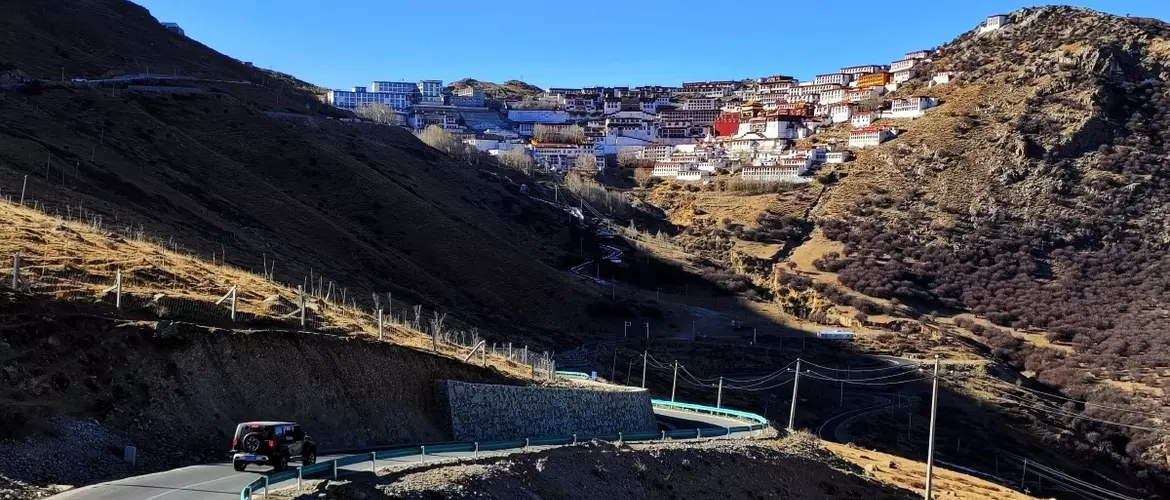
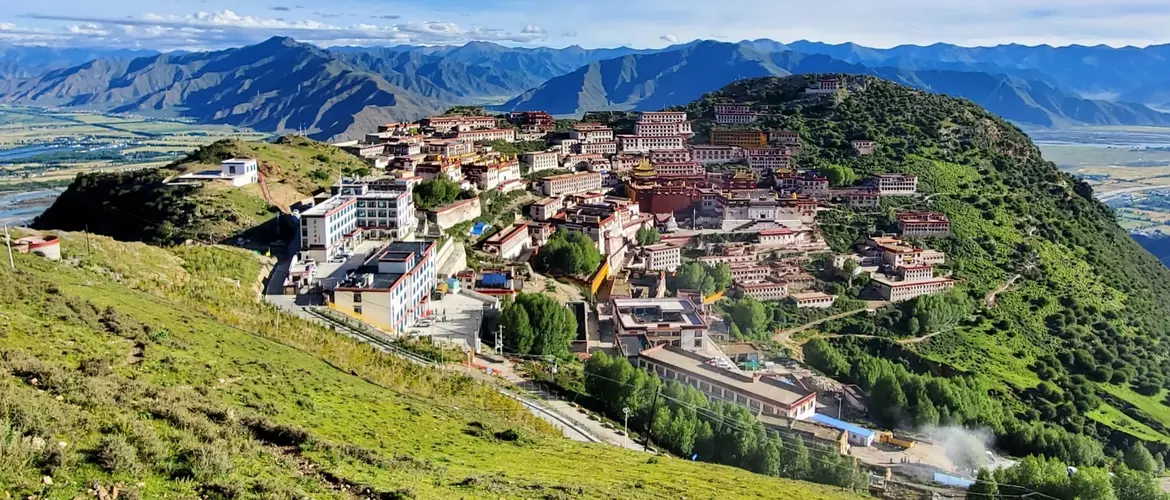
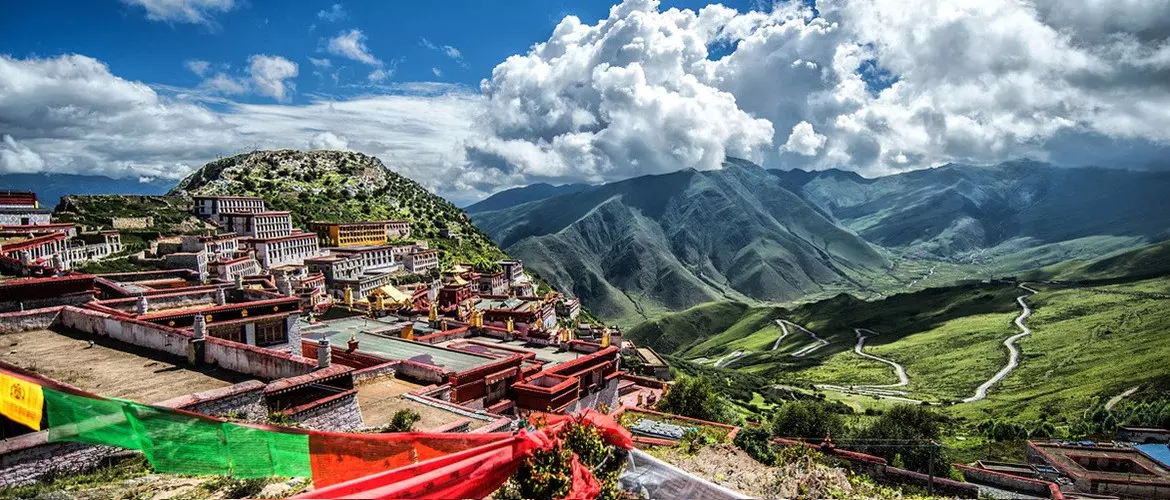
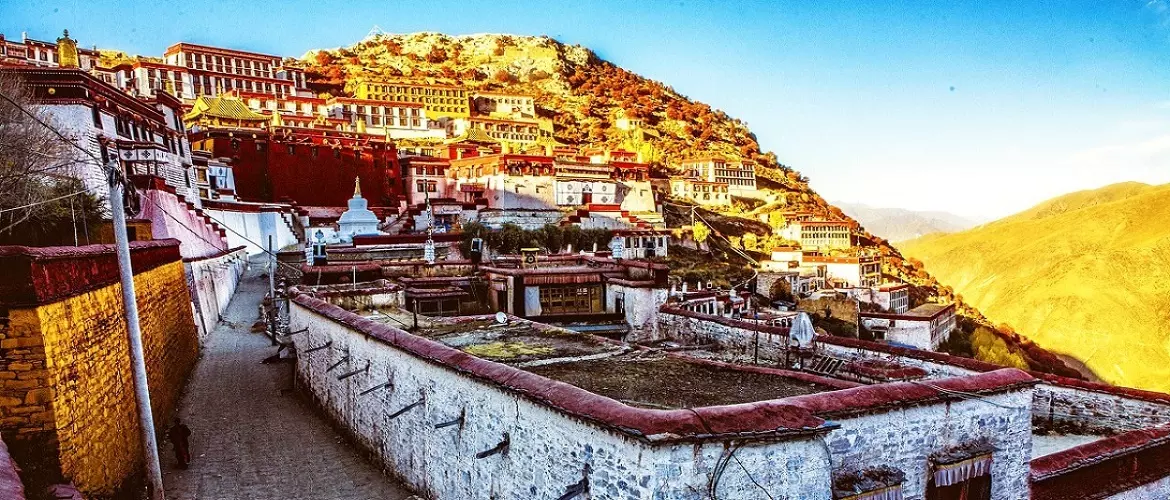
Known as the “Sky Monastery,” Ganden Monastery is located in Dagze District, about 40 km northeast of Lhasa. It is one of the six great monasteries of the Gelug school and one of the earliest and most important monasteries established within the tradition. The monastery was founded in 1409 by Je Tsongkhapa, the founder of the Gelug school, and is therefore regarded as its ancestral monastery. The name “Ganden” means “Joyful” or “Tushita Paradise,” and it is often listed together with Drepung Monastery and Sera Monastery as the three great Gelug monasteries of Lhasa.
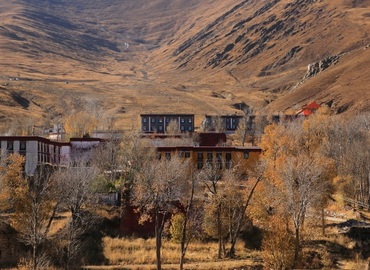
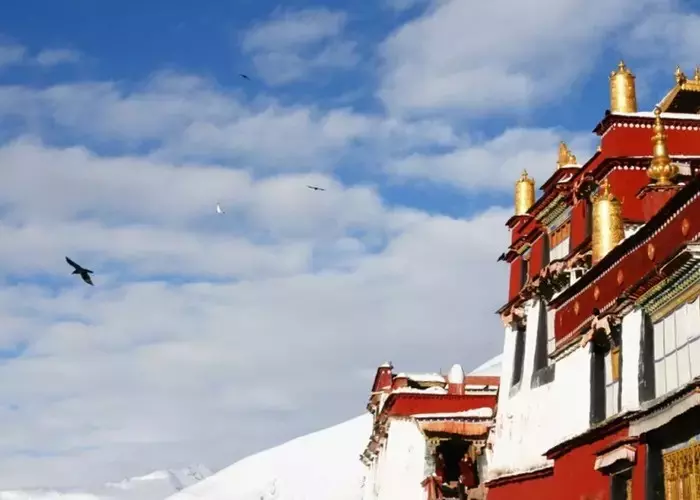
Perched along the ridge of Wangbur Mountain at an altitude of around 4,300 meters, Ganden Monastery unfolds along the mountainside in a layered structure. Its golden roofs blend naturally with the surrounding peaks, creating a striking harmony between architecture and landscape. Walking along the circumambulation path around the monastery, visitors can experience a strong spiritual atmosphere while enjoying sweeping views of valleys and the vast Tibetan plateau.
History
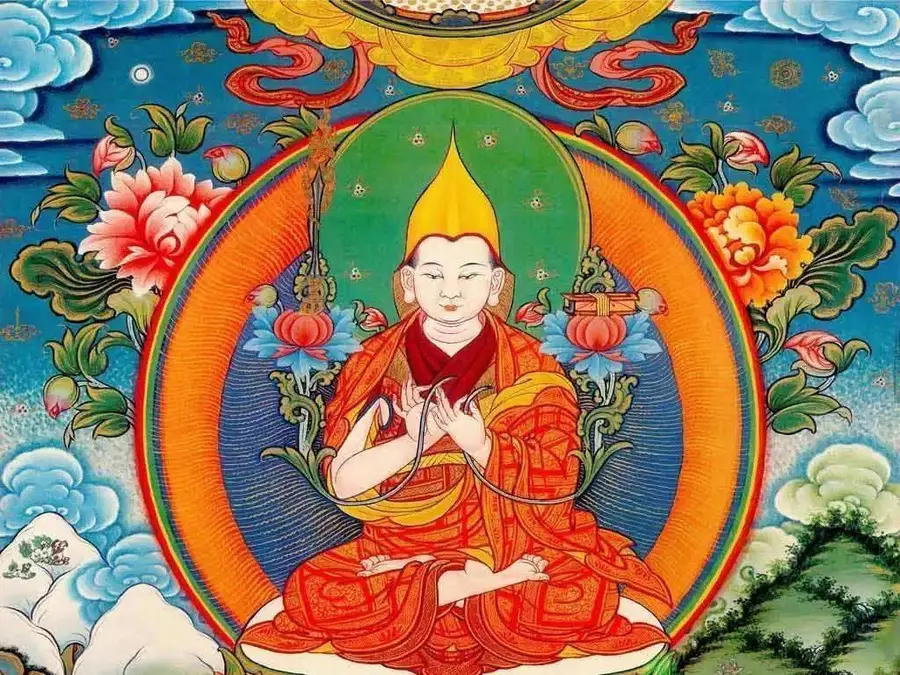
In 1409, Je Tsongkhapa began the construction of Ganden Monastery with the support of the Phagmodrupa (Pakmodru) regime. With the establishment of the monastery, the Gelug school gradually took shape and expanded, and Ganden Monastery came to be regarded as one of the key birthplaces of the tradition.
Je Tsongkhapa personally oversaw the construction of the monastery’s main buildings and spent much of his time here teaching, and guiding his disciples. In 1419, he passed away at Ganden Monastery.
After his passing, his chief disciple, Gyeltsab Je, succeeded him as the first Ganden Tripa. The title “Ganden Tripa” means “Holder of the Ganden Throne” and represents the spiritual head of the Gelug tradition. Successive Ganden Tripas are selected through long years of rigorous study, practice, and examination, and are regarded as exemplars of both scholastic mastery and spiritual attainment within the Gelug school.
Architectural Layout
Ganden Monastery is a classic example of Tibetan Buddhist architectural art. Built along the steep slopes of Wangbur Mountain, the monastery does not follow a strict axial symmetry. Instead, it expands naturally according to the terrain. In gentler areas, spacious assembly halls and temples were constructed, while monks’ quarters and auxiliary buildings are arranged along steeper slopes, allowing the entire complex to blend seamlessly with the mountain landscape.
At the center of the monastery is the Tsokchen Assembly Hall, around which are distributed scripture halls, temples, stupas, and the two main monastic colleges (dratsangs), forming a complete and well-organized monastic complex. Among them, Tsoktokhang (Tsotruk Kang) is built against a cliff and is one of the most distinctive structures of Ganden Monastery.
Main Highlights
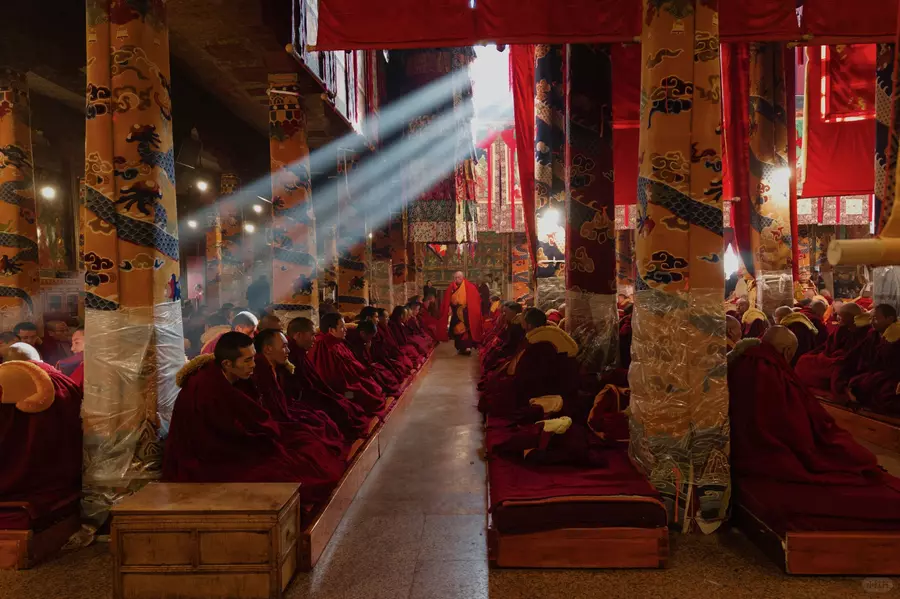
Tsokchen Assembly Hall
The Tsokchen Assembly Hall is the most important building of Ganden Monastery and serves as the venue for major religious ceremonies and chanting rituals.
Inside the hall are statues of Maitreya Buddha, Je Tsongkhapa, and other important deities, along with a large collection of precious relics. One of the notable features is a throne supported by five golden lions, said to have been prepared for Je Tsongkhapa after the establishment of the Gelug tradition. The hall also preserves Tsongkhapa’s meditation bed and a complete set of the Kangyur and Tengyur scriptures written in pure gold, which are classified as national-level cultural relics. Many of the ritual objects, offerings, and decorations are believed to date back to the Ming dynasty, along with numerous ancient murals, thangkas, and ritual instruments.
A famous feature inside the hall is a suspended wooden pillar, with a visible gap between its base and the ground, attracting pilgrims who come to touch it for blessings.
Tsoktokhang
Tsoktokhang was once the residence and meditation place of Je Tsongkhapa, and later became an important retreat site for successive Ganden Tripas. The temple also contains tantric mandalas used in Gelug practice, along with robes, meditation cushions, seals, and other sacred objects used by Tsongkhapa and later Ganden Tripas.
In addition, the hall enshrines statues of Manjushri and other revered Buddhist deities. It is considered one of the most historically and religiously significant structures within Ganden Monastery.
Serdong Hall (Stupa Hall)
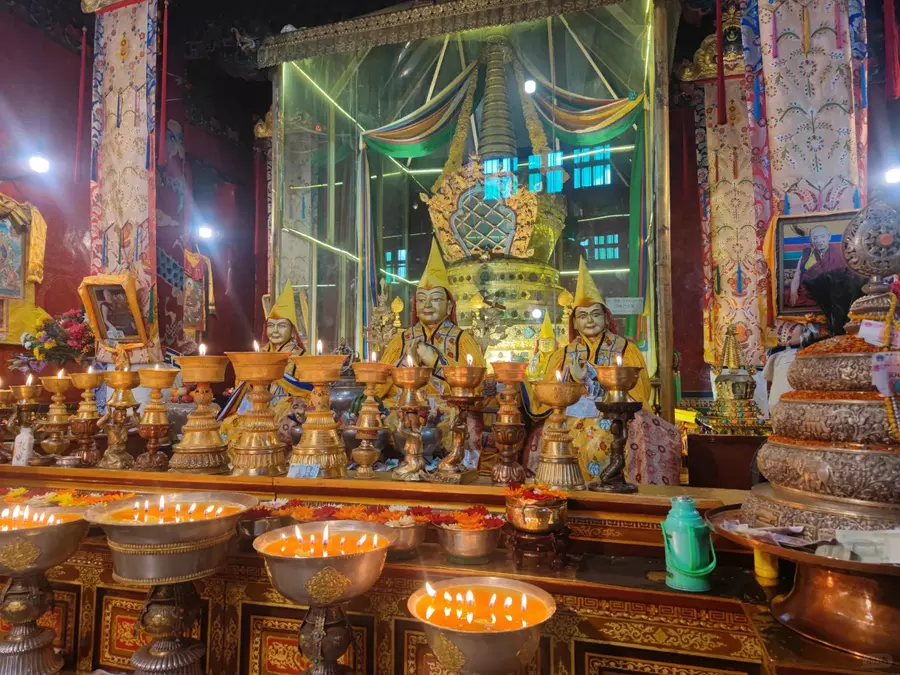
Serdong Hall, also known as the Stupa Hall, is the sacred site where the stupa of Je Tsongkhapa is enshrined.
After Tsongkhapa passed away in 1419, his disciples built a stupa to enshrine his remains. The original stupa was made of 900 taels of silver. Later, the 13th Dalai Lama had it covered with gold and inlaid with precious jewels. Since then, successive Ganden Tripas have also been commemorated with stupas built inside the monastery. Today, the hall contains a total of 95 stupas.
Ganden Kora
The Ganden Kora is one of the most distinctive pilgrimage routes at Ganden Monastery and one of the main reasons many visitors travel here. The full loop is approximately 3 km and usually takes around 1 to 2 hours to complete on foot.
Compared with Drepung Monastery and Sera Monastery, one of Ganden Monastery’s greatest attractions is not only its historical and religious significance, but also this ridge-top pilgrimage trail, where monastery architecture, high-altitude landscapes, and Buddhist devotional practice come together in a single experience.
Along the way, the trail passes stupas, mani stones, prayer flags, and various sacred sites. For pilgrims, it is an important path for accumulating merit; for visitors, it offers a meaningful way to understand Tibetan Buddhist culture and local spiritual traditions.
The trail also passes several viewpoints behind the monastery, offering wide, open vistas.
For visitors with limited time, a visit to Ganden Monastery including the main section of the kora can typically be completed in 2–3 hours. For those wishing to complete the full circuit, it is recommended to allocate half a day.
Since the monastery is located on a mountain ridge, the kora route is not completely flat. Some sections include ascents, descents, and stone steps. For most reasonably fit visitors, the walk is moderate in difficulty. However, due to the high altitude, it is advisable to walk slowly and take breaks as needed.
How to Get to Ganden Monastery?
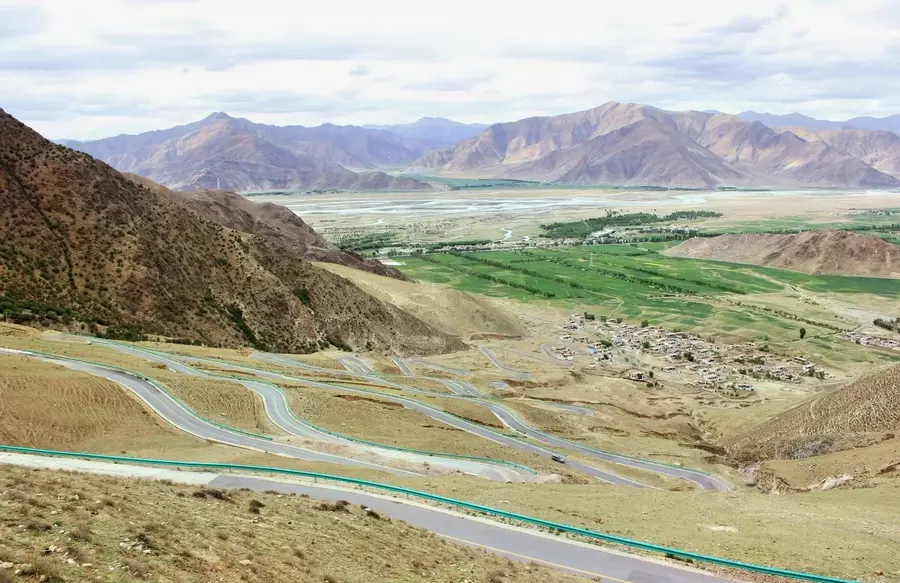
Ganden Monastery is located on Wangbur Mountain in Dagze District, approximately 40 km from central Lhasa. Due to its mountainous location, it is often combined with a day trip to Drak Yerpa Hermitage for a more complete itinerary.
The drive from Lhasa city takes around 1.5 to 2 hours. The road gradually transitions from urban areas to rural valleys and then into high-altitude mountain terrain, offering varied and scenic landscapes along the way. Although the road condition is generally good, travel time may vary depending on weather conditions.
Foreign visitors are typically required to travel with a licensed guide and arranged transportation through an authorized travel agency.
Best Time to Visit
The best time to visit Ganden Monastery is from May to October, when the weather is relatively stable and conditions are ideal for sightseeing and photographing the highland landscapes.
For travelers interested in experiencing traditional religious festivals, the Butter Lamp Festival on the 25th day of the 10th Tibetan lunar month is particularly noteworthy.
Butter Lamp Festival
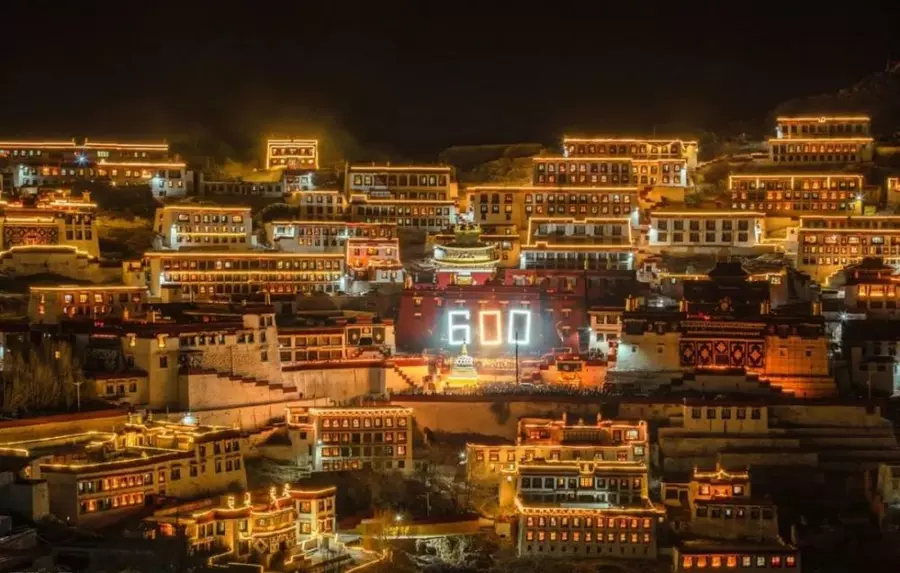
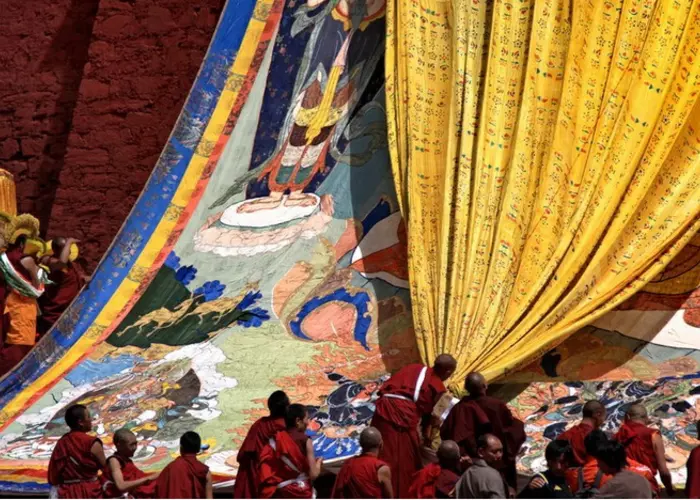
The Butter Lamp Festival is an important annual religious event held in memory of Je Tsongkhapa’s passing, and it is one of the most significant ceremonies at Ganden Monastery.
During the festival, thousands of butter lamps are lit throughout the monastery, and monks and pilgrims gather to hold prayer ceremonies. As night falls, the entire monastery is illuminated by flickering lights, creating a solemn and spectacular scene that attracts numerous pilgrims and visitors each year.


Lhasa - Ganden Monastery - Lhasa
Designed for tourists with a special interest in Tibetan Buddhism. Hiking around Ganden Monastery is the highlight.

Lhasa - Ganden - Lhasa
Visit Great Three Gelugpa monasteries, specially designed for those who want to get close to Buddhist culture.

Lhasa - Ganden - Tidrum - Lhasa
Involve significant tourist spots, top three Gelugpa monasteries of Tibetan Buddhism, and a mysterious sky-burial site.
Email response within 0.5~24 hours.