
Everest Expeditions via the Northern Route
- Beatrice
- Last Updated : 04/10/2026
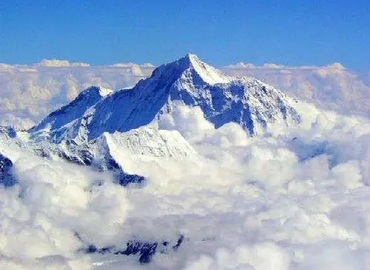
Known as the “Top of the World,” Mount Everest is the most iconic peak of the Himalayas and the ultimate aspiration for adventurers worldwide. Standing at 8,848.86 meters, it represents both a physical challenge and a deeply personal journey, echoing the famous words of George Mallory: “Because it is there.” While reaching the summit demands exceptional effort, the journey itself—through glaciers, valleys, and high-altitude camps—is equally unforgettable.
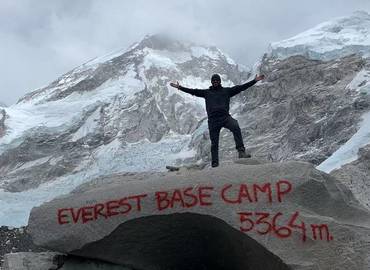
There are two main base camps for expeditions to Everest: the Tibet Everest Base Camp at 5,200 m (17,056 ft) on the northern side, and the Nepal Everest Base Camp at 5,364 m (17,597 ft) on the southern side. In this guide, we focus on the northern route from Tibet, known for its dramatic landscapes and distinctive climbing experience.
Northern Route Overview
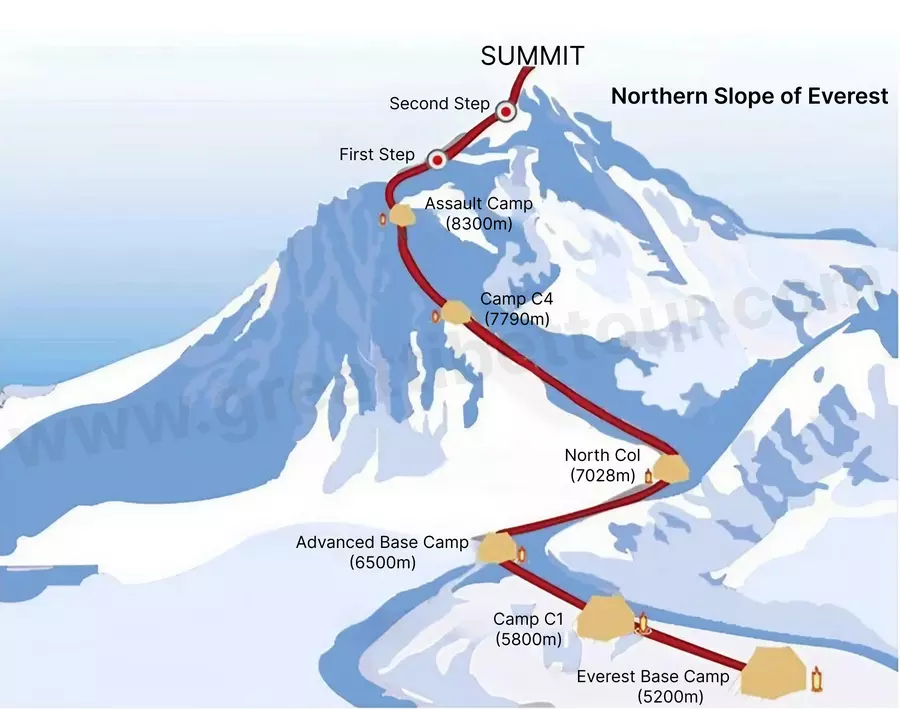
The northern approach from Tibet offers a striking and less crowded path to Everest. The journey begins at Base Camp near the Rongbuk Glacier at around 5,200 meters. From here, climbers gradually move to the Intermediate Camp at 5,800 meters and then to the Advanced Base Camp at 6,500 meters, located below the North Col.
Beyond this point, the ascent becomes increasingly technical. Climbers establish higher camps at around 7,000 meters, 7,790 meters, and 8,300 meters before attempting the final summit push. Along the way, obstacles such as the Second Step test both skill and endurance before reaching the summit.
Acclimatization and High-Altitude Challenges
As altitude increases, oxygen levels drop significantly, making acclimatization essential. The journey from Base Camp to the Advanced Base Camp (ABC) typically takes several days, allowing the body to gradually adapt to the thinner air. At around 6,500 meters, ABC serves as the final major staging point before climbers move into the high-altitude camp system.
Beyond this point, conditions become increasingly harsh. Above 8,000 meters—the so-called “death zone”—oxygen levels are only about one-third of those at sea level. Temperatures can plunge below –40 °C, and strong winds sweep across exposed ridges, making even simple movements physically exhausting.
In such an environment, every step requires focus and endurance. As many climbers describe it, reaching the summit at sunrise, after days of extreme cold and fatigue, is a moment that makes every hardship along the way worthwhile.
Preparation and Training
Climbing Mount Everest is not just a physical challenge—it also tests endurance and mental resilience. Before setting out, it’s recommended to build a strong fitness base through aerobic and strength training such as running, hiking, swimming, and carrying a weighted backpack. These activities help improve cardiovascular fitness, leg strength, and overall stamina needed for long days on the mountain.
High-altitude adaptation is equally important. Training can begin at lower elevations, followed by gradual exposure to higher altitudes around 5,000–6,000 meters, allowing the body to adjust to thinner air. Practicing with mountaineering boots and a loaded pack also helps simulate real trekking conditions and improves balance on uneven terrain.
Consistency matters more than intensity. Regular training over time builds endurance more effectively than short bursts of effort. It is also helpful to gain experience on multi-day treks, where you can become familiar with pacing, energy management, and the physical demands of consecutive days at altitude.
Diet and rest play a vital role in preparation. Adequate sleep supports recovery, while a balanced, high-energy diet helps build the reserves needed for the climb. Taking rest days during training is equally important to avoid fatigue and injury.
With proper preparation and steady training, climbers can reduce the risk of altitude-related issues, maintain strength throughout the journey, and approach the Everest experience with greater confidence and readiness.
Essential Gear for Everest
Proper equipment is vital for both safety and comfort when climbing Mount Everest. In extreme high-altitude conditions, climbers rely on a layered clothing system to regulate body temperature, typically consisting of moisture-wicking base layers, insulating mid-layers, and a windproof, waterproof outer shell. At higher elevations, a full down suit designed for temperatures below –30 °C becomes essential protection against severe cold.
Footwear is equally critical. High-altitude mountaineering boots are specially designed for extreme environments, offering insulation, waterproofing, and compatibility with crampons for stability on icy slopes. Combined with gloves, goggles, and face protection, these items help prevent frostbite and ensure visibility in strong winds and snow glare.
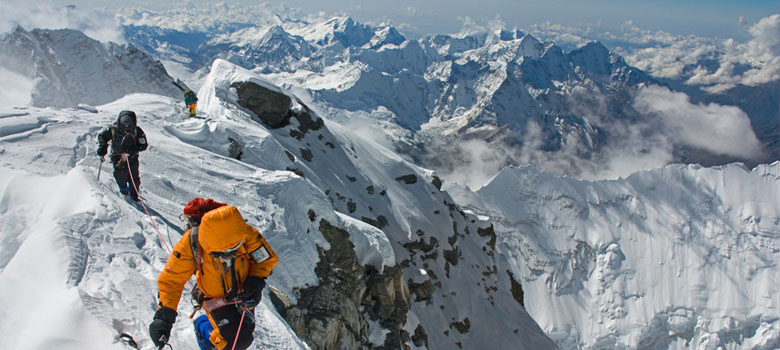
Technical gear supports safe movement on steep terrain. Equipment such as ice axes, harnesses, ropes, and helmets is used throughout the climb, particularly on exposed ridges and fixed lines. At higher camps, climbers depend on durable high-altitude tents and cold-resistant sleeping bags to rest and recover in harsh conditions.
Oxygen systems play a key role above 8,000 meters. Modern portable cylinders and masks provide supplemental oxygen, helping climbers cope with the extremely thin air during the final ascent. In addition, essential accessories such as headlamps, thermal flasks, and high-energy food supplies ensure that climbers remain functional during long summit pushes.
Since every kilogram matters at high altitude, all equipment and supplies must be carefully selected to balance reliability and weight. Even on guided expeditions, having properly fitted and dependable gear can make a significant difference in both safety and overall climbing experience.
Sherpa Guides and High-Altitude Support
During expeditions on Mount Everest, the Sherpas play an indispensable role. More than just guides, they form the backbone of the entire climbing operation, providing logistical support and ensuring safety throughout the journey. From carrying equipment and setting up camps to fixing ropes along high-altitude routes, Sherpas are involved in nearly every critical stage of the ascent.
Having lived for generations in the Himalayas, Sherpas are exceptionally well adapted to high-altitude environments. Their ability to perform efficiently in low-oxygen and extreme cold conditions has made them widely recognized as some of the world’s finest high-altitude mountaineers. In most expeditions, multiple Sherpas are assigned to support climbers, assisting with the transport of oxygen, gear, and essential supplies along the route.
At the same time, this work involves significant risk. Throughout Everest’s climbing history, Sherpas have been among those who have contributed the most under challenging conditions. Despite this, they continue to return each climbing season, helping adventurers from around the world achieve their summit goals.
For most climbers, choosing an experienced expedition team and reliable Sherpa support is not only key to success, but also a fundamental aspect of safety on the mountain.
Cost and Budget
Climbing Mount Everest is a high-investment expedition. In addition to guide fees and insurance, climbers must also budget for equipment, transportation, supplies, and high-altitude support. The overall cost typically starts from around USD 60,000 and can increase significantly depending on the level of service and team arrangements.
Expenses go beyond basic gear and guiding services. They also include the transportation of oxygen cylinders, the establishment of high-altitude camps, route fixing, and continuous supply support along the ascent. As altitude increases, the cost of moving supplies rises considerably, which is one of the main reasons why high-altitude expeditions are so expensive.
In addition, there are often overlooked costs such as pre-trip medical checkups, training expenses, international flights, visas, and travel arrangements. These can form a meaningful part of the overall budget. Careful financial planning and choosing the right service package are essential steps in preparing for an Everest expedition.
Permits and Expedition Arrangements
Climbing Everest from the northern side requires official permits as well as prior high-altitude mountaineering experience. Applications are typically submitted several months in advance, and the process can be complex.
For this reason, most climbers choose to work with licensed mountaineering companies (like Tibet Autonomous Region Mountaineering Association). These professional operators handle permit applications and provide a complete support system, including itinerary planning, experienced guides, camp setup, logistics, and emergency response arrangements.
Service levels can vary widely between companies, ranging from basic logistical support to fully guided expeditions. Selecting a reputable and experienced operator not only improves the chances of a successful summit but also plays a crucial role in ensuring safety in such an extreme environment.
Conclusion
Climbing Mount Everest is more than just reaching the highest point on Earth—it is a journey through extreme landscapes and personal limits. With proper preparation, reliable support, and respect for the mountain’s challenges, the experience becomes not only achievable for skilled climbers, but also deeply rewarding.
Email response within 0.5~24 hours.