



Kailash Mansarovar Yatra: Once in A Lifetime Experience
- Catherine
- Last Updated : 11/19/2026
Kailash Mansarovar is a pilgrimage site nestled in the Himalayas in Tibet. Over the years, Yatris from around the world have come here to do the Kailash Mansarovar Yatra, and travelers come to witness its mystical beauty. In this article, you will find the routes, cost, best time, etc., to undertake the Kailash Mansarovar Yatra.
Content Preview
- What Is Kailash Mansarovar Yatra?
- How to Take a Kailash Mansarovar Trip?
- Extra Expenses During the Trip
- How to Take the Kailash Parvat Trek?
- Gauri Kunda: The Lake of Compassion
- What Is the Ideal Time For Mount Kailash Yatra?
- How to Deal With Altitude Sickness?
- Lake Manasarovar Yatra
- Chiu Monastery
- Essential Travel Documents
- List of Must-have Items For Kailash Mansarovar Trek
- Conclusion
What Is Kailash Mansarovar Yatra?
Kailash Mansarovar Yatra mainly involves completing a parikrama of Mount Kailash and taking a holy dip in Mansarovar Lake. It is said that this can alleviate pilgrims' sins and bring them salvation.
People aged 18 to 70 and in good health are eligible to take the Kailash Mansarovar Yatra trip. The yatra can be done on foot, by bus, or by helicopter. To undertake the yatra, please book either through the Ministry of External Affairs or through a Tibet/Nepal tour operator.

How to Take a Kailash Mansarovar Trip?
To reach Kailash Mansarovar, Indian pilgrims can take a road trip from Delhi. The Ministry of External Affairs organizes the yatra from June to September each year through two different routes -- Lipulekh Pass (Uttarakhand) and Nathu La Pass (Sikkim). The yatra is conducted in batches with a certain number of pilgrims each year. Alternatively, you can go to Kathmandu to join the Kailash Mansarovar pilgrimage trip starting here. If you have a US passport or another passport, you can fly to Lhasa to start your Kailash Mansarovar trip.
Via Lipulekh Pass
The route through Lipulekh Pass (a Himalayan pass on the border between India's Uttarakhand state and the Tibet region of China) involves some trekking. The Kailash Mansarovar Yatra cost is about Rs 1.6 lakh per person/USD2133, which is the lowest cost. The duration of the Kailash Mansarovar Yatra is 24 days, including 3 days of preparation in Delhi.
The route has three sections. The first section is a 107.6 km long road from Pithoragarh to Tawaghat, the second section is a 19.5 km single-lane road from Tawaghat to Ghatiabgarh, and the third section is 80 km from Ghatiabgarh to Lipingkh Pass at the Chinese border. Only trek through. A new road in the third section is under construction in 2020 to allow vehicles. After completion, it cuts travel time from 5 days by trek to just two days by vehicle.
This route crosses important locations, such as Narayan Ashram. Yatris can also see the beauty of the scenery of the Chialekh Valley or "Om Parvat", where snow naturally appears in the form of "Om".
Via Nathu La Pass
The route through Nathu La Pass (4,309 meters, connecting Sikkim, India, with China's Tibet Autonomous Region) is reachable by bus and especially suitable for elderly yatris. The cost is about Rs.2 lakh per person/USD2,667. The duration would be 21 days, including 3 days in Delhi for preparatory work. It passes through scenic spots such as Hangu Lake and the vast landscape of the Tibetan Plateau.
Via Kathmandu
A Kailash Mansarovar Yatra from Kathmandu is available either by helicopter or by car. The helicopter package is easier and faster, which takes 12 days and costs RS 210,000/USD2,800 per person. You will be flying from Kathmandu to Simikot via Nepalgunj and taking a helicopter ride from Simikot to Hilsa. The view over the Himalayan mountains is breathtaking and wonderful. After entering Tibet, we will drive you to Kailash and Mansarovar.
√ 14 Days Kailash Mansarovar Yatra by Road from Kathmandu
The overland package takes 14 days and costs RS140,000/ USD1,950 per person. After sightseeing in Kathmandu, you will pass Syabrubesi and drive to Saga via Kerung. Then, explore the area of Mansarovar and drive to Darchen for the Kailash Mansarovar Yatra. The Himalayas will leave a deep impression on you along the way.
√ 12 Days Kailash Mansarovar Yatra by Helicopter from Kathmandu
Via Lhasa
Apart from these religious groups, plenty of tourists are simply enchanted by the beauty of the place. They can book Kailash Mansarovar tour packages operated by Tibet travel agencies directly. But the premise is that they must have non-Indian passports, as Tibet Travel Agencies are not allowed to arrange Indian tourists to Kailash Mansarovar. The duration is 12 ~15 days. Kailash Mansarovar tour cost via Great Tibet Tour starts from Rs 140,219/ USD1,930 per person. Along the way, you can visit the Potala Palace, Yamdroktso Lake, beautiful grasslands, Everest Base Camp, and view the sand dunes of western Tibet and local's villages, etc.
√ 15 Days Kailash Mansarovar Kora Pilgrimage Group Tour
Extra Expenses During the Trip
Throughout the trip, you will have to pay for services that are not covered by your travel agency. These expenses are personal, and thus it is entirely up to you to spend them or not. Moreover, there may be incidents like natural disasters and emergency medical situations, which cannot be covered by any travel agency.
Nevertheless, it is always wise to carry extra cash wherever you go. Some of the excluded personal expenses are:
- Horse rides or yak rides. This is for people who cannot walk long miles at a stretch. USD50/day
- Laundry, extra snacks and drinks, telephone services, etc. USD50/day
- Extended hotel stays if you are sick. USD65/room/night.
- Airport transportation costs. USD80/vehicle

Please note these expenses are the same for all travel packages. The number of days in your package may affect the total amount of these personal payments.
How to Take the Kailash Parvat Trek?
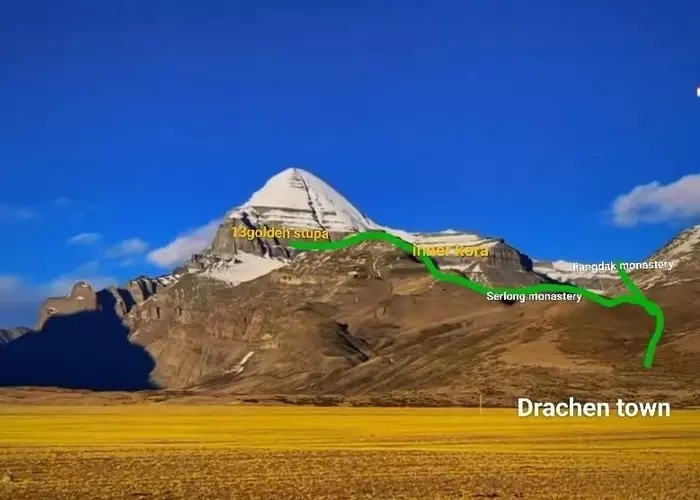
For pilgrims, the Mount Kailash yatra can be divided into the outer kora and the inner kora. The inner kora trek is shorter but more dangerous and difficult to accomplish. The local people believe that people are not qualified to take the inner kora until they complete 13 circles of the outer kora. Therefore, few people take the inner kora, and it is not recommended.
The outer kora is 52 kilometers long, with a total ascent of 1,000m+. The Kailash Parvat trek is a high-altitude, physically demanding trek that usually takes 3 days.
Day 1: You can take an eco-bus from Darchen to Prayer Flag Square for 7 kilometers, then trek 13 kilometers. It is mostly uphill and takes about 6 hours to reach Dirapuk Monastery at a steady pace.
Day 2: This is the most challenging part of the trek as you will challenge the Dolma La Pass (5,630m). During this time, you need to be very careful about the drastic ascent and descent of almost 600 meters. You will trek 22 km to Dzultripuk Monastery, which takes around 11 to 14 hours.
Day 3: Only 10 kilometers of gentle roads remain, which is relatively easy. You can also take the bus for the last 3 kilometers.
Gauri Kunda: The Lake of Compassion
Another sacred landmark along the Mount Kailash Kora is Gauri Kunda, a small emerald-green lake situated below Dolma La Pass. Pilgrims encounter it during the steep descent from the pass on the second day of the trek.
According to Hindu belief, Goddess Parvati, also known as Gauri, used to bathe in this lake. Its sacred waters hold special significance for Hindu pilgrims, many of whom wish to bring some water back home. However, the slope down to the lake is steep and slippery, so visitors should admire it from the trail rather than attempt to climb down themselves.
After passing Gauri Kunda, the trail continues towards Zuthulpuk, where pilgrims spend the second night of the kora in basic guesthouse accommodation.
What Is the Ideal Time For Mount Kailash Yatra?
The Tibetan mountains have unpredictable and irregular snowfall. Limited oxygen, cold temperatures, and rough terrain make it all the more difficult to visit this place. That's why, to enjoy the entire trip, it is important to choose a particular time to go on this Yatra.
The ideal time for a Kailash Mansarovar Yatra is May to June or September to October. May-June is the spring period, so you can witness clear blue skies, lush greenery, and stunning views. The weather is pleasant on most days, but there is also a high chance of rain.
September to October is autumn, when oxygen levels are higher than the rest of the year and temperatures are more comfortable. Therefore, the possibility of altitude sickness is less than usual, especially at such a high-altitude place, on the Kora trail from 4,700 meters to more than 5,700 meters above sea level.

On an average day, temperatures range from as high as 14°C to as low as -12°C. During the summer period, it varies from around 16°C-21°C. During the winter period, it varies from around 0°C to -4°C. The average difference between the day and night temperatures is around 14°C. Nights are much colder than days.
In recent years, Yatris go to Mount Kailash parvat from June to September cos they can only get their pilgrimage permits for this period. Although summer is the monsoon season, it usually rains at night, so the weather will not affect the yatra too much.
How to Deal With Altitude Sickness?
Mount Kailash is located 6,700 meters above sea level. On the Kailash Mansarovar Yatra, you may experience altitude sickness. This sickness is caused by lower oxygen levels at high altitudes.
Your body is used to working with a certain amount of oxygen. Therefore, a lack of oxygen can cause physical distress.
Common symptoms of altitude sickness are:
- Vomiting and nausea
- Appetite loss
- Severe headaches
- Fatigue
- Dizziness
- Breath loss
- Laziness
If you experience any of the above symptoms during the Kailash Mansarovar Yatra, you likely have high-altitude sickness. To feel better, you can do the following.
- Hydrate regularly
- Don't trek for long hours straight
- Avoid exercise
- Don't drink alcohol
- Eat fiber-rich foods
- Carry portable oxygen cylinders
Lake Manasarovar Yatra
Lake Manasarovar is one of the reasons why thousands of people around the globe come for the Kailash Manasarovar Yatra. It is known as one of the holiest lakes on earth. It is located 32 km from Mt. Kailash and sits at an elevation of 4,950 meters.
The derivation of Manasarovar comes from the combination of two Sanskrit words. They are "Manas," which means mind and "Sarovar," which means lake.

The lake water is famous for its holy and pure properties. It is said to have many disinfecting and magical healing properties too. Pilgrims, after touring Kailash Parvat, come to this river for three main reasons-
- To get rid of all their past sins and purify themselves.
- They consider it to be a wish-granting lake. Thus, come here for wish fulfillment.
- To get rid of mental and physical illness. The healing properties are said to bring good health. Thus, people take a dip in the lake to purify themselves and enhance their health.
The purity and crystal-clear water of this lake are a major attraction. Visitors can clearly see the lake's deep bottom. The purity of the water is like that of a sapphire stone.
The freshwater lake is also said to change its color. The sunlight beams directly reflect on the lake as the sun rises and sets. This phenomenon makes it possible for the water's color to change continuously.
The colors shift from shades of blue to green, creating a mesmerizing scene. In rare cases, you can also see rainbow colors on the surface of the lake, which adds to the lake's liveliness.
If you can spare a night from your entire tour, then you should camp beside the lake. The shore of the lake is firm, so it can support a tent. This mystical overnight stay will be one of the most soothing experiences of your life.
Chiu Monastery
Chiu Monastery is located on the hillside next to the holy Lake Manasarovar. After dipping in Lake Manasarovar, you can climb up the hillside to overlook the whole blue holy lake. This is a great place to appreciate the breathtaking views, not only of Lake Manasarovar but also of the "Goddess Peak" Gurla Mandhata and the "Sacred Mountain" Kailash. There is a natural hot spring near Chiu Monastery, always emitting a smell of sulfur, for people to bathe. The hot spring water can not only reduce inflammation and sterilize but also relieve fatigue after yatra.
Essential Travel Documents
Foreigners have to get several valid Travel permits for Kailash Mansarovar Yatra. They are-
- Tibet Travel Permit or Tibet Visa- It is necessary to travel anywhere in Tibet.
- Military Area Permit - Mount Kailash is a militarily sensitive area, so this permit is critical.
- Foreign Affairs Permit
- Frontier's pass
- Aline's Travel Permit- also called the PSB permit. China's Public Security Bureau issues this permit for 50 Chinese Yuan.
List of Must-have Items For Kailash Mansarovar Trek
It is human nature to forget things while packing for a trip. When packing up for the Yatra, you must remember to pack light. Due to the high and uneven terrain, it can be difficult to carry your luggage.
Especially if you're going to spend most of your time on foot, consider this a must-have list so you don't forget these essentials while packing.
- A backpack- To carry all your essential personal items. You can carry this every day throughout the trek.
- Clothes- Pack lightly. Only carry what's necessary. Mostly pack winter clothing.
- Medicine- If you're on medications, then carry extras so that you don't run out.
- Toiletries- Carry one of each: toothbrush, toothpaste, Shampoo, Soap, and towel.
- Water bottle- Remember to hydrate yourself. Carry a water bottle and a thermos for hot water
- Socks- Your feet are going to freeze in the cold, so carry extra pairs of woolen socks.
- Shoes- Since you're going to walk and trek, carry trekking boots or sport shoes. They have a good grip and will keep you from slipping on the terrain.
- Gloves and beanies- To protect your hands and ears from the cold.
- Moisturizers and lip balm- dryness can crack your skin. Carry moisturizers, sunscreen, and lip balm.
- Snacks- Dry snacks and power drinks to keep up your stamina. Canned food is also advisable.
- Rainwear- Umbrella and Raincoat
- Candles/flashlights/torchlights; also carry extra sets of batteries.
Conclusion
The few days you spend on the Kailash Mansarovar yatra will be an unforgettable experience for you, as you will not only enjoy the beautiful scenery of the snow-capped mountains and the vast plains but also get spiritually inspired. After having your Mt.Kailash parikrama and dipping in Lake Mansarovar, you will return with fresh energy and a refreshing perspective on life.
Email response within 0.5~24 hours.

Typically Asked Questions from Our Clients
La***
Hello, I'm planning a kailash Manasarovar Yatra from and trough Tibet to Mount Kailash with my husband. However, not until 2026. I have a few questions about this. Would it be possible to create a customized tour that is tailored to my needs? The spiritual aspect of the Kora is most important to me. Accordingly, I would like to immerse myself more in the atmosphere around Kailash and Lake Manasorovar and spend a few more days there. It would also be nice if the guide had a spiritual background in terms of the mountain and the Kora. Ialso want to acclimatize well before the Kora and would like to do this on 2 extra days while hiking around Darchen. The tour should also include the kingdom of Guge and Shanshung. Would such a tour be possible?
Dear Lana****,
We can customize and arrange a Kailash Mansarovar Yatra for you in 2026. Our tour guides have many years of experience and do Mount Kailash Kora several times every year. They will guide you and help you acclimatize the high altitude.
Ruch***
Please share more information about Kailash and Mansarovar tour. We are good of 5 people. We are planning for 2025. Please tell us a out the entire processs. Any visa requirements, physical requirements and any restrictions. Thanks
Dear Ruch****,
We can arrange the Mt.Kailash and Mansarovar tour for you on 6 July 2025. We can help you apply for the Tibet Travel Permit along with the scan of your passports and China Visas.
We suggest that visitors with a severe cold, a high fever, acute or chronic pulmonary diseases, or severe cardiovascular diseases should avoid traveling to regions with a high altitude.
As for age, we can't arrange the tour for tourists over 80 years old.
Right now, we can't organize the Indian people's Kailash tour.
tano***
I wanted Kailash Mansarovar Yatra, with prakram and holy bath inmasarovar
Dear Tano***,
Holy bath in Mansarovar is not allowed at Mt.Kailash. But you can consult it with the tour guide. As the water in the lake is bitterly cold, I suggest you take a bucket of water and heat it before bath.
Raji***
We are interested to visit Mt Kailash in May 2024. We want to explore 2 travel options
1) start/end in Lhasa, then fly to Ngari then land route to Mt kailash kora then return same route to Lhasa
2) start/end in kathmandu fly to Nepalgunj, then fly Simikot then helicopter to Hilsa then land route to kailash. Back same route to kathmandu
Dear Raji****,
Currently we can only arrange option I - start/end in Lhasa, then fly to Ngari then land route to Mt Kailash Kora then return the same route to Lhasa. But this route is very likely to cause altitude sickness. If possible, I suggest you drive one way and fly one way.
For option II, the Puran Port has not yet opened so flights to Hilsa are prohibited. You can fly from Kathmandu to Nepalgunj and then to Simikot, but for the last step to Hilsa, it's not available.
Rame***
I am interested in Mansarovar-Kailash trip by land. Are there any age restrictions. If so are these requirements of Tibet/Chinea government ot travel agencies. I am 72 years old and have no medical conditions. My wife is 67. We shall be coming from USA.
Dear Rame****,
We can arrange the Mt.Kailash Mansarovar tour for you. As for age, it's also hard to define a certain age as the boundary of whether you are able to travel to Tibet. Things are not always absolute considering the age of traveling to high-altitude places. Actually, altitude sickness is more likely to happen on those strong young men with muscles who need oxygen more than others. Previously, our oldest client who came from the US and even made it to Everest Base Camp is at the age of 81 with his 76-year-old wife. So I suggest you consult with your doctor and stay physically strong and healthy before making the decision to travel to Tibet.
Read More ...