


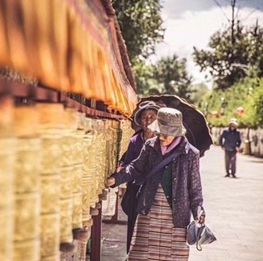
Best Things to Do in Ngari
- Eric
- Last Updated : 10/29/2026
Ngari, in western Tibet, is one of the region’s most remote areas, known for its vast plateau landscapes and rich cultural heritage. It is home to Mount Kailash, revered as a sacred mountain by several religions, as well as Lake Manasarovar and Rakshastal. The region also features the dramatic Zanda Earth Forest, the ruins of the ancient Guge Kingdom, and historical sites associated with the ancient Zhangzhung civilization. From snow-capped mountains and high-altitude lakes to ancient Buddhist art and star-filled skies, Ngari offers a remarkable blend of natural beauty and history.
For travelers, highlights include completing the Mount Kailash Kora, admiring the sacred lakes, and exploring ancient ruins. If time permits, you can also enjoy the scenery of Pangong Tso or gaze at the stars in Ngari Dark Sky Park. Here are some of the best things to do in Ngari to help you plan an unforgettable journey through western Tibet.
Content Preview
- 1. Complete the Mount Kailash Kora
- 2. Admire Lake Manasarovar and Rakshastal
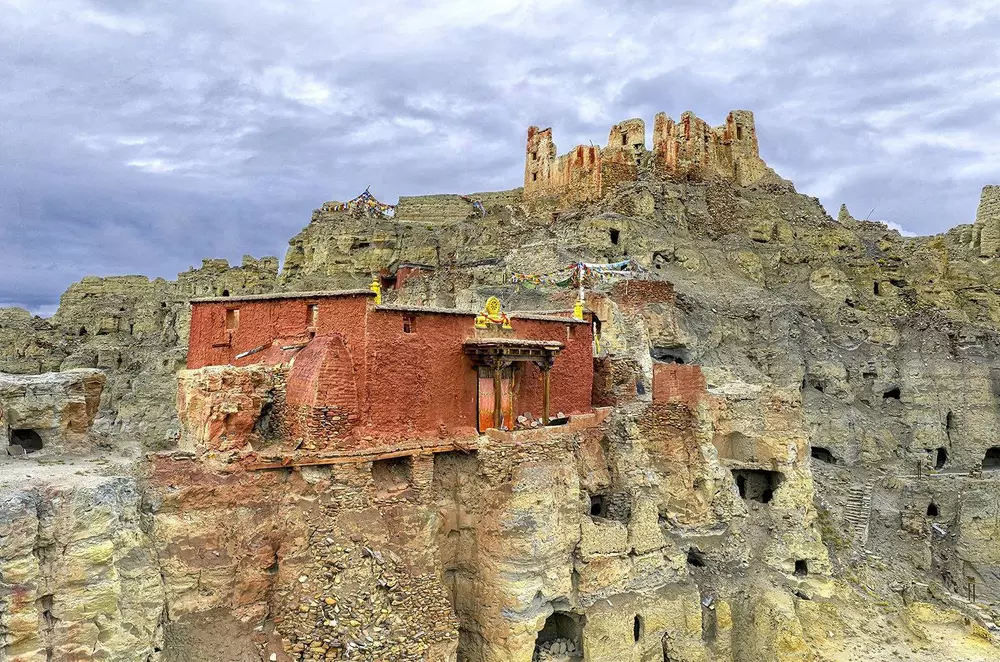
- 3. Explore the Zanda Earth Forest and Guge Kingdom Ruins
- 4. Uncover the Ancient Zhangzhung Capital of Khyung Lung Dngul Mkhar
- 5. Mount Naimona'nyi: Snow-Capped Peaks and Sacred Lakes
- 6. Discover Ancient Buddhist Art at the Piyang-Donggar Ruins
- 7. Stargaze at Ngari Dark Sky Park
- 8. Enjoy the Turquoise Waters of Pangong Tso
- Conclusion
1. Complete the Mount Kailash Kora
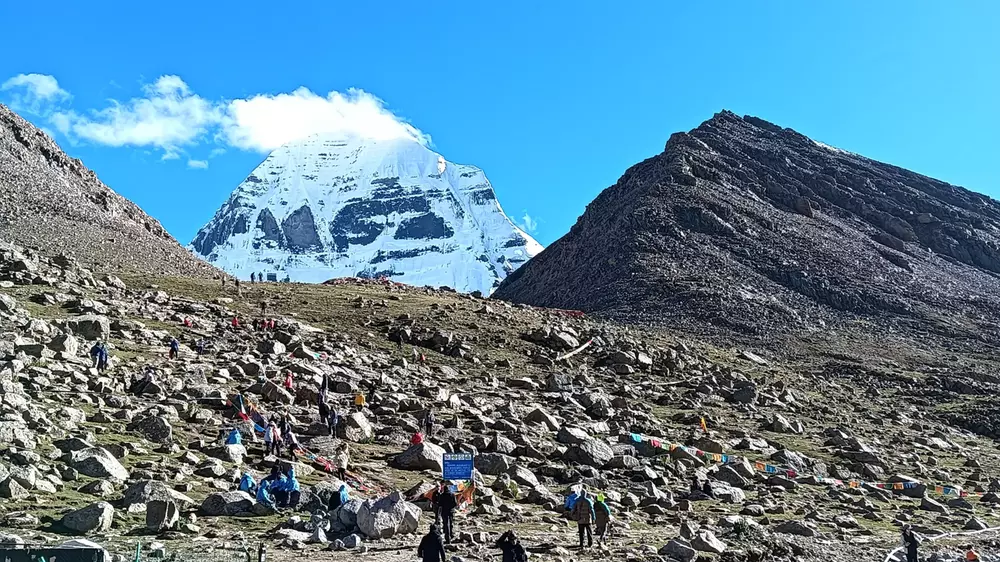
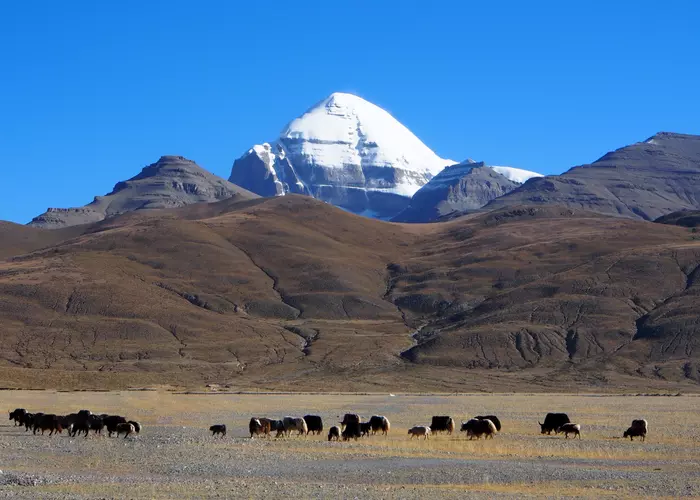
Mount Kailash is a sacred mountain revered by Tibetan Buddhists, Hindus, followers of Bon, and Jains. It holds an important place in these religious traditions, with some regarding it as the center of the world. Although it is not the highest peak in the area, its distinctive pyramid-shaped form and perpetually snow-covered summit make it stand out among the surrounding mountains.
According to local religious beliefs and legends, circumambulating Mount Kailash is a spiritual practice that expresses devotion, accumulates religious merit, and seeks blessings. Many travelers and pilgrims coming to Ngari hope to undertake the kora to appreciate the mountain’s magnificent scenery and rich religious traditions.
The Mount Kailash Kora is generally divided into the outer kora and the inner kora. The outer kora follows a circular trekking route around the sacred mountain, while the inner kora leads to more secluded areas closer to the mountain. According to some pilgrimage traditions, pilgrims generally complete 13 rounds of the outer kora before undertaking the inner kora. Along the inner route, the Thirteen Golden Stupas are a notable landmark, known for their distinctive setting, religious significance, and challenging access. In Tibetan culture, the number thirteen is also associated with the fulfillment of religious merit.
2. Admire Lake Manasarovar and Rakshastal
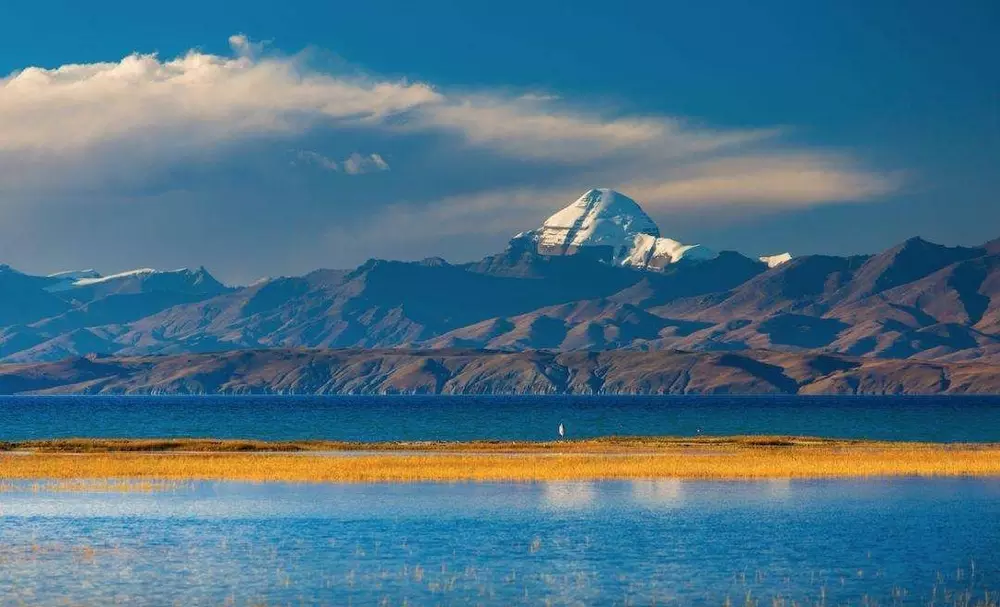
Lake Manasarovar and Rakshastal are two neighboring high-altitude lakes in Purang County, Ngari, not far from Mount Kailash. One is revered as a sacred lake, while the other is known as the “Ghost Lake.” Together, they offer contrasting landscapes and reflect the region’s rich religious traditions.
Lake Manasarovar is sacred in Tibetan Buddhism, Hinduism, and other religious traditions. According to Hindu mythology, the lake was created by Brahma, the god of creation, through the power of his mind. Its name is therefore often interpreted as “Lake of the Mind.” For travelers, its clear waters, wide-open shoreline, and views of distant snow-capped mountains make it a memorable stop.
Nearby Rakshastal, known as the “Ghost Lake,” has a more rugged and barren landscape, with open waters set against bare mountains and the vast plateau sky. Its name comes from local religious beliefs and legends. Visiting both lakes together allows travelers to appreciate their contrasting scenery and gain a deeper understanding of Ngari’s natural landscapes and spiritual traditions.
3. Explore the Zanda Earth Forest and Guge Kingdom Ruins
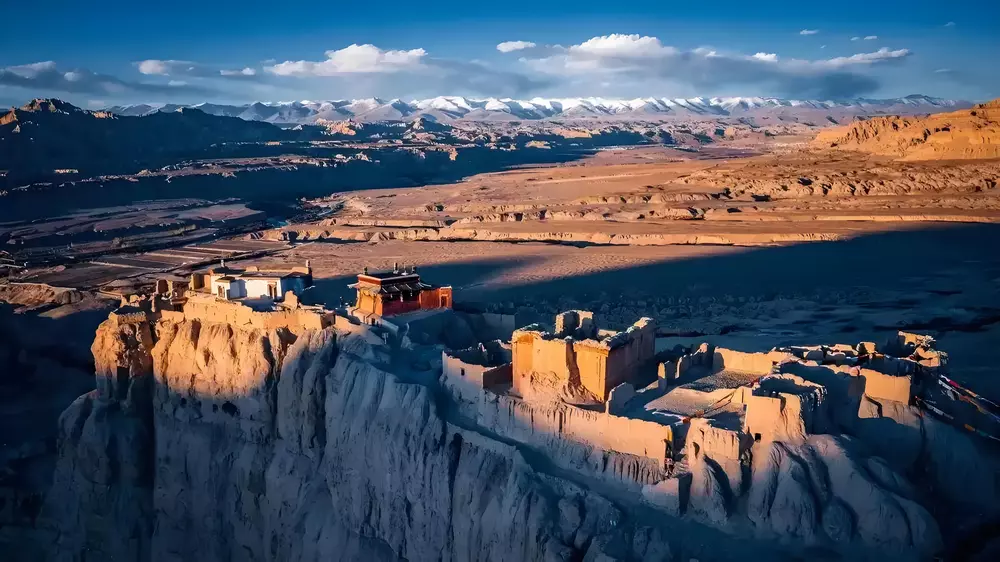
The Zanda Earth Forest is a distinctive geological landscape in Ngari, located between the Gangdise Mountains and the Himalayas. Over time, erosion by flowing water and weathering have shaped vast areas of earthen hills, gullies, and steep cliffs, creating a striking landscape. At sunrise and sunset, sunlight casts changing colors across the formations, adding to the beauty of this vast and rugged plateau.
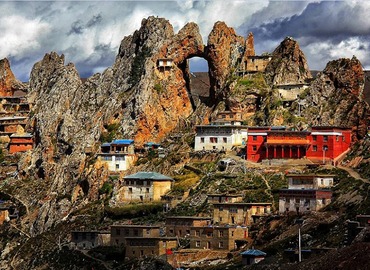
The ruins of the Guge Kingdom lie within the Zanda Earth Forest, built along the slopes of a hillside. The site was once an important center of the Guge Kingdom. Today, visitors can see the remains of houses, caves, stupas, and temples scattered across the slopes. These surviving structures offer a glimpse into the kingdom’s former prosperity and provide valuable insights into the history, architecture, and religious culture of western Tibet. Walking among the ruins allows visitors to observe the remains of this ancient civilization up close and appreciate the region’s rich historical heritage.
4. Uncover the Ancient Zhangzhung Capital of Khyung Lung Dngul Mkhar
The site is located in the Zanda Earth Forest, on the top of Kardong Mountain at an altitude of 4,400 meters, near Guge Kingdom. Khyung Lung Dngul Mkhar means the silver castle where the roc lived. It has a history of nearly 4,000 years. It may be the birthplace of Asian civilization, and also the birthplace of Bonism, a traditional Tibetan religion. It was also the center of the glorious ancient Zhang Zhung Kingdom. The ancient Zhang Zhung Kingdom reached its peak in the 7th century. The Zhang Zhung civilization developed with the spread of "Bon religion" as the main line and now it's regarded as the origin of Tibetan culture. Khyung Lung Dngul Mkhar carried this glorious age. Later, Tubo gradually rose in the Tibetan Plateau. By the 8th century A.D., the ancient state of Zhang Zhung was completely conquered. Since then, the Zhang Zhung culture has gradually disappeared. Now you can only see the ruins.

5. Mount Naimona'nyi: Snow-Capped Peaks and Sacred Lakes
Mount Naimona'nyi, also known as Gurla Mandhata, rises to 7,694 meters (25,243 feet) in the western Himalayas, in Purang County, Ngari. Its Tibetan name is commonly translated as “Mountain of the Goddess” or “Mountain of the Holy Mother.” The mountain is covered in snow throughout the year, forming a striking feature of the region's high-altitude landscape.
For travelers exploring Ngari, one of the best ways to appreciate Mount Naimona'nyi is to admire it alongside the surrounding high-altitude lakes. From the shores of Lake Manasarovar, the snow-capped peak stands out against the blue water and wide-open sky. On clear days, when the lake is calm, you may even see the mountain reflected on its surface. Along the way to Mount Kailash or Purang, Mount Naimona'nyi adds another memorable mountain view to the journey.

6. Discover Ancient Buddhist Art at the Piyang-Donggar Ruins
The Piyang-Donggar ruins are located in Zanda County and consist of two groups of ancient caves and monastery ruins at Piyang and Donggar, which lie less than a kilometer apart. The site contains numerous caves, monastery remains, stupas, and pagoda forests, offering a glimpse into the religious life and monastic practices of ancient western Tibet.
For travelers exploring Ngari, one of the main highlights is the ancient artwork preserved inside some of the caves. The walls and ceilings feature murals depicting Buddhas, bodhisattvas, Buddhist stories, and intricate mandala designs. Fine lines, rich colors, and subtle shading bring these images to life, offering insight into the Buddhist art of western Tibet. A visit to the Piyang-Donggar ruins also provides a deeper understanding of the religious culture and artistic traditions of the Guge Kingdom period, adding another historical dimension to a journey through the Zanda Earth Forest and the ruins of the Guge Kingdom.
7. Stargaze at Ngari Dark Sky Park
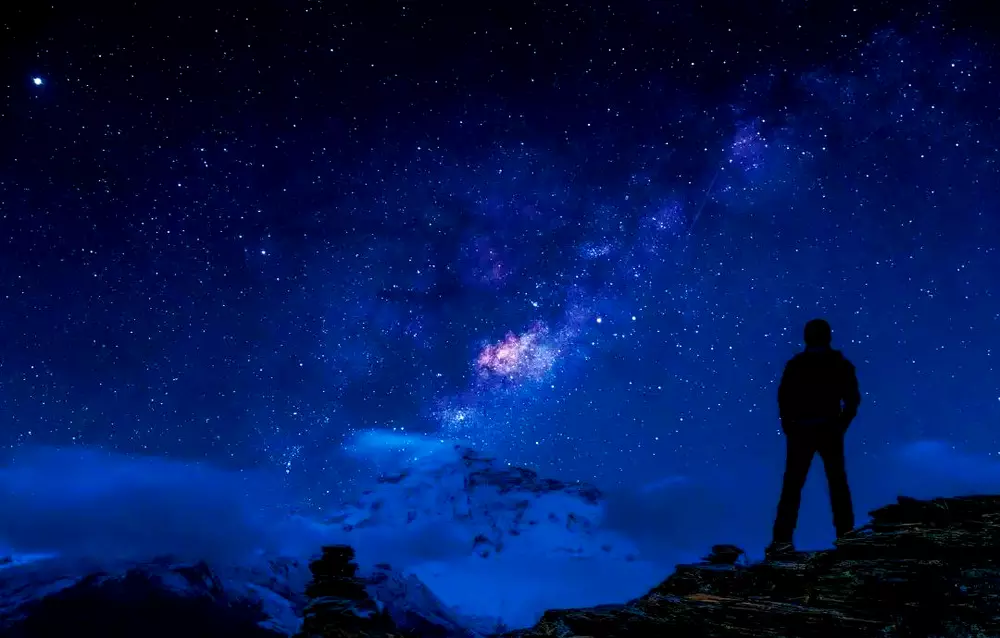
Ngari Dark Sky Park is located about 25 km south of Shiquanhe Town in Gar County, Ngari, at an altitude of approximately 4,700 meters (15,420 feet). As China’s first dark sky park dedicated to stargazing, astrophotography, and dark-sky conservation, it offers a special opportunity to observe the night sky in a remote part of the Tibetan Plateau. Far from the main sources of urban light, the area’s dry climate and low humidity can provide favorable conditions for astronomical observation.
For travelers exploring Ngari, a visit to the park offers a chance to identify constellations with the naked eye, look for the Milky Way, observe celestial objects through a telescope, or photograph the stars. On a clear night with little moonlight, the sky can appear especially vivid. However, visibility depends on weather conditions, cloud cover, and the phase of the Moon, so the Milky Way is not always visible. Check the forecast before setting out and bring warm clothing for the cold nighttime temperatures. Given the park’s high altitude, it is also best to allow time to acclimatize before planning nighttime activities.
8. Enjoy the Turquoise Waters of Pangong Tso
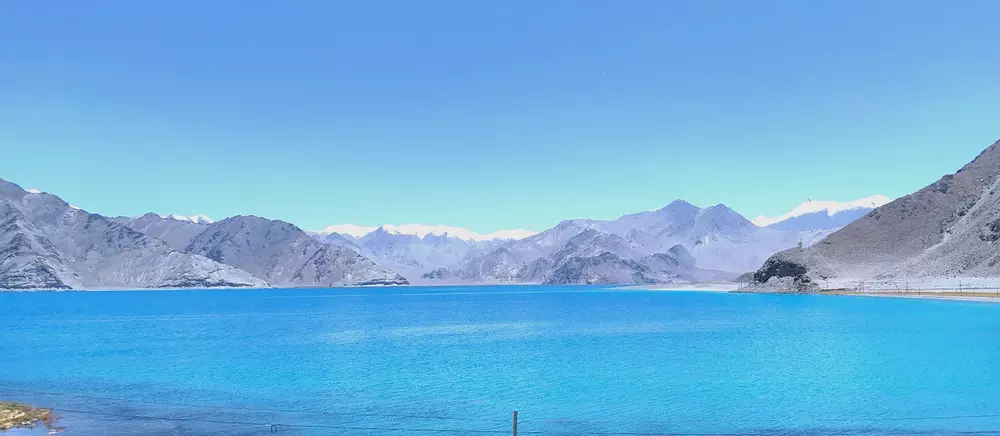
Pangong Tso, also known as Pangong Lake, is a long, narrow high-altitude lake in Rutog County, Ngari, Tibet, at an elevation of approximately 4,240 meters (13,911 feet). Extending across the China–India border region, the lake is known for its vast open waters, rugged surrounding mountains, and shades of blue and green that change with the light.
As you travel along the lakeshore, you can stop to photograph the lake against the distant mountains and look out for the small islands and waterbirds. The eastern section of Pangong Tso is predominantly freshwater, supporting a richer aquatic ecosystem. Its bird island provides an important habitat and breeding ground for various waterbirds. Late spring through summer, particularly from May to September, is generally a good time for birdwatching.
For travelers exploring Ngari, Pangong Tso makes a worthwhile stop to enjoy the region's natural scenery. Far from busy towns, the lake offers wide-open views and a landscape distinct from those around Mount Kailash and Lake Manasarovar. If your itinerary allows, take some time to appreciate the lakeside scenery, photograph the surrounding mountains, and experience the vast, quiet beauty of the Ngari Plateau.
Conclusion
Ngari’s appeal lies not only in its magnificent mountains, vast lakes, and striking landscapes, but also in its enduring religious traditions and ancient civilizations. From completing the Mount Kailash Kora and admiring Lake Manasarovar and Rakshastal to exploring the ruins of the Guge Kingdom and Piyang-Donggar, each experience offers a different perspective on this remote and remarkable region. If your itinerary allows, you might also consider the natural scenery of northern Ngari, including Zhari Namco and the Changtang grasslands, where you may spot wildlife along the way.
As Ngari is a high-altitude region with long distances between attractions, it is important to plan your route carefully and allow enough time to acclimatize. Before setting out, read our guide to the Best Time to Visit Tibet to help you choose when to travel and plan your Ngari itinerary according to your interests and schedule.
Email response within 0.5~24 hours.


Typically Asked Questions from Our Clients
Huiy***
You are one of the best travel Agencies. I am interested in the Yarlung Zangbo Grand Canyon.
16 days of Tibet North tour, or call it Ali tour.
Dear Huiy****,
We can arrange the Tibet North tour for you. I will answer your questions one by one.
1. The Yarlung Zangbo Grand Canyon is closed to foreign travelers. You can see the Yarlung Zangbo River along the way.
2. As for the Ali tour, we mainly have 3 tours. I will list the itinerary, please let me know your idea.