
Panch Kailash Names
- Merry
- Last Updated : 04/12/2026
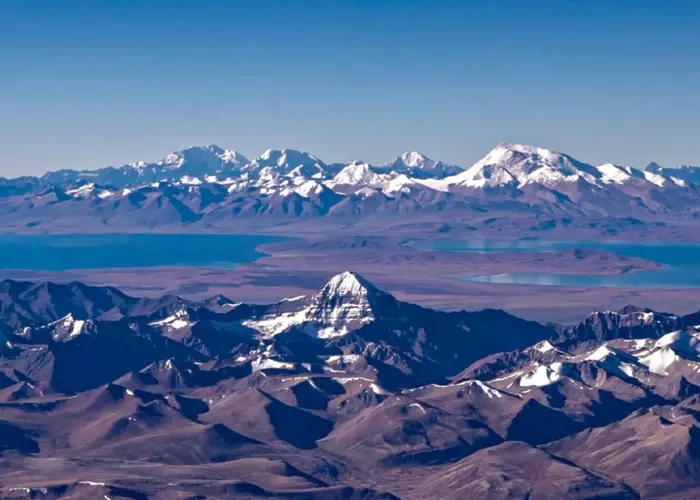
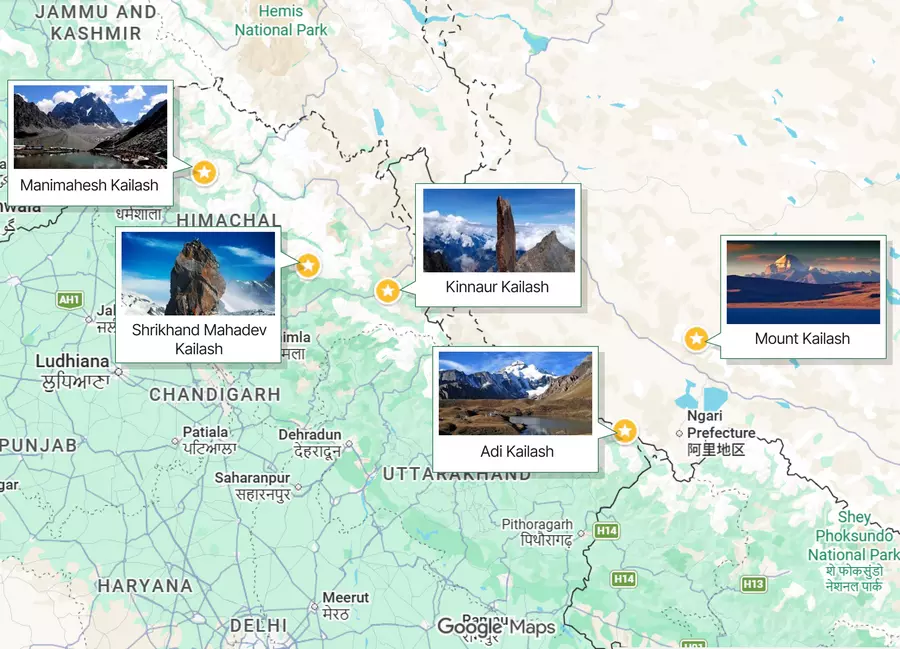
The Panch Kailash, or the Five Kailash, refer to a group of five sacred mountains revered in Hinduism and Buddhism. These include Mount Kailash (Gang Rinpoche) in the Ngari region of western Tibet, along with Adi Kailash, Kinnaur Kailash, Shrikhand Mahadev, and Manimahesh Kailash in northern India.
Rather than isolated peaks, they together form a sacred pilgrimage network stretching across the Himalayas. Centered on Mount Kailash, the other four mountains are distributed mainly to its west and southwest, forming a distinctive “one core, four nodes” spatial pattern.
Beyond their geographical arrangement, these mountains also represent an interconnected spiritual landscape, where each sacred peak holds its own significance while sharing a common place within a broader belief system.
Why Are There Five Kailash?
After understanding the names of the Panch Kailash (Five Kailash), a natural question arises: why are there five Kailash in the first place? The concept of the Panch Kailash does not originate from a unified geographical classification, but rather from the gradual development of religious beliefs and pilgrimage traditions.
In Hindu tradition, Kailash is regarded as the abode of Lord Shiva. As a result, mountains associated with Shiva through mythology, symbolism, or worship were also given the name “Kailash.”
Within this sacred worldview, Mount Kailash is considered the true “center of the universe,” holding supreme significance in Hinduism, Tibetan Buddhism, and Bon. However, due to its remote location and extreme altitude, only a limited number of pilgrims have historically been able to reach it in person.
As a result, in the Himalayan regions of northern India, several mountains that share religious, symbolic, or mythological connections with Mount Kailash gradually came to be regarded as its earthly counterparts or manifestations. These include Adi Kailash, Kinnaur Kailash, Shrikhand Mahadev Kailash, and Manimahesh Kailash, and they were incorporated into a broader pilgrimage system across the Himalayas.
In essence, the formation of the Panch Kailash represents an extension of faith: it provides pilgrims who cannot travel to Mount Kailash with alternative sacred destinations, while also expanding the idea of the “cosmic center” from a single location into a wider, cross-regional spiritual network.
In this sense, Kailash is not merely a physical mountain, but a sacred symbol that continues to be projected and reinterpreted across different regions.
Individual Kailash Mountains
Before planning a Panch Kailash darshan, it is important to understand the significance and unique characteristics of each of these five sacred mountains.
1. Mount Kailash (Ngari, Tibet)
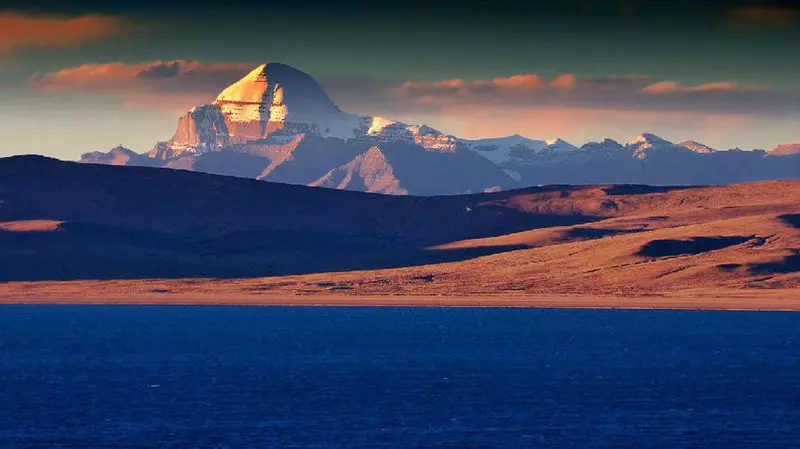
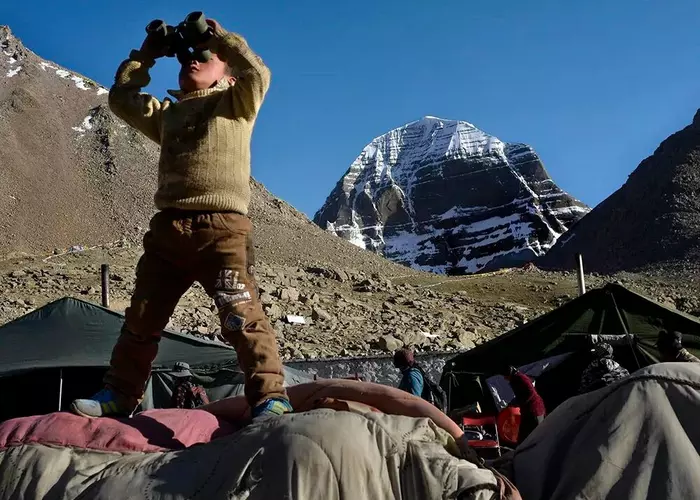
Mount Kailash (Gang Rinpoche) holds the highest spiritual significance within the Panch Kailash tradition.
In Hindu tradition, it is believed to be the abode of Lord Shiva. As one of the Trimurti (the Holy Trinity), Shiva represents destruction and regeneration, symbolizing both the end of cycles and the beginning of renewal.
The pilgrimage journey includes the sacred Lake Manasarovar, located 30km southeast of Mount Kailash. This high-altitude lake is considered a place of spiritual purification, where pilgrims perform ritual bathing and prayers, symbolizing the cleansing of the mind and spiritual renewal.
The core of pilgrimage is not only the approximately 52-kilometer Parikrama (circumambulation), but also the spiritual discipline it represents. For Hindu devotees, completing the kora is believed to cleanse karma, support liberation from Samsara (the cycle of rebirth), and bring divine blessings. For many pilgrims, this is not just a physically demanding high-altitude trek, but a once-in-a-lifetime spiritual journey.
Features: Spiritual core, global pilgrimage center
Difficulty: High (high altitude + long trekking distance)
Best for: Experienced pilgrims seeking the full Kailash experience
2. Adi Kailash (Small Kailash, Uttarakhand, India)
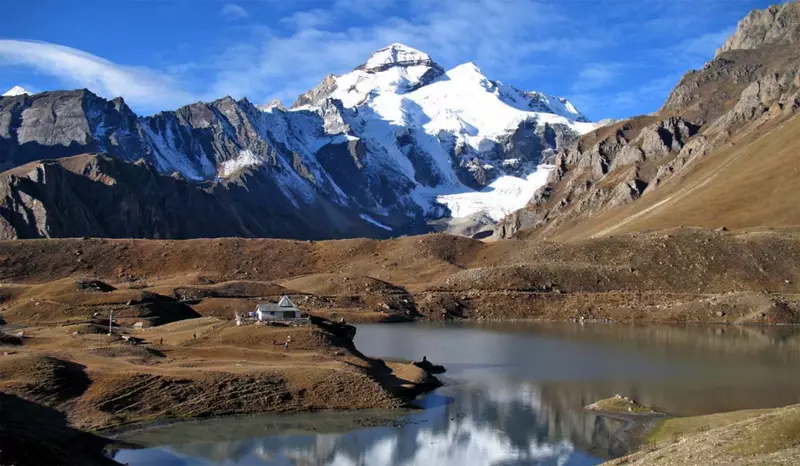
Adi Kailash, often called “Chhota Kailash” (Little Kailash), resembles Mount Kailash in shape and is regarded as the closest manifestation of the original. In local belief, it is also associated with Lord Shiva, considered another earthly manifestation of the deity.
Compared to Mount Kailash, the pilgrimage route is more accessible, with certain sections reachable by vehicle. Pilgrims typically perform a simplified Parikrama around the mountain and visit nearby temples for rituals and prayers.
Although less physically demanding, its spiritual significance remains profound. For devotees unable to travel to Tibet, Adi Kailash offers a more accessible alternative pilgrimage site that is still believed to carry divine blessings.
Features: Visual similarity, the strongest alternative pilgrimage site
Difficulty: Moderate to low
Best for: First-time pilgrims and time-limited travelers
3. Kinnaur Kailash (Himachal Pradesh, India)
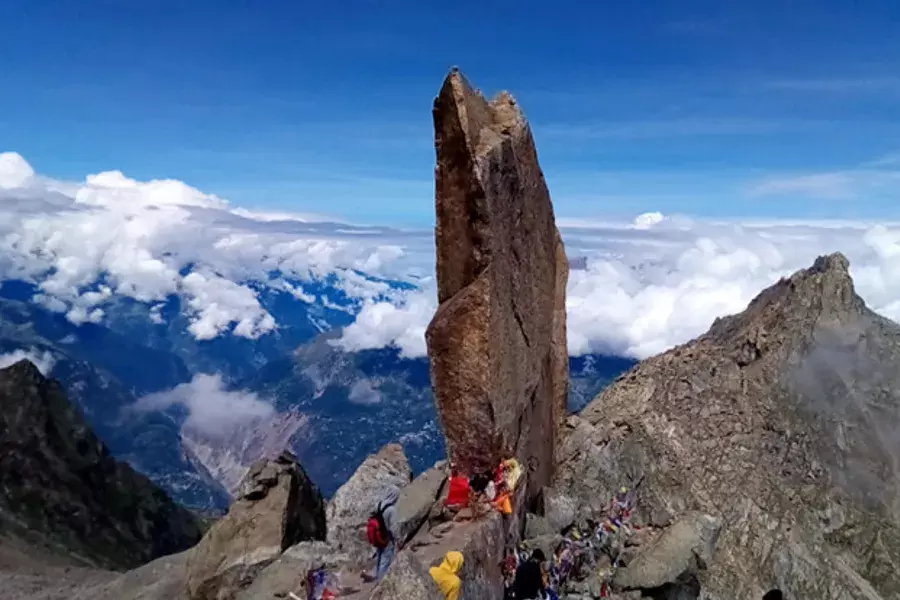
Kinnaur Kailash is famous for its towering rock pillars, which are seen as the symbol of Lord Shiva (Shiva Lingam). In local tradition, reaching or approaching this sacred rock is considered a process of coming closer to the divine.
The pilgrimage route to Kinnaur Kailash is more challenging and requires several days of trekking through high mountainous areas. Unlike symbolic pilgrimage sites, this journey combines both spiritual devotion and physical endurance.
Pilgrims believe that through arduous walking and approaching this sacred peak, they can achieve spiritual purification and strength. The pilgrimage to Kinnaur Kailash is unique among the Panch Kailash as it offers a blend of faith and adventure.
Features: Strong symbolic presence, trekking-focused experience
Difficulty: High (requires technical and physical endurance)
Suitable for: Experienced trekkers and adventure pilgrims
4. Shrikhand Mahadev Kailash (Himachal Pradesh, India)
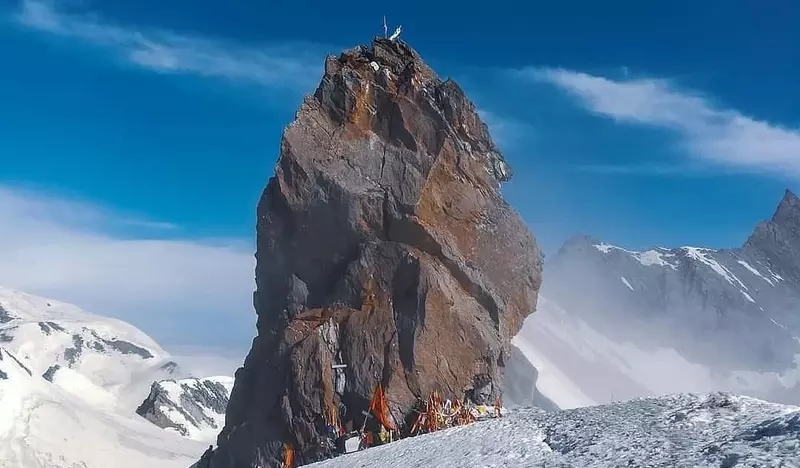
Shrikhand Mahadev is considered the most challenging of the Five Kailash. Its summit features a large rock symbolizing Lord Shiva, seen as a direct manifestation of the deity.
This pilgrimage route is high in altitude and long in distance, with some sections being treacherous. The route is only open during specific seasons each year. Pilgrims need to complete the high-intensity trek in a short period, which is regarded as a test of both faith and willpower.
In local tradition, reaching the sacred summit is believed to grant Shiva’s blessings and symbolize transcendence of personal limitations, making it a deeply ascetic form of pilgrimage.
Features: Highly sacred, extremely demanding route
Difficulty: Extremely high
Suitable for: Highly experienced and physically fit pilgrims
5. Manimahesh Kailash (Himachal Pradesh, India)
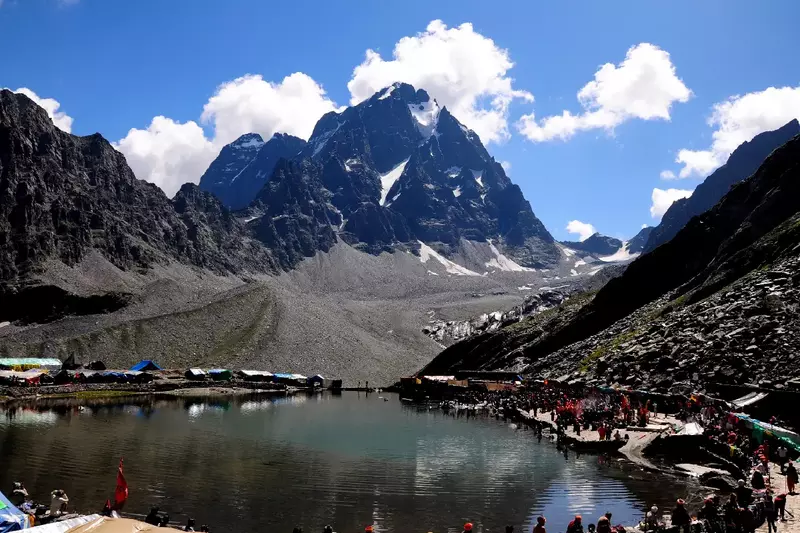
Manimahesh Kailash is famous for its sacred lake, Manimahesh Lake, at its base. In belief, this place is also closely associated with Lord Shiva and is considered one of his manifestations.
Unlike other Kailash sites, the focus of the pilgrimage here is not on climbing the mountain but on bathing and praying at the sacred lake. During the pilgrimage season each year, numerous devotees gather to perform ritual bathing, praying for purification and blessings.
This water-centered pilgrimage makes Manimahesh Kailash more accessible and ritualistic, offering a gentler but equally sacred pilgrimage experience.
Features: Sacred lake pilgrimage, ritual-based worship
Difficulty: Low to moderate
Suitable for: General pilgrims and religious travelers
How to Choose Your Kailash?
Choosing the right Kailash depends on your time, physical condition, and spiritual intention. Here is a quick comparison:
| Sacred Site | Shiva Association | Pilgrimage Style | Difficulty | Best For |
|---|---|---|---|---|
| Mount Kailash | Divine Abode | Full Parikrama | Very High | Ultimate pilgrimage seekers |
| Adi Kailash | Manifestation / Counterpart | Short Pilgrimage | Moderate | Beginners / Limited time |
| Kinnaur Kailash | Shiva Lingam Symbol | Trekking Approach | High | Adventure pilgrims |
| Shrikhand Mahadev | Strong Symbolic Presence | Ascetic Pilgrimage | Very High | Extreme challenge seekers |
| Manimahesh Kailash | Sacred Lake Manifestation | Ritual Bathing | Low | General pilgrims |
As shown above, each of the Five Kailash has its own characteristics. In terms of difficulty, duration, physical demands, and accessibility, different pilgrimage routes are suited to different types of travelers.
Mount Kailash is the most spiritually significant and physically demanding destination among the Five Kailash. It is best suited for devoted pilgrims who are physically prepared and wish to complete the ultimate pilgrimage. The classic 52-kilometer Parikrama (circumambulation) holds deep meaning not only for Hindus, but also for followers of Tibetan Buddhism and Bon. The full journey usually takes 12–16 days and requires advance arrangements, including travel permits, making it more suitable for those with sufficient time and preparation.
For first-time pilgrims or those with limited time and budget, Adi Kailash is an ideal choice. Often referred to as “Little Kailash,” it shares symbolic and visual similarities with Mount Kailash. The journey typically takes 6–8 days, does not require international travel permits for Indian pilgrims, and involves moderate trekking, while still offering an authentic spiritual experience.
If you prefer a more accessible pilgrimage with a strong ritual focus, Manimahesh Kailash is a good option. Centered around the sacred lake, this pilgrimage involves less physical effort and is easier to complete, making it especially suitable for general pilgrims.
For those seeking a balance between physical challenge and spiritual meaning, Kinnaur Kailash is a rewarding choice. Known for its natural rock pillar (Shiva Lingam), the route is more demanding and offers a combination of trekking adventure and symbolic religious experience.
If you are looking for an extreme physical challenge combined with deep spiritual discipline, Shrikhand Mahadev is the most demanding of the Five Kailash. The entire route requires intense trekking and tests both endurance and determination, making it a true ascetic-style pilgrimage.
Let Us Help You Plan Your Mount Kailash Pilgrimage
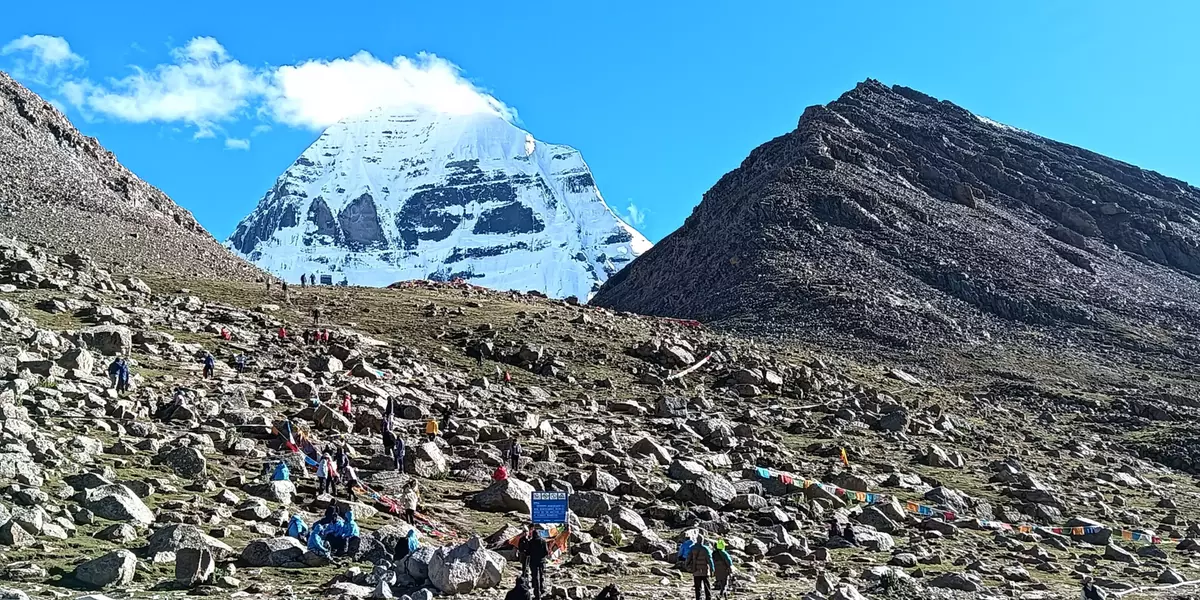
As a Tibet-based travel agency recommended by Lonely Planet, Great Tibet Tour offers experienced support to help you complete your pilgrimage safely and smoothly.
For Indian citizens, we provide well-organized fixed itineraries that cover all essential arrangements, making the journey straightforward and worry-free. For travelers of other nationalities, more flexible travel options may be available depending on the route and travel conditions.
Contact us to start planning your pilgrimage.
Email response within 0.5~24 hours.