Wuhou Shrine
- Beatrice
- Dernière mise à jour : 25.11.2026
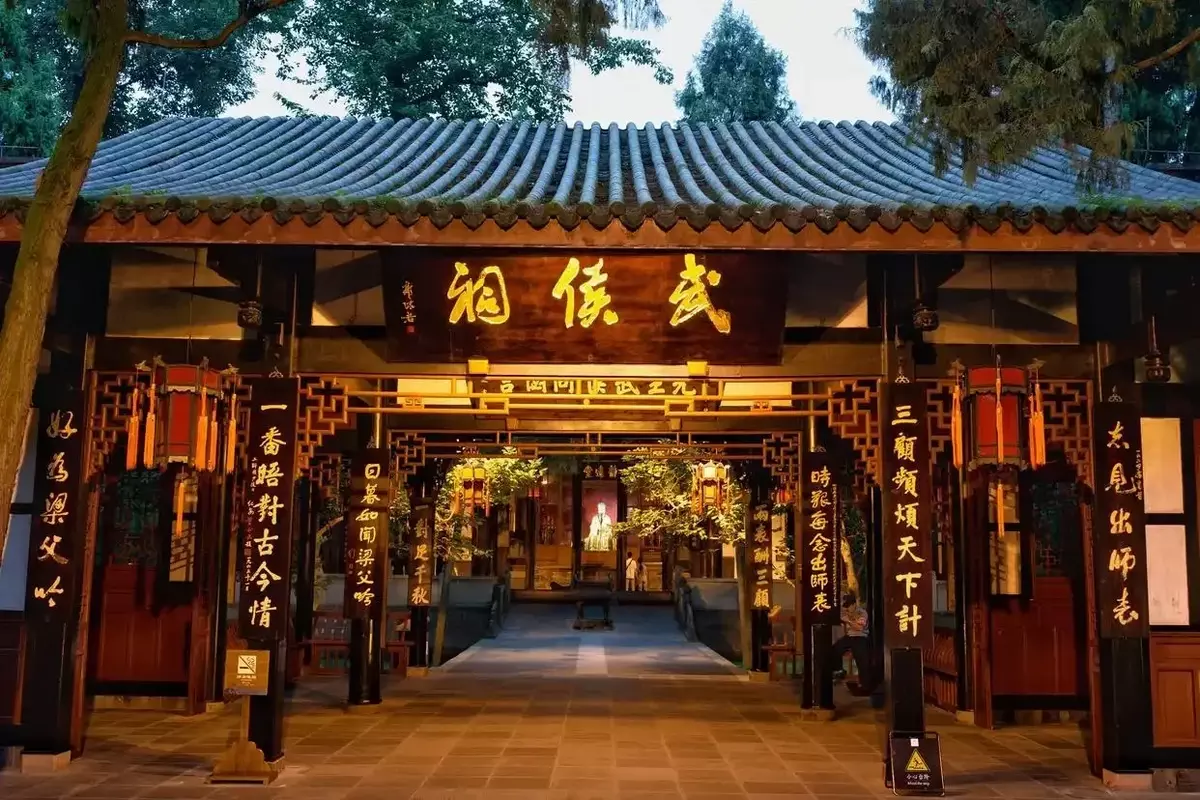
Located in the heart of Chengdu, Wuhou Shrine (武侯祠) is one of the city's most important historical and cultural attractions. It is dedicated to Zhuge Liang, the celebrated chancellor and military strategist of the Kingdom of Shu during China's Three Kingdoms period (220–280 AD). Known for his intelligence, loyalty, and political wisdom, Zhuge Liang remains one of the most admired figures in Chinese history. Today, the shrine offers visitors a chance to step into this fascinating period of China's past while enjoying its traditional architecture, peaceful courtyards, and beautiful gardens.
Is Wuhou Shrine Worth Visiting?
Wuhou Shrine is more than a memorial to a famous historical figure. It is a place where Chinese history, literature, architecture, and traditional culture come together. Visitors can see statues of important figures from the Shu Kingdom, read historical inscriptions, and learn about the famous stories of the Three Kingdoms. One of the most charming features is the red-walled pathway lined with bamboo, which has become one of Chengdu's most recognizable photo spots. Whether you are interested in Chinese history or simply want to experience the city's cultural atmosphere, Wuhou Shrine offers a rewarding visit.
History and Cultural Significance
The history of Wuhou Shrine dates back to 223 AD, when Liu Bei, the founding emperor of the Shu Han Kingdom, was buried in Chengdu. A memorial temple, known as Han Zhaolie Temple, was built beside his mausoleum in his honor. Later, during the Western Jin Dynasty (266–316 AD), a separate shrine was established nearby to commemorate Zhuge Liang, the kingdom's renowned chancellor. In the early Ming Dynasty, the two temples were officially combined, creating the rare arrangement of an emperor and his chancellor being honored within the same complex. The site was destroyed during the wars at the end of the Ming Dynasty and rebuilt in 1672 during the Qing Dynasty, establishing much of the layout seen today. Today, Wuhou Shrine commemorates Liu Bei, Zhuge Liang, and other prominent figures of the Shu Han Kingdom, offering visitors an insight into the history and culture of the Three Kingdoms period. The Tang Dynasty poet Du Fu also celebrated the shrine in his famous poem The Temple of the Premier of Shu, which opens with the lines, "Where can the Premier's shrine be found? Beyond the City of Brocade, where ancient cypress trees stand." His poem has further cemented the shrine's place in Chengdu's literary and cultural heritage.
What to See at Wuhou Shrine: Highlights and Recommended Walking Route
Wuhou Shrine is a unique historical complex combining memorial halls, a museum, and traditional Chinese gardens. It features important historical buildings, ancient stone inscriptions, and statues of notable figures from the Three Kingdoms period. Shaded by old trees, the grounds also feature bamboo-lined red walls, ponds, pavilions, and landscaped courtyards, offering a peaceful setting to explore Chengdu's history and culture.
To make the most of your visit, the following walking route covers the shrine's main highlights (see the map below):
Main Entrance → Three Wonders Stele → Ming Stele → Second Gate → Corridors of Civil and Military Officials → Liu Bei Hall → Zhuge Liang Hall → Sanyi Temple → Red Wall → Hui Mausoleum → Exhibition Hall → Jinli Ancient Street
1. The Three Wonders Stele
Located in a stone pavilion on the eastern side of the path between the main entrance and the Second Gate, the Three Wonders Stele is one of the most treasured relics of Wuhou Shrine. Dating back to the Tang Dynasty, it is celebrated for three outstanding features: its literary composition, calligraphy, and stone carving. The inscription was written by Pei Du, a Tang Dynasty prime minister, praising Zhuge Liang's achievements and character. Its elegant calligraphy was created by Liu Gongchuo, while the skilled craftsman Lu Jian engraved the characters with remarkable precision. Together, these three contributions earned the stele its name, making it an important monument to both Zhuge Liang and Tang Dynasty art and literature.
2. The Ming Stele
Located near the Three Wonders Stele, the Ming Stele is an important monument recording the history of Wuhou Shrine. Its full title, Record of Zhuge Liang's Shrine, is traditionally attributed to Zhang Shiche, a Sichuan official during the Ming Dynasty. The inscription documents the shrine's history and the efforts made to preserve it. Unlike many royal memorial temples that fell into decline after dynastic changes, Wuhou Shrine continued to be respected and maintained by later rulers, reflecting the lasting admiration for Zhuge Liang's wisdom and loyalty. The stele stands on the back of a stone tortoise, a traditional symbol of longevity and stability in Chinese monument design.
3. Corridors of Civil and Military Officials
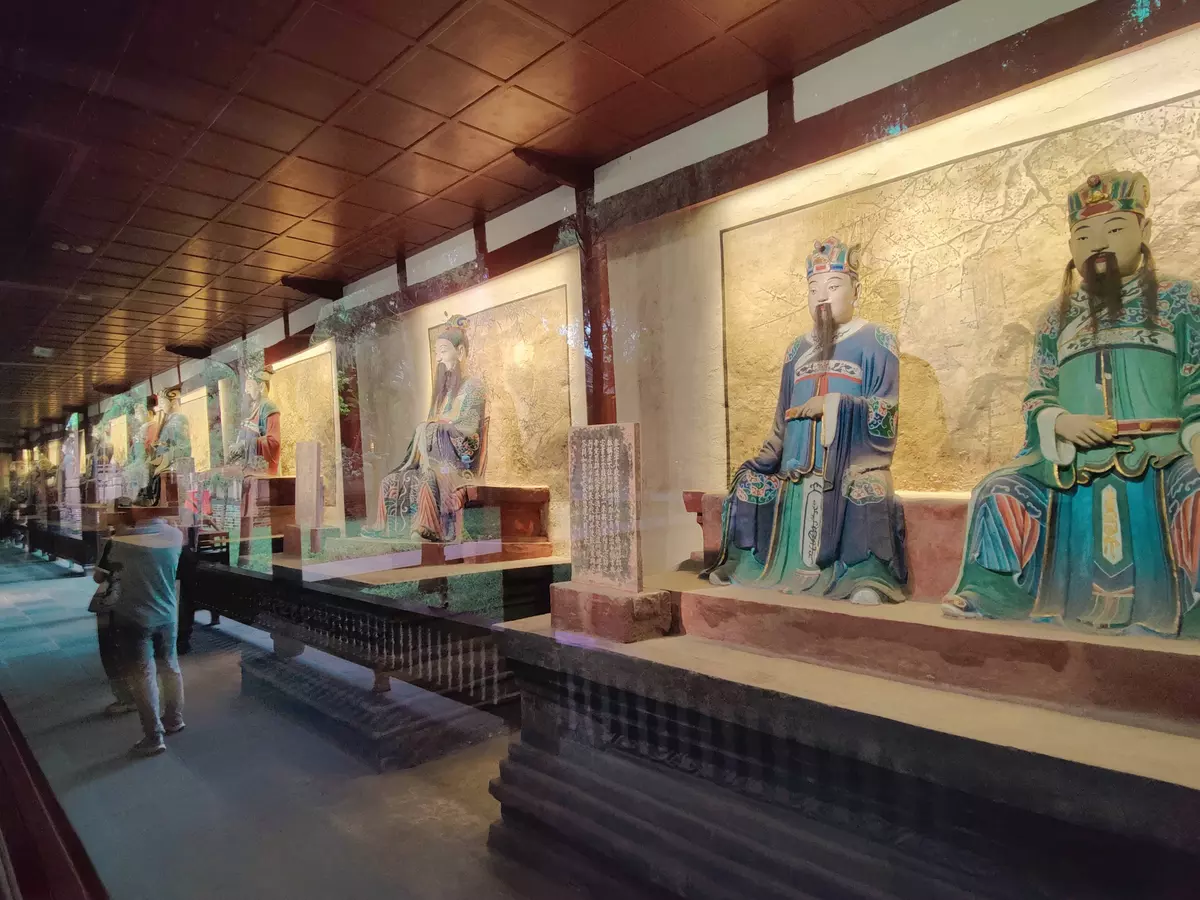
Located on either side of Liu Bei Hall, the two long corridors are dedicated to the civil officials and military generals who served the Shu Han Kingdom. Together, they house 28 lifelike statues from the Qing Dynasty, with 14 figures in each corridor. The Civil Officials' Corridor features prominent advisers such as Pang Tong and Fa Zheng, while the Military Generals' Corridor honors famous commanders including Zhao Yun, Ma Chao, Huang Zhong, and Wei Yan. Stone plaques in front of the statues provide information about each figure's life and achievements. Visitors can also see the famous Chu Shi Biao (Memorial on Sending Troops), Zhuge Liang's heartfelt memorial to Liu Shan, the young emperor of Shu Han, before his northern military campaign. These corridors offer a closer look at the people who helped shape the history of the Shu Han Kingdom.
4. Liu Bei Hall (Han Zhaolie Temple)
Liu Bei Hall is one of the main buildings along the central axis of Wuhou Shrine. It honors Liu Bei, the founding emperor of the Shu Han Kingdom, who was given the posthumous title Emperor Zhaolie of Han. At the center of the hall stands a gilded seated statue of Liu Bei, about three meters tall, dressed in imperial robes with a solemn expression. Statues of other important Shu Han figures, including Guan Yu and Zhang Fei, stand nearby. One interesting detail is the statue of Liu Chen, Liu Bei's grandson, who is honored here instead of his son Liu Shan. Liu Chen chose to die rather than surrender when the Shu Han Kingdom fell, making him a symbol of loyalty and integrity. The hall offers insight into the founding of the Shu Han Kingdom and the unique tradition of honoring an emperor and his chancellor within the same temple complex.
5. Zhuge Liang Hall
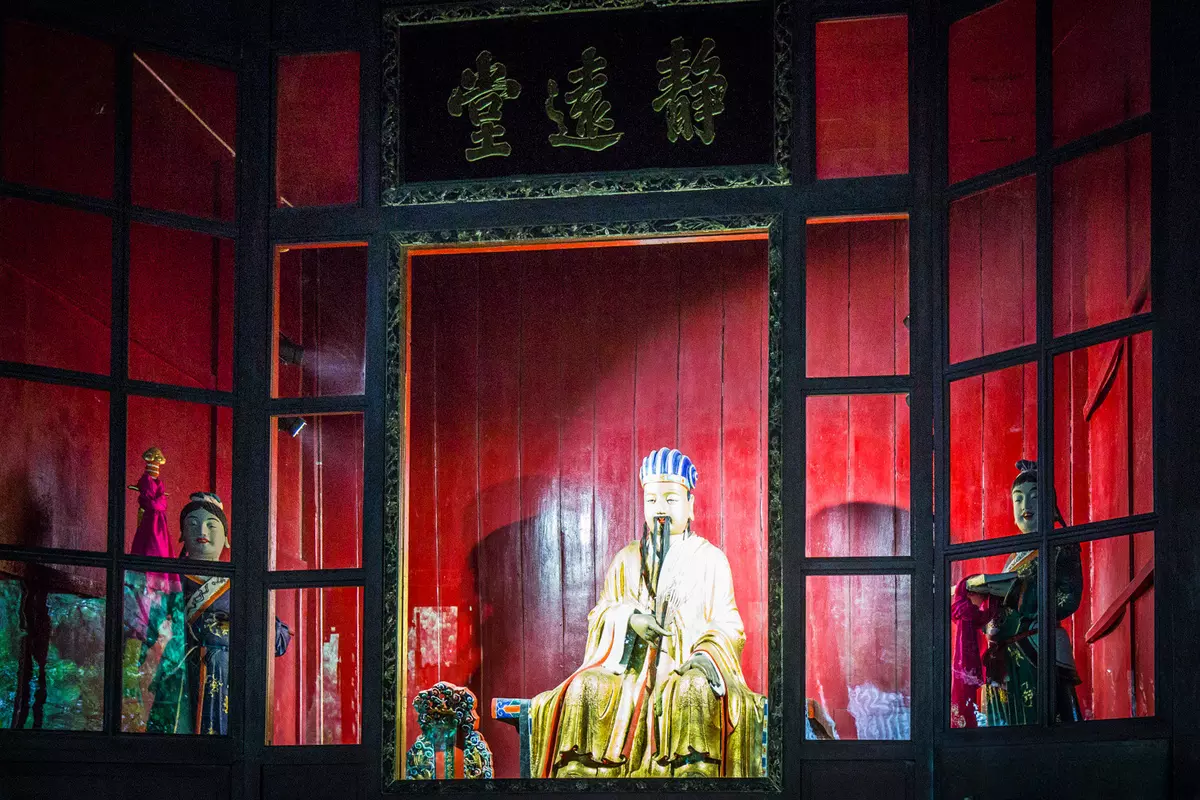
Zhuge Liang Hall, located behind Liu Bei Hall, is the main place of worship dedicated to Zhuge Liang at Wuhou Shrine. At its center stands a gilded statue, about 2.8 meters tall, depicting him holding a feather fan and wearing a traditional silk headscarf—a familiar image of wisdom and strategic thinking in Chinese culture. Zhuge Liang was a renowned statesman and military strategist of the Shu Han Kingdom, remembered for his loyalty, political skills, and service to Liu Bei and his successor. Statues of his son, Zhuge Zhan, and grandson, Zhuge Shang, stand on either side of the main hall. Both died defending Shu Han in its final years. The hall also features historical plaques and couplets honoring Zhuge Liang. One particularly notable work is the famous Gongxin Couplet, or "攻心联," which reflects on his campaign to pacify the southern regions and his approach to winning people's hearts rather than relying on military force alone.
6. Sanyi Temple
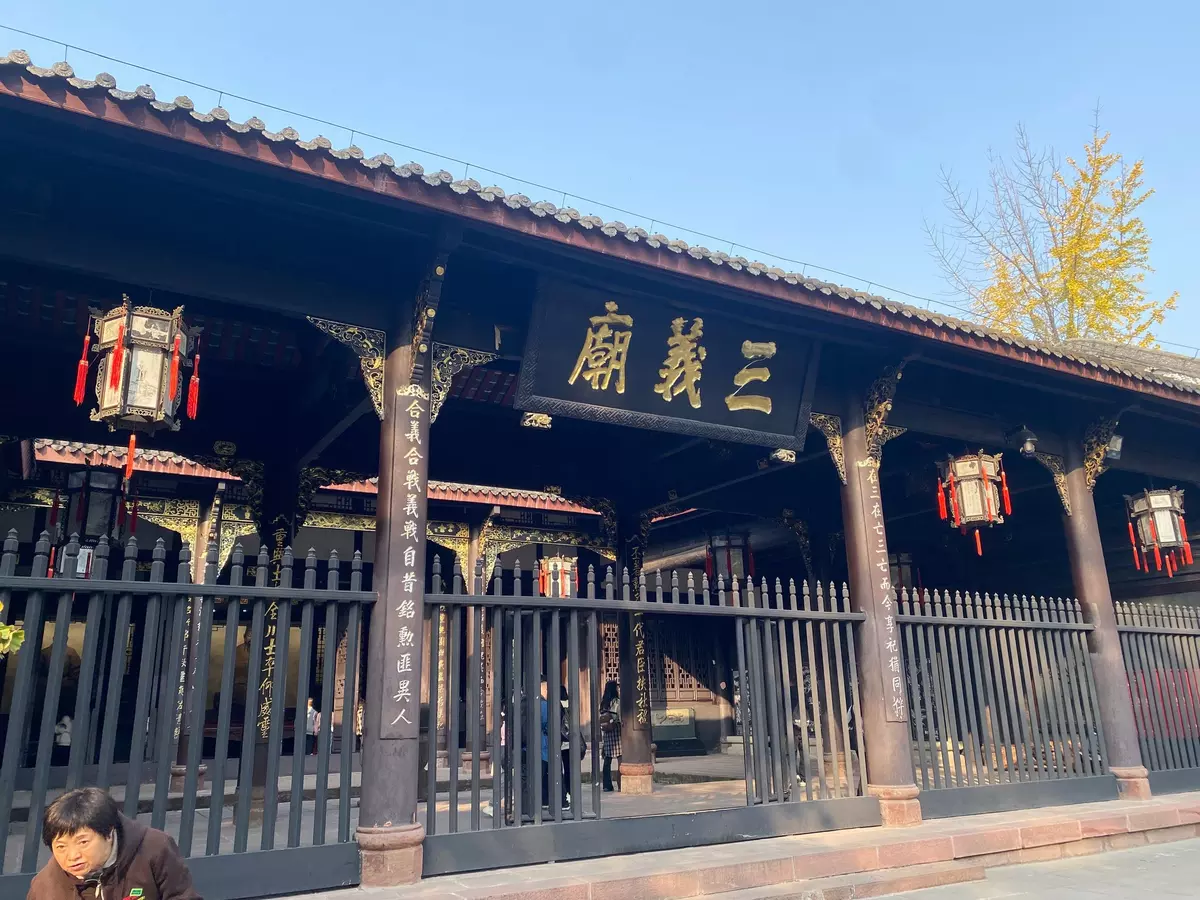
Sanyi Temple, located behind Zhuge Liang Hall, is dedicated to Liu Bei, Guan Yu, and Zhang Fei. Inside the main hall, Liu Bei stands in the center, with Guan Yu and Zhang Fei on either side, commemorating the famous Oath of the Peach Garden. Although the three men were not biological brothers, they formed a close bond through shared ideals and mutual loyalty. Their brotherhood became one of the best-known stories in Romance of the Three Kingdoms, symbolizing friendship, trust, and brotherly devotion in Chinese culture. The story remains widely popular today, offering visitors a glimpse into how the Three Kingdoms legends have shaped traditional Chinese values.
7. Red Wall Path
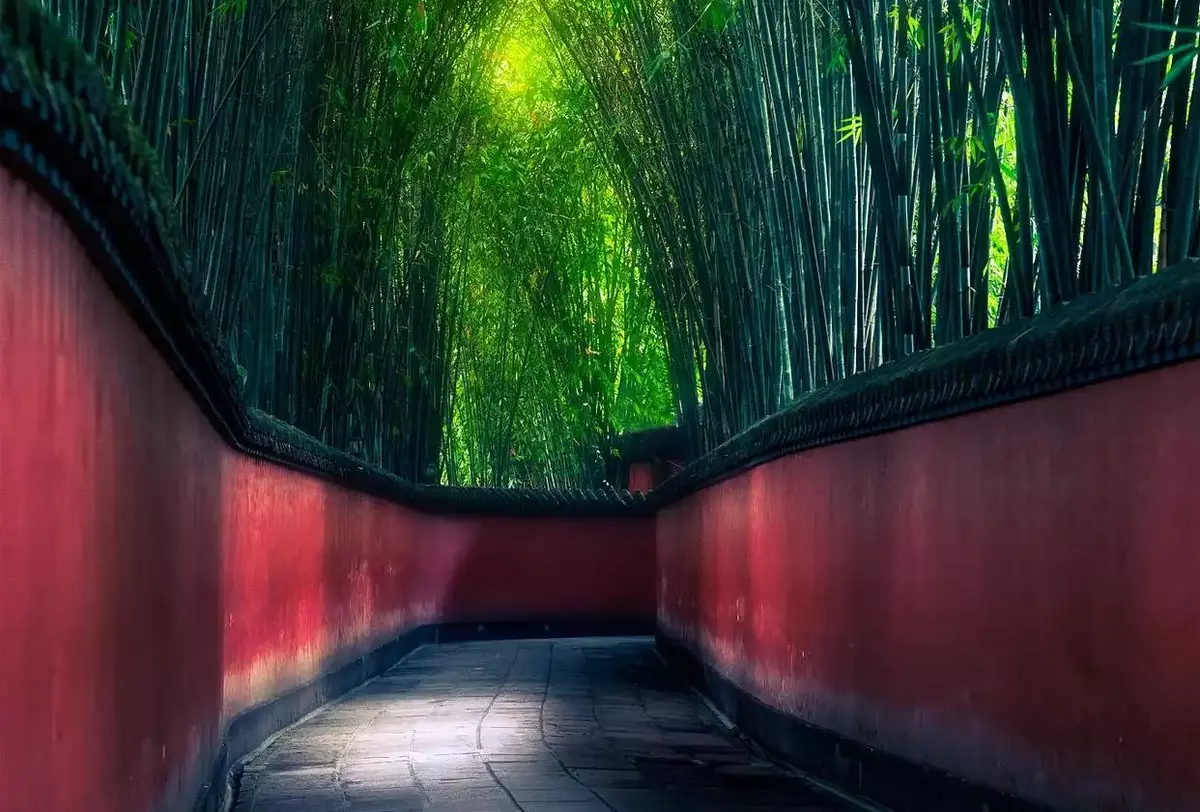
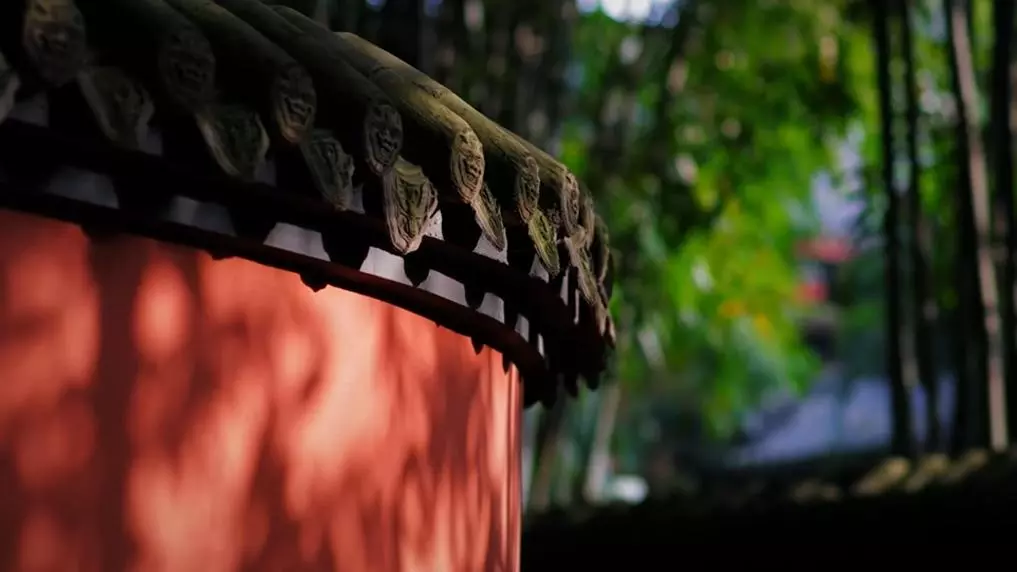
The Red Wall Path is one of the most iconic and photogenic spots at Wuhou Shrine. This winding stone-paved walkway runs around Hui Mausoleum, framed by striking red walls and lush green bamboo. Sunlight filtering through the bamboo leaves casts delicate shadows across the walls and pathway, creating a beautiful contrast of colors and light. The combination of traditional architecture, vibrant greenery, and quiet garden scenery gives this corner of the shrine a timeless charm. It is also one of Chengdu's most popular photography spots. Visiting in the morning is recommended if you prefer fewer crowds and better opportunities to capture its peaceful beauty.
8. Hui Mausoleum
Hui Mausoleum is the tomb of Liu Bei, the founding emperor of the Shu Han Kingdom, also known as Emperor Zhaolie of Han. It is an important part of the Three Kingdoms historical site at Wuhou Shrine. According to historical records, Liu Bei was buried here alongside his two wives, Lady Gan and Lady Wu, making it a joint burial for three members of the royal family. The circular burial mound stands about 12 meters high and measures approximately 180 meters in circumference. Dating back more than 1,800 years, the mausoleum remains well preserved and has never been excavated. Surrounded by ancient trees, its quiet grounds offer a more peaceful atmosphere than the grand halls and temples elsewhere in the complex.
How to Get to Wuhou Shrine?
Wuhou Shrine Museum is located within Chengdu's First Ring Road, close to the city center. It is easily accessible from major areas of the city by public transport or taxi.
By Metro
Take Metro Line 10 to Wuhou Shrine (Jinli) Station and leave from Exit A2. The museum is about a 3-minute walk away. Alternatively, take Metro Line 3 or Line 5 to Gaoshengqiao Station and walk for approximately 10 minutes from Exit A.
By Bus
Several bus routes stop near Wuhou Shrine, including Routes 1, 57, 82, 334, and 335. Get off at Wuhou Shrine (Jinli) Stop, just a short walk from the entrance.
By Taxi
Taking a taxi or ride-hailing service is another convenient way to reach Wuhou Shrine. For example, a ride from Chunxi Road or Taikoo Li usually takes around 15–20 minutes and costs approximately RMB 15–25, depending on traffic conditions.
Travel Tips for Visiting Wuhou Shrine
1. Opening Hours and Admission Fee
The admission fee for the Wuhou Shrine Museum's historical site is RMB 50 per person. Regular opening hours are from 9:00 AM to 6:00 PM, with the last admission at 5:00 PM. Opening hours may vary during summer or special events, so check the official website before your visit.
2. Book Your Tickets in Advance
It is recommended to book your tickets in advance through the Wuhou Shrine Museum's official website or WeChat account. Tickets are sold under a real-name reservation system and are generally available up to 14 days in advance. International visitors can use their passports or other valid identification documents to make a reservation.
3. Choose the Best Time to Visit
Spring and autumn are pleasant seasons to visit Wuhou Shrine, with comfortable weather for sightseeing. If possible, plan your visit on a weekday, as weekends and Chinese public holidays tend to be busier, especially with domestic tour groups.
4. Allow Enough Time for Your Visit
Allow around 2–3 hours to explore Wuhou Shrine. This gives you enough time to see the main halls, historical exhibits, and garden areas, as well as take photos. If you are particularly interested in the history of the Three Kingdoms period, you may wish to spend longer.
5. Don't Miss the Red Wall Path
The Red Wall Path is one of the most iconic and popular photo spots at Wuhou Shrine. Its red walls, green bamboo, and stone-paved walkway create a distinctive setting for photos. Visit early in the morning to avoid the crowds and enjoy a quieter atmosphere.
6. Explore the Gardens Beyond the Main Halls
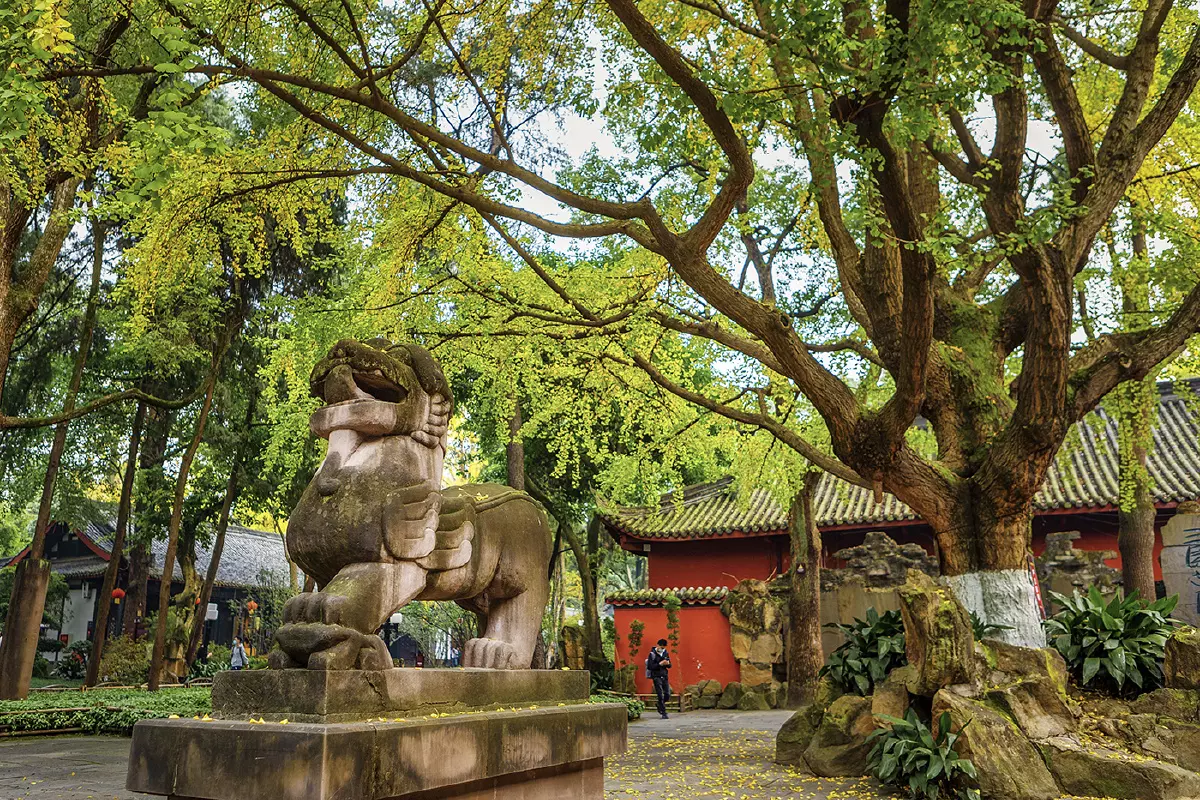
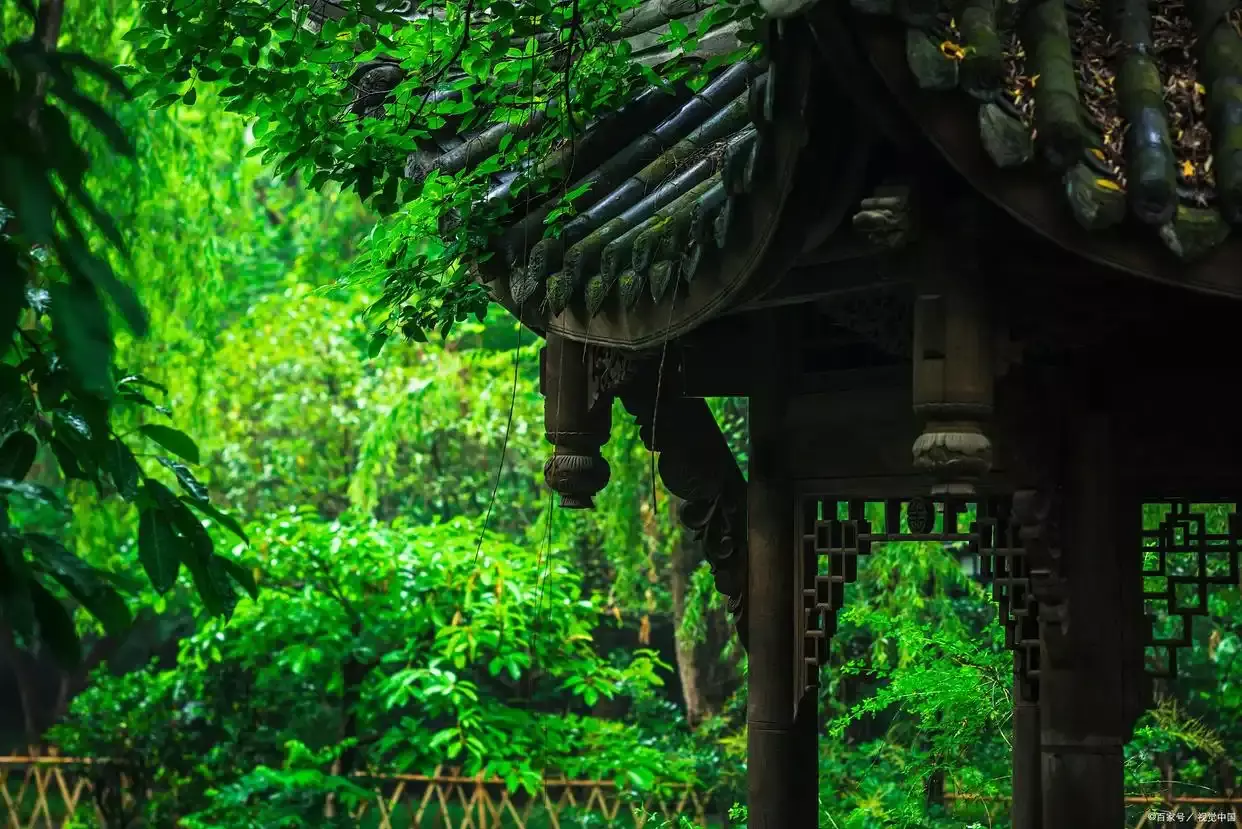
Don't spend all your time inside the main halls. Wuhou Shrine also features ancient cypress trees, traditional courtyards, and quiet garden paths that are worth exploring at a leisurely pace. The cypress trees are particularly noteworthy, as they bring to mind the famous lines by Tang Dynasty poet Du Fu in his poem The Temple of the Premier of Shu (Shu Xiang):
“Where can the Premier's shrine be found? Beyond the City of Brocade, where ancient cypress trees stand.”
7. Combine Wuhou Shrine with Jinli Ancient Street
Jinli Ancient Street is right next to Wuhou Shrine and can easily be reached on foot. You can visit the shrine during the day, then head to Jinli to browse traditional shops, sample Sichuan snacks, and enjoy the atmosphere of Chengdu's old streets. Jinli is also particularly charming in the evening when its streets are illuminated.
8. Consider Hiring a Guide or Using an Audio Guide
Wuhou Shrine is more than a complex of historic buildings; it is also an important place to learn about the history of the Three Kingdoms period. Many of its halls, statues, and stone inscriptions are connected to specific historical figures and events. Without some background knowledge, visitors may find it difficult to fully understand their significance.
If you would like to learn more about Liu Bei, Zhuge Liang, and other key figures of the Shu Han Kingdom, consider hiring an English-speaking guide. The museum offers guided tours in Chinese, English, Japanese, and Korean, with each tour lasting approximately one hour. Free audio guide services are also available in Chinese and English.
Plan Your Chengdu Tour with Us
Planning to visit Wuhou Shrine and other highlights of Chengdu? Great Tibet Tour can help you arrange a private Chengdu tour or a wider Sichuan trip, including visits to the Chengdu Panda Base, Dujiangyan, Mount Qingcheng, Leshan Giant Buddha, and Mount Emei.
Whether you have just one day in Chengdu or several days to explore Sichuan, we can help you plan an itinerary that suits your schedule and interests.
Réponse par email sous 0,5 à 24 heures.