Comment voyager au Tibet depuis Taïwan
- Beatrice
- Dernière mise à jour : 21.04.2026
Le Tibet attire de nombreux voyageurs taïwanais par sa culture mystérieuse, ses paysages à couper le souffle et son riche patrimoine religieux. Pour les résidents de Taïwan, voyager au Tibet est relativement simple, bien qu'il existe quelques réglementations spécifiques à connaître.
Contrairement aux voyages vers d'autres villes de Chine continentale, le Tibet a des politiques d'entrée plus strictes. Les voyageurs taïwanais doivent obtenir un document de voyage spécial — le Tibet Travel Permit — par l'intermédiaire d'une agence de voyage agréée.
Ce guide vous fournit toutes les informations nécessaires pour voyager de Taïwan au Tibet, vous aidant à planifier votre voyage en toute sérénité.
Documents requis
Pour les résidents de Taïwan, voyager au Tibet nécessite des documents de voyage spécifiques. Les deux plus importants sont le Tibet Travel Permit et le Mainland Travel Permit for Taiwan Residents (Taiwan Compatriot Permit).
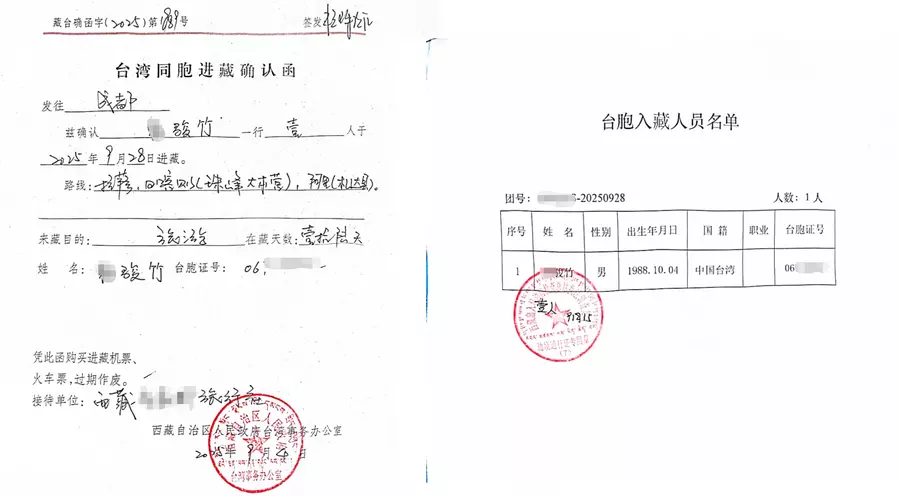
Tibet Travel Permit (Lettre de confirmation d'entrée au Tibet)
Le Tibet Travel Permit, également appelé Tibet Entry Permit ou « Tibet Travel Document », est officiellement désigné comme la « Lettre de confirmation d'entrée au Tibet pour les compatriotes taïwanais ». C'est un document obligatoire pour les voyageurs taïwanais visitant le Tibet. Sans lui, les voyageurs ne peuvent pas embarquer sur les vols ou trains à destination du Tibet, ni voyager légalement dans la région.
Il est important de noter que le Tibet Travel Permit ne peut pas être demandé individuellement. Il doit être organisé par une agence de voyage agréée basée au Tibet. Dans la plupart des cas, les voyageurs taïwanais doivent rejoindre un voyage en groupe ou réserver un circuit privé/sur mesure organisé par une agence de voyage au Tibet. Une fois votre itinéraire — incluant les dates de voyage, le parcours et les moyens d'entrée/sortie — confirmé avec l'agence, celle-ci fera la demande de permis en votre nom.
Délai de traitement :
- Pour des régions comme Nyingchi et le Camp de base de l'Everest : environ 12 jours ouvrables (nécessite un Alien Travel Permit)
- Pour la région du Ngari : environ 17 jours ouvrables (nécessite un Military Permit)
Utilisation :
L'original du Tibet Travel Permit est requis lors de l'embarquement sur les vols ou trains à destination du Tibet (ou d'autres formes selon les dernières réglementations).
👉 Il est recommandé de confirmer votre itinéraire 40 à 60 jours à l'avance et de soumettre tous les documents requis au moins un mois avant le départ pour assurer un traitement sans encombre.
Taiwan Compatriot Permit (Permis de voyage en Chine continentale pour les résidents de Taïwan)
Le Taiwan Compatriot Permit est un document essentiel pour les résidents taïwanais entrant en Chine continentale, et il est également requis lors de la demande du Tibet Travel Permit.
Méthode de demande :
Les demandeurs doivent faire la demande en personne dans un bureau d'administration des sorties et entrées autorisé par le Bureau de la sécurité publique (au niveau du comté ou supérieur) en Chine continentale.
Délai de traitement :
Environ 7 jours ouvrables
Documents requis pour la demande de permis tibétain :
Une copie scannée claire ou une photocopie du Taiwan Compatriot Permit suffit lors de la demande du Tibet Travel Permit.
Options de transport de Taïwan au Tibet
Les voyageurs taïwanais peuvent atteindre le Tibet par deux routes principales : via la Chine continentale ou via le Népal. La route par la Chine continentale est la plus courante et pratique, tandis que la route par le Népal offre une expérience d'entrée internationale plus aventureuse avec des paysages himalayens spectaculaires.
Entrer au Tibet via la Chine continentale (Recommandé)
La Chine continentale est la porte d'entrée la plus pratique pour les voyageurs de Taïwan se rendant au Tibet. Les grandes villes comme Pékin (environ 3,5 heures de Taipei), Shanghai (environ 2,5 heures) et Chengdu (environ 3,5 heures) servent de principaux hubs de transit, offrant des connexions fréquentes et un voyage vers le Tibet fluide.
Parmi elles, Chengdu est le point d'entrée au Tibet le plus populaire et le plus pratique, avec plusieurs vols quotidiens et un temps de voyage global plus court. Pékin et Shanghai offrent également une bonne connectivité, surtout pour les voyageurs combinant le Tibet avec d'autres destinations en Chine.
Après être arrivé en Chine continentale, les voyageurs peuvent continuer vers le Tibet en avion ou en train.
En avion (Option la plus rapide)
Prendre l'avion est le moyen le plus rapide et le plus efficace pour atteindre Lhassa. Les vols directs depuis la Chine continentale prennent généralement environ 2,5 à 4 heures, selon la ville de départ (par exemple, Chengdu–Lhassa dure environ 2,5 heures, tandis que Pékin–Lhassa dure environ 4 heures). Certains vols, comme Shanghai–Lhassa, peuvent être plus longs en cas d'escale.
Par temps clair, les passagers peuvent même profiter de vues imprenables sur l'Himalaya pendant le vol. Cette option est idéale pour les voyageurs qui privilégient la vitesse et le confort.
En train (Option panoramique)
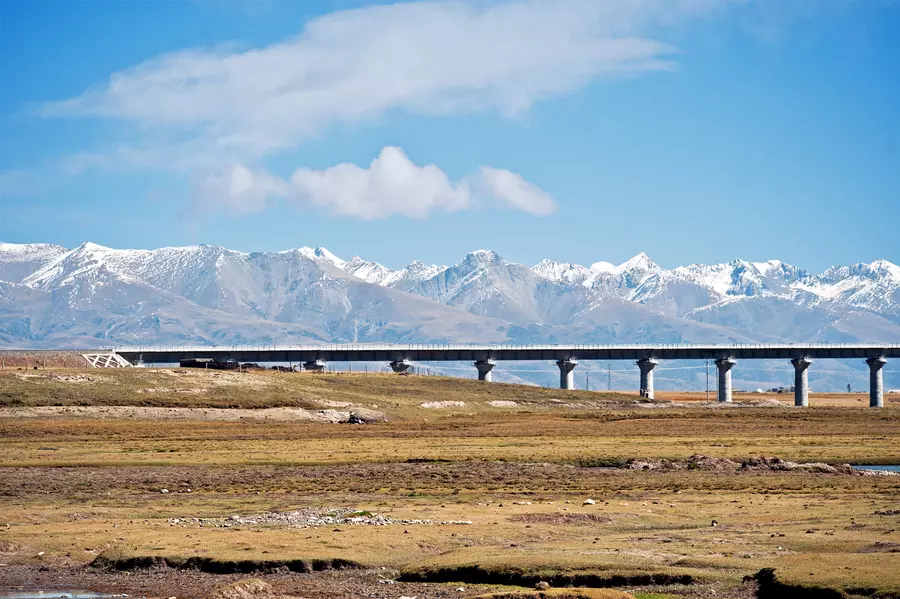
Le chemin de fer Qinghai–Tibet offre l'un des voyages en train les plus pittoresques au monde, traversant des montagnes enneigées, de vastes prairies et des lacs de haute altitude.
Les trains vers Lhassa partent de plusieurs grandes villes, dont Pékin, Shanghai, Chengdu et Xining, avec des temps de trajet allant d'environ 21 à plus de 40 heures, selon l'itinéraire de départ. La route la plus populaire et la plus courte est celle de Xining (environ 21 heures), tandis que Chengdu (environ 34,5 heures) et Pékin (environ 40 heures) sont également des points de départ couramment utilisés.
Bien que le voyage soit long, il offre une occasion unique d'expérimenter progressivement et confortablement le paysage du plateau tibétain, faisant du trajet en train une partie inoubliable du voyage au Tibet.
Entrer au Tibet via le Népal
Le Népal partage une frontière avec le Tibet et sert de porte d'entrée internationale importante. Les voyageurs peuvent entrer au Tibet depuis le Népal soit par avion, soit par voie terrestre via le poste frontière de Gyirong. Les deux routes offrent des paysages himalayens spectaculaires.
En avion (Option la plus rapide)
Le moyen le plus rapide et pratique de voyager du Népal au Tibet est le vol direct de Katmandou à Lhassa.
Les vols partent de l'aéroport international Tribhuvan (KTM) vers l'aéroport de Gonggar à Lhassa (LXA), avec environ 3 à 4 vols par semaine. Le temps de vol est d'environ 1 heure et 20 minutes, en faisant l'une des routes internationales les plus rapides vers le Tibet.
Les prix des billets varient généralement entre 410 et 580 USD, selon la saison et la disponibilité.
Par voie terrestre (Route panoramique terrestre)
La route terrestre du Népal au Tibet via la frontière de Gyirong est une option plus aventureuse et économique.
Le voyage commence depuis Katmandou et traverse les vallées fluviales, forêts et villages traditionnels du Népal avant de s'élever progressivement dans l'Himalaya et d'entrer sur le plateau tibétain, où les paysages se transforment radicalement en vastes hauts plateaux, sommets enneigés et lacs.
Cependant, les conditions routières peuvent être difficiles, avec des sections montagneuses et parfois boueuses. Le voyage prend généralement environ 7 à 8 heures, et il est recommandé d'éviter la saison des pluies pour des raisons de sécurité et de confort.
Meilleure période pour visiter le Tibet
Globalement, la meilleure période pour visiter le Tibet est le printemps (mars–mai) et l'automne (septembre–octobre). Ces deux saisons offrent le temps le plus stable, une excellente visibilité et les conditions de voyage les plus confortables pour la plupart des visiteurs.
Caractéristiques du printemps (mars–mai)
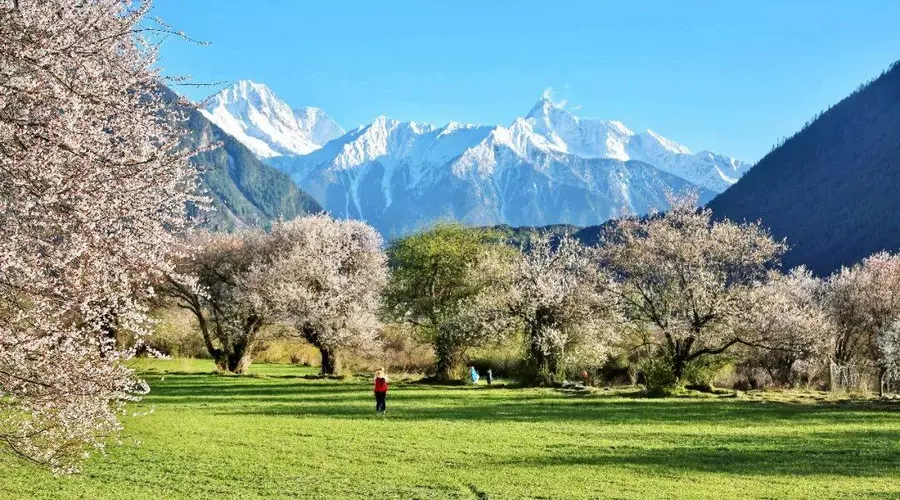
Le printemps est une saison où le plateau tibétain s'anime progressivement, avec des températures diurnes comprises entre 5°C et 15°C. L'air est limpide et les vues sur les montagnes sont particulièrement nettes, ce qui est idéal pour le tourisme et la photographie.
L'un des plus grands moments forts est le Festival des fleurs de pêcher de Nyingchi (fin mars à mi-avril), où les fleurs roses contrastent magnifiquement avec les montagnes enneigées et les vallées profondes, créant un paysage printanier de haute altitude unique. De plus, la période de fonte du lac Namtso en avril offre des paysages dramatiques de glace et d'eau.
Idéal pour : les amoureux de la nature, les visiteurs pour la première fois et les débutants en photographie
Caractéristiques de l'été (juin–août)
L'été est la haute saison touristique au Tibet, avec des températures agréables comprises entre 15 et 25°C. Les prairies sont luxuriantes et les lacs sont à leur plus vif, offrant des paysages riches et colorés.
Cependant, juillet et août sont à la fois la saison des pluies et la haute saison touristique, ce qui signifie plus de monde et des perturbations météorologiques occasionnelles dans certaines régions.
Cette période comprend également de nombreux festivals tibétains importants, comme les festivals de courses de chevaux et le festival de Saga Dawa, offrant une expérience culturelle plus approfondie.
Idéal pour : les expériences culturelles, le tourisme détendu et les voyageurs pour la première fois
Caractéristiques de l'automne (septembre–octobre)
L'automne est largement considéré comme la saison dorée pour voyager au Tibet, avec des températures diurnes comprises entre 10°C et 20°C. Le temps est stable, la visibilité excellente et les vues sur les montagnes exceptionnellement claires.
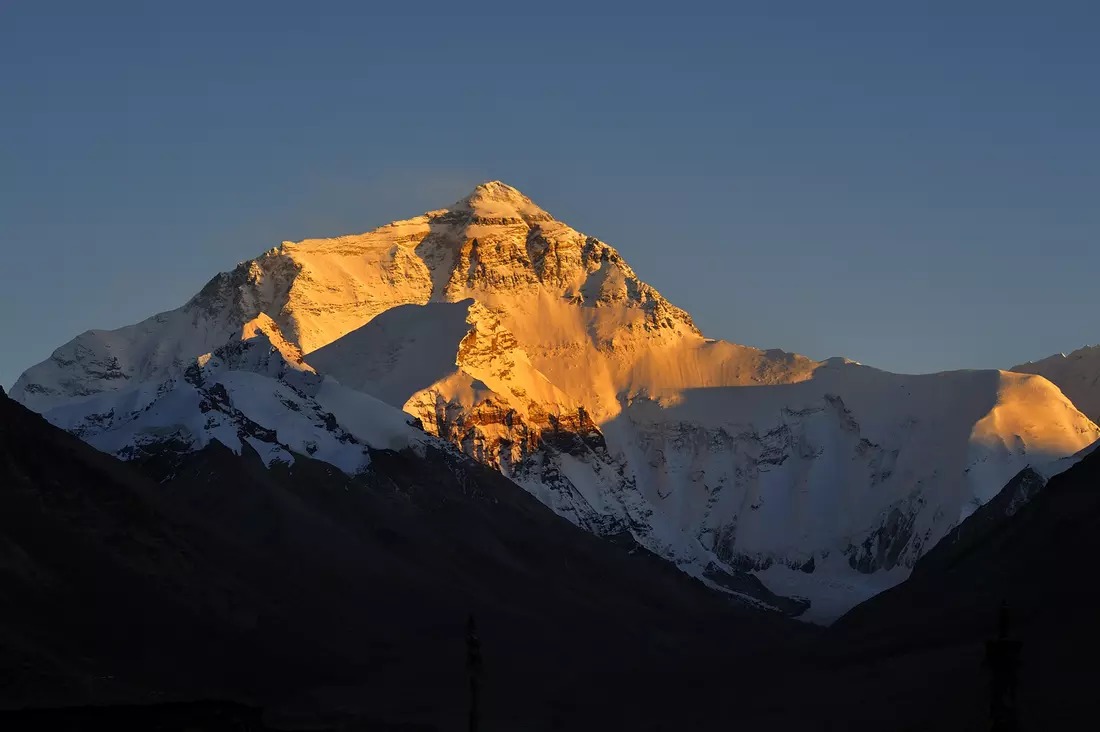
Pendant cette période, des régions comme Nyingchi et Shannan affichent des couleurs automnales vibrantes, avec des forêts dorées et rouges contrastant magnifiquement avec les sommets enneigés. C'est aussi l'un des meilleurs moments pour observer le mont Everest, car le ciel dégagé offre une excellente visibilité. Après la fin de la saison des pluies, les conditions routières deviennent également plus adaptées aux road trips.
Idéal pour : les amateurs de photographie, les voyageurs en voiture et ceux recherchant un temps stable
Caractéristiques de l'hiver (novembre–mars)
L'hiver est la basse saison au Tibet, mais elle offre une expérience de voyage paisible et unique. Lhassa bénéficie d'un ensoleillement abondant, avec des températures diurnes comprises entre 5°C et 10°C, et le nombre de touristes est bien plus faible, créant une atmosphère calme et détendue.
La combinaison des paysages enneigés et du palais du Potala crée un paysage hivernal saisissant. De plus, l'hiver est la saison la plus économique, avec des coûts d'hôtel et de voyage plus bas.
Idéal pour : les voyageurs à petit budget, les explorateurs culturels et ceux recherchant une expérience tranquille
Itinéraires de voyage recommandés
Pour les voyageurs de Taïwan, le Tibet offre une variété d'expériences, des vallées verdoyantes aux paysages sacrés de haute altitude. Parmi toutes les destinations, Nyingchi est particulièrement populaire pour ses paysages forestiers et ses fleurs de pêcher saisonnières, ce qui en fait un favori des amoureux de la nature.
En même temps, les incontournables classiques comme le mont Everest et le lac Namtso sont souvent inclus dans les itinéraires, offrant des vues emblématiques des vastes paysages et montagnes sacrées du Tibet. Pour ceux qui s'intéressent au spirituel, un voyage au mont Kailash — l'un des sites de pèlerinage les plus vénérés d'Asie — est également une option significative.
Nyingchi – Bomi – Ranwu – Lhassa
Cet itinéraire est à visiter de préférence de mi-mars à début avril et est idéal pour les voyageurs qui aiment les paysages naturels. Il traverse les paysages forestiers de Nyingchi et Bomi, y compris des points forts comme la forêt de Lulang et la forêt de Gang Spruce.
Le point culminant principal est les fleurs de pêcher de la vallée des fleurs de pêcher de Bomi, sur fond de montagnes enneigées. Le voyage se poursuit vers le lac Ranwu via le glacier Laigu, avant de se terminer à Lhassa avec des sites emblématiques comme le palais du Potala et le temple du Jokhang.
→ 8 Jours Tour de Nyingchi Bomi Lhassa
Lhassa – Shigatse – Everest – Namtso – Lhassa
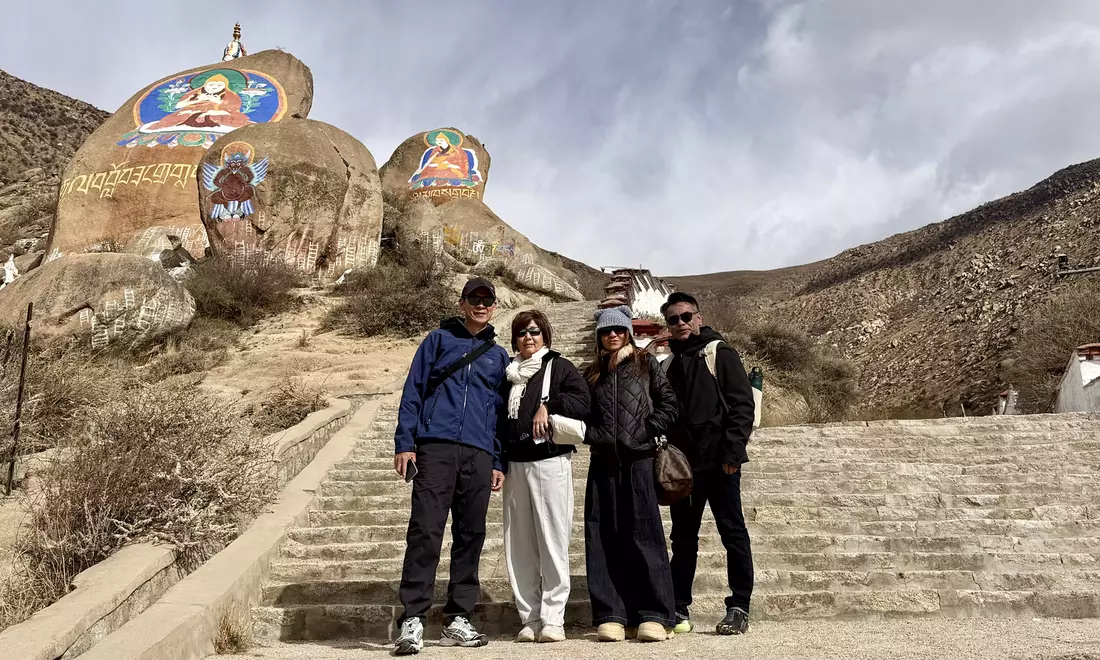
Cet itinéraire classique combine le patrimoine culturel du Tibet avec ses paysages les plus emblématiques. Vous visiterez les principaux monastères comme Drepung, Jokhang et Tashilhunpo à Shigatse.
Les points forts naturels incluent le mont Everest, le lac Yamdrok et le lac Namtso, offrant certains des paysages les plus époustouflants du Tibet. Il est idéal pour les voyageurs recherchant une expérience équilibrée entre culture et nature.
→ 9 Jours Tour de Lhassa Gyantse Shigatse Everest Namtso
Lhassa – Shigatse – Everest – Saga – Mont Kailash – Lhassa
Cet itinéraire est conçu pour les voyageurs recherchant une expérience spirituelle et de pèlerinage. Il inclut le mont Everest et se poursuit vers le sacré mont Kailash, où les pèlerins accomplissent la fameuse kora.
Le voyage offre un aperçu profond du bouddhisme tibétain, combiné à certains des paysages les plus reculés et spectaculaires de l'ouest du Tibet.
→ 15 Jours Tour de pèlerinage Everest et Mont Kailash
Équipement et conseils importants
Avant de voyager au Tibet, il est important de bien se préparer à l'altitude élevée, aux conditions météorologiques changeantes et aux coutumes locales. Les conseils suivants couvrent les éléments les plus essentiels à garder à l'esprit pour un voyage sûr et confortable.
- Préparation santé : Évitez de prendre froid avant votre voyage, car cela peut augmenter le risque de mal d'altitude. Les voyageurs souffrant de problèmes comme une maladie cardiaque ou une hypertension sévère doivent consulter un médecin à l'avance. Certains voyageurs choisissent de prendre du Rhodiola Rosea avant le voyage.
- Vêtements et météo : Le temps au Tibet peut changer rapidement, avec de grandes différences de température entre le jour et la nuit et un fort rayonnement UV. Apportez des vêtements superposés, y compris une veste chaude, ainsi que de la protection solaire comme des lunettes de soleil, de la crème solaire et un chapeau — même en été.
- Voyage longue distance : Les distances entre les destinations sont longues et les trajets routiers sont courants. Si vous êtes sujet au mal des transports, pensez à apporter des médicaments, un coussin de cou ou d'autres articles de confort.
- Médicaments et essentiels : En raison du climat sec et de l'altitude élevée, il est conseillé de transporter des médicaments de base comme des médicaments contre le rhume, des analgésiques et du baume à lèvres. Il est également important de bien s'hydrater.
- Coutumes locales : Le Tibet a de fortes traditions religieuses. Respectez toujours les coutumes et croyances locales. La photographie peut être restreinte dans les monastères, et il est poli de demander la permission avant de prendre des photos de moines ou de personnes locales.
Réponse par email sous 0,5 à 24 heures.