
Mount Kailash: Is It Part of the Himalayas?
- Eric
- Naposledy aktualizováno : 30/09/2026
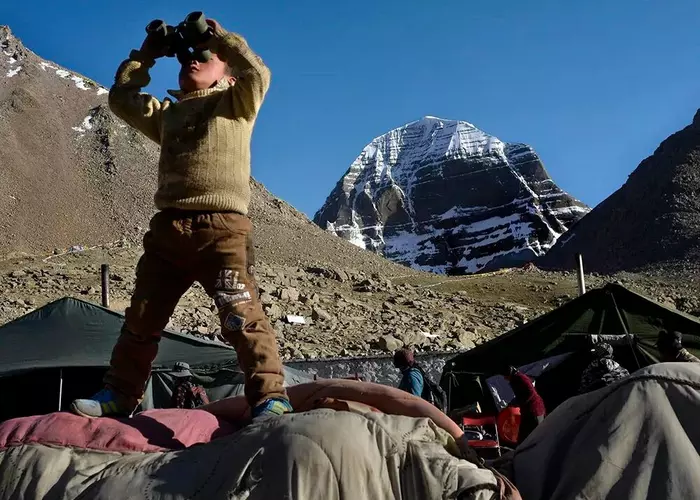
Mount Kailash, standing at approximately 6,638 meters above sea level, is located in Ngari Prefecture, Tibet, and is one of the most famous peaks of the Gangdise Mountains. The mountain stands relatively isolated from its surroundings, with a roughly pyramid-shaped summit covered in snow year-round, creating a striking contrast with the vast plateau landscape around it.
If you look at a map, you may notice an interesting question: Mount Kailash is often called a “sacred mountain of the Himalayas,” but is it actually part of the Himalayan mountain range? The answer needs to be considered from both geographical and cultural perspectives.
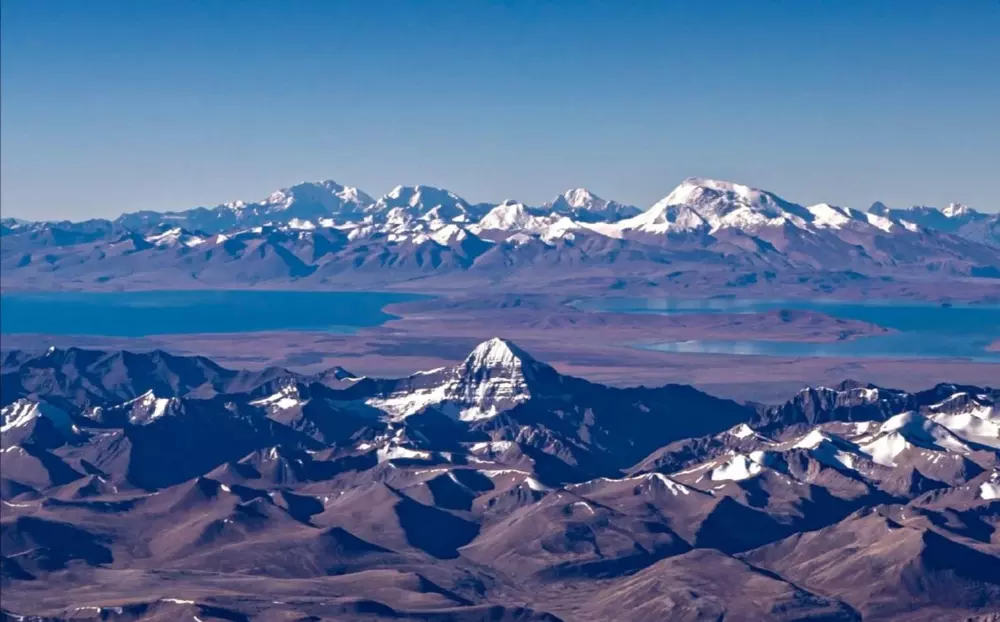
Is Mount Kailash Part of the Himalayas?
Strictly speaking, Mount Kailash belongs to the Gangdise Mountains rather than the main Himalayan range. The Gangdise Mountains lie north of and roughly parallel to the Himalayas and are generally considered part of the broader Trans-Himalayan mountain system.
Therefore, from a strict geographical classification, Mount Kailash belongs to the Gangdise Mountains, not the main Himalayan range.
So why do travel materials often use terms such as “Kailash Himalaya” or “Mount Kailash in the Himalayas”? This is because “the Himalayas” does not always refer exclusively to the main Himalayan range. In broader geographical and cultural contexts, the term can also refer to the highland mountains and cultural region closely associated with the Himalayas.
Therefore, although Mount Kailash is not part of the main Himalayan range, it is closely connected with the broader Himalayan region. The area is home not only to vast highland landscapes but also to a sacred site revered by several religious traditions.
One Sacred Mountain, Four Religious Traditions
The distinctive feature of Mount Kailash is that it is revered by Hindus, Tibetan Buddhists, Jains, and followers of Bon. Each religious tradition has its own stories and interpretations of the mountain, but all attach special sacred significance to Mount Kailash.
For Hindus, Mount Kailash is regarded as the abode of Shiva, one of the most important deities in Hinduism. It is therefore an important pilgrimage destination for Hindus.
For Buddhists, Mount Kailash is closely associated with the Buddhist cosmological concept of Mount Meru and religious traditions surrounding Chakrasamvara. In Tibetan Buddhist traditions, Mount Kailash is an important sacred mountain.
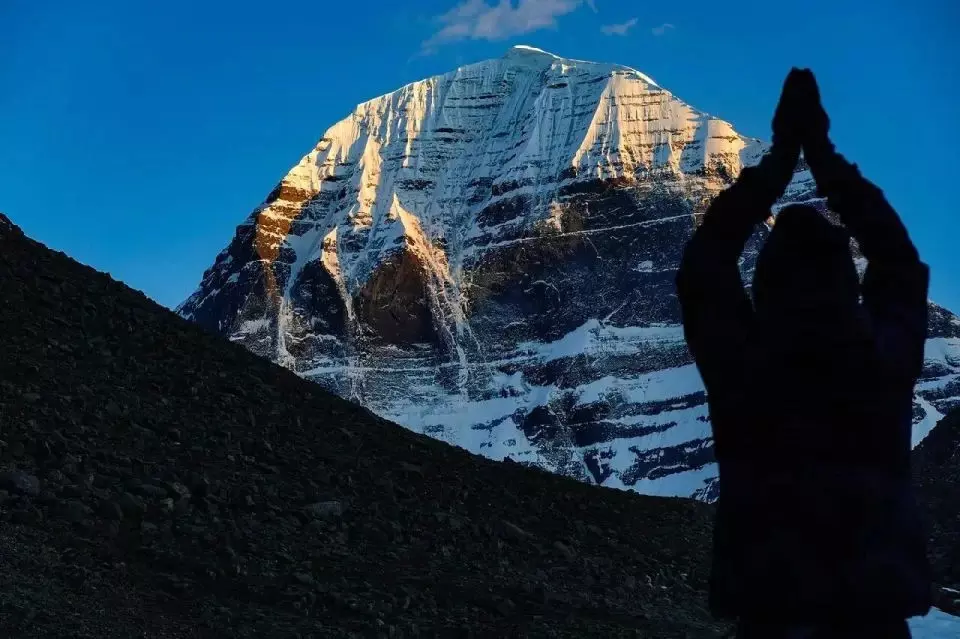
For Jains, the area around Mount Kailash is traditionally associated with the legendary Mount Ashtapada. According to Jain tradition, Rishabhanatha, the first Tirthankara, attained liberation at Ashtapada, giving the region important religious and pilgrimage significance.
For Bon followers, Mount Kailash is traditionally associated with Tonpa Shenrab Miwoche, the founder of Bon, whose manifestation is believed to have appeared here. It is therefore regarded as both a birthplace and sacred site of the Bon tradition.
Therefore, Mount Kailash does not belong exclusively to any one religion. It is a sacred site revered by different religious traditions and an important window into the religious culture of Tibet.
Mount Kailash and the Four Major Rivers of Asia
The area around Mount Kailash and Lake Manasarovar is one of the important source regions for major Asian rivers. Traditionally, this area has been described as the source region of four major rivers: the Shiquan River, Xiangquan River, Maquan River, and Peacock River. Flowing in different directions from the region around Mount Kailash, they belong to the upper reaches of major river systems, including the Indus, Sutlej, Yarlung Tsangpo, and Ganges.
The Shiquan River flows north and is one of the sources of the Indus River; the Xiangquan River flows west and forms part of the upper Sutlej River system; the Maquan River flows east and is an upper reach of the Yarlung Tsangpo; and the Peacock River flows south and is connected with the Ganges River system.
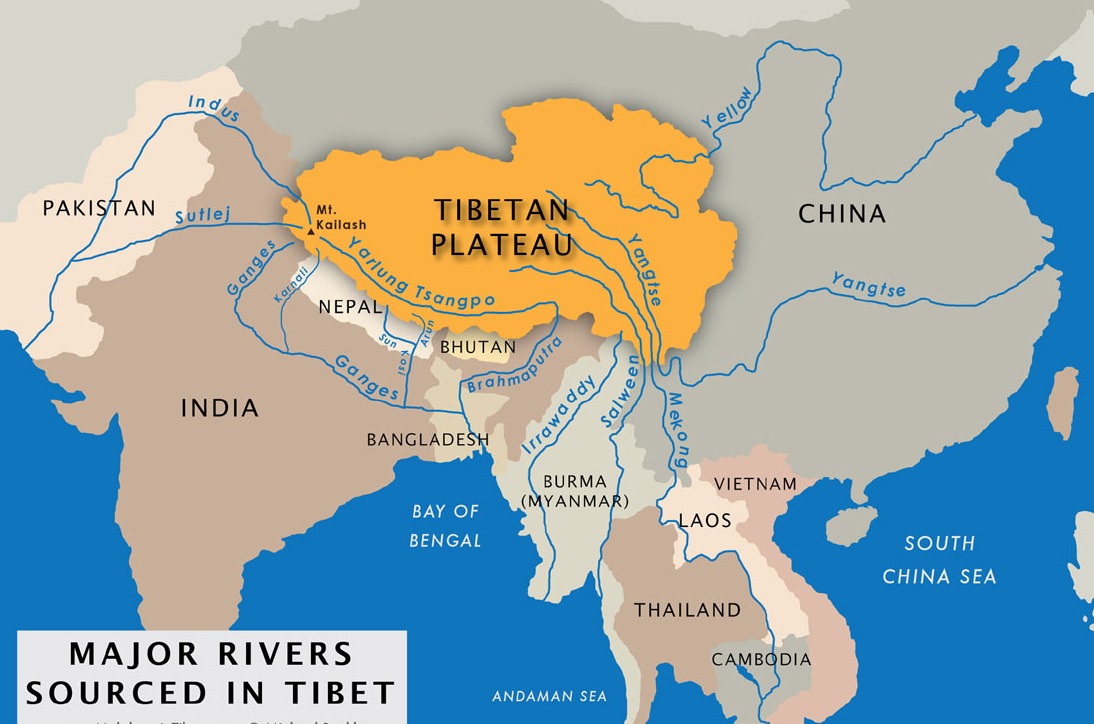 Mount Kailash and the four major river systems.
It is worth noting that these four rivers do not all originate directly from the summit of Mount Kailash. Instead, their headwaters are found in different glaciers, springs, and watersheds in the surrounding region. Together, they form an important river system around Mount Kailash and give this remote highland region considerable geographical significance.
Why Has No One Climbed Mount Kailash?
One of the most intriguing questions about Mount Kailash is this: at approximately 6,638 meters, it is not the world's highest mountain, so why is there still no recognized record of a successful summit?
The answer is not simply that the mountain is difficult to climb. Mount Kailash is regarded as sacred in several religious traditions, and reaching the summit is not the goal of pilgrims. At present, there is no summit route open to ordinary mountaineers, and there is no widely recognized official record of a successful ascent.
This makes Mount Kailash very different from Mount Everest. Mount Everest attracts mountaineers seeking to climb the world's highest peak, while Mount Kailash attracts pilgrims who walk around the mountain.
For pilgrims, the summit is not something to be conquered. What they seek to complete is the Kora, or circumambulation. By walking around the sacred mountain, they express their devotion and complete their pilgrimage.
Mount Kailash and Lake Manasarovar
Not far south of Mount Kailash lies the famous Lake Manasarovar. At an elevation of approximately 4,600 meters, it is one of Tibet's well-known high-altitude freshwater lakes. Nearby is the larger saline lake, Rakshastal.
Mount Kailash, Lake Manasarovar, and Rakshastal together form one of the most representative highland landscapes in western Ngari. Snow-covered mountains, lakes, barren plains, and vast skies come together to create the dramatic natural scenery of the Tibetan Plateau.
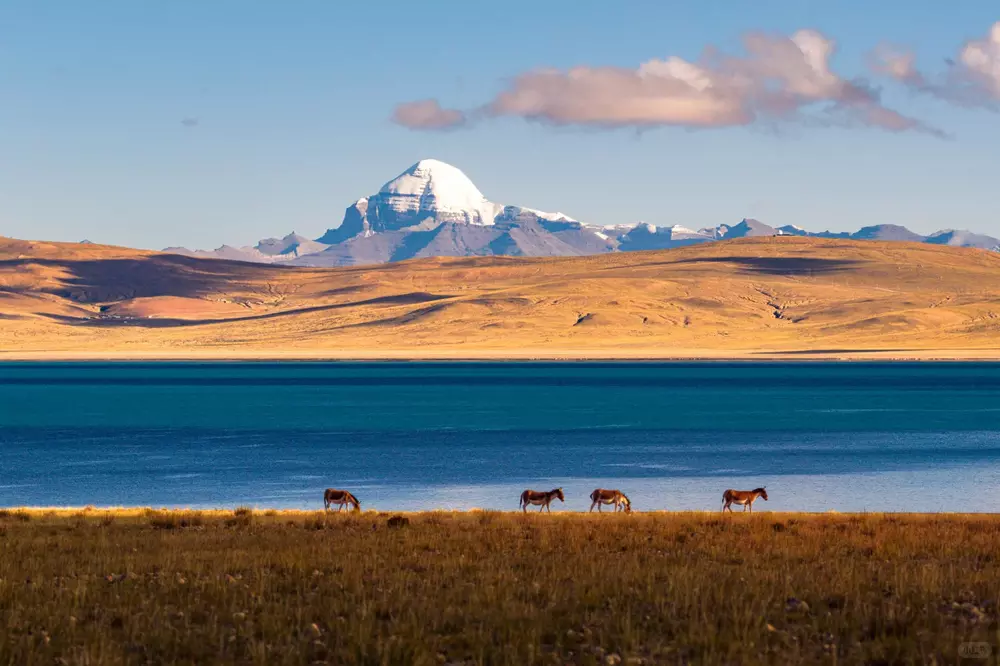
Lake Manasarovar also holds great significance in Hinduism, Buddhism, Jainism, and Bon. For pilgrims, Mount Kailash and Lake Manasarovar are not simply two separate attractions but interconnected parts of a sacred landscape.
For ordinary travelers, the area offers a way to experience the natural environment of the Ngari Plateau. Whether admiring the snow-covered peak of Mount Kailash from a distance or taking in the scenery of Lake Manasarovar and Rakshastal, visitors can experience the vast and distinctive landscapes of western Tibet.
What Is the Mount Kailash Kora?
For visitors to Mount Kailash, the most meaningful way to experience the mountain is not climbing it but completing a Kora.
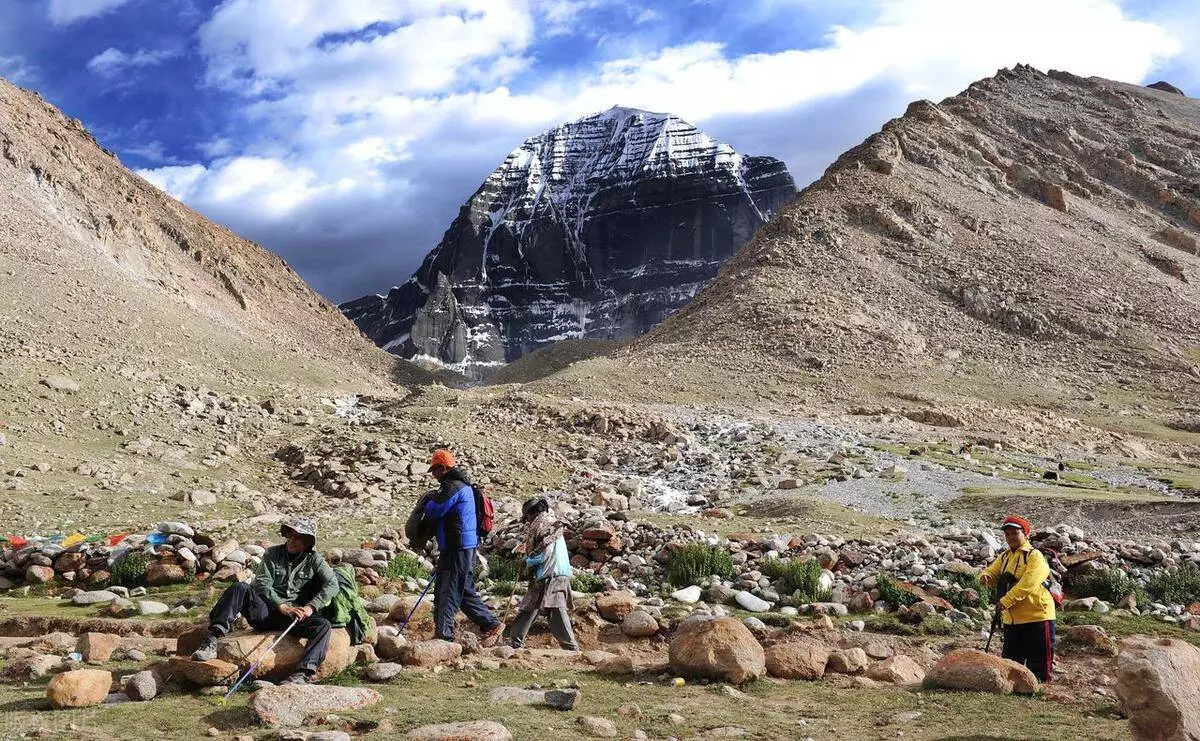
The Mount Kailash Kora route is generally around 52–53 kilometers long and usually takes three days to complete. The route crosses Drolma La (Dolma La), a mountain pass at an elevation of more than 5,600 meters. The entire route is at high altitude with challenging terrain, and crossing Drolma La is particularly demanding on physical fitness and acclimatization to high altitude.
The Kora is not an ordinary hiking loop. For pilgrims, walking around the mountain is itself part of the pilgrimage. Some travel on foot, while others complete the entire circuit by performing full-body prostrations or following other traditional practices.
This is one of the most important things to understand about Mount Kailash: people do not come here to conquer the mountain. They walk around it as an expression of faith and respect.
For ordinary travelers, the Mount Kailash Kora is also a unique high-altitude trekking experience. Along the way, you can enjoy views of snow-capped mountains, glaciers, valleys, and vast highland landscapes, but the high altitude and unpredictable weather make it a route that requires thorough preparation.
Why Do People Travel So Far to Mount Kailash?
Mount Kailash is about 1,200 km from Lhasa and around 860 km from Kathmandu by road, so reaching it usually involves a long overland journey. Why, then, are people willing to travel so far to get here?
For pilgrims, Mount Kailash is an important religious destination. They come here to complete their pilgrimage and perform the Kora. For them, the journey is not simply a physical undertaking but also carries deep religious significance.
For hikers, the Mount Kailash Kora offers a unique high-altitude trekking experience. Following the route around the sacred mountain, travelers can experience the challenges of high-altitude trekking while taking in the dramatic landscapes of the Ngari Plateau.
For ordinary travelers, a journey to Mount Kailash is about more than simply taking in the scenery. The sacred mountain, holy lakes, and deep religious traditions give the region a unique cultural and spiritual atmosphere. Here, travelers can not only explore the magnificent landscapes of the Ngari Plateau but also gain a deeper understanding of local beliefs and traditions and the role they play in people’s lives and spiritual world.
Conclusion
Although Mount Kailash is not part of the main Himalayan range, it is closely connected with the natural environment and cultural traditions of the broader Himalayan region. It is one of the important source regions for major Asian rivers and a sacred place revered by Hindus, Tibetan Buddhists, Jains, and followers of Bon.
Whether visiting for pilgrimage, completing the Kora, or experiencing the natural scenery of the Ngari Plateau, Mount Kailash brings together remarkable geographical and cultural significance. It is not simply a mountain, but a special destination where nature, faith, and travel come together.
Odpověď e-mailem během 0,5–24 hodin.