
Góra Gongga
- Eric
- Ostatnia aktualizacja : 2026-08-14
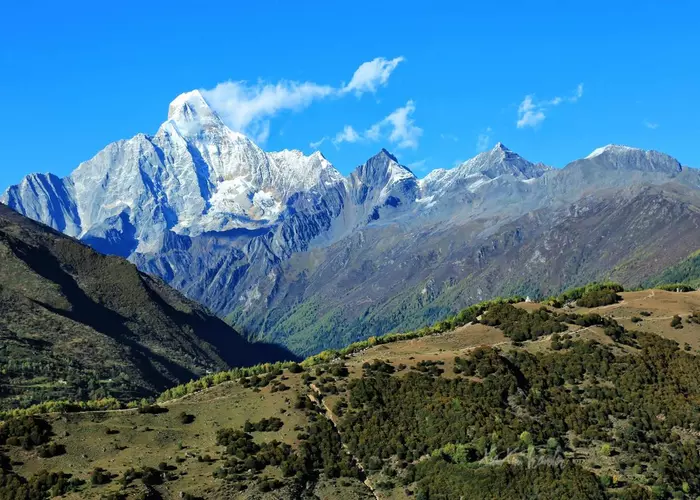
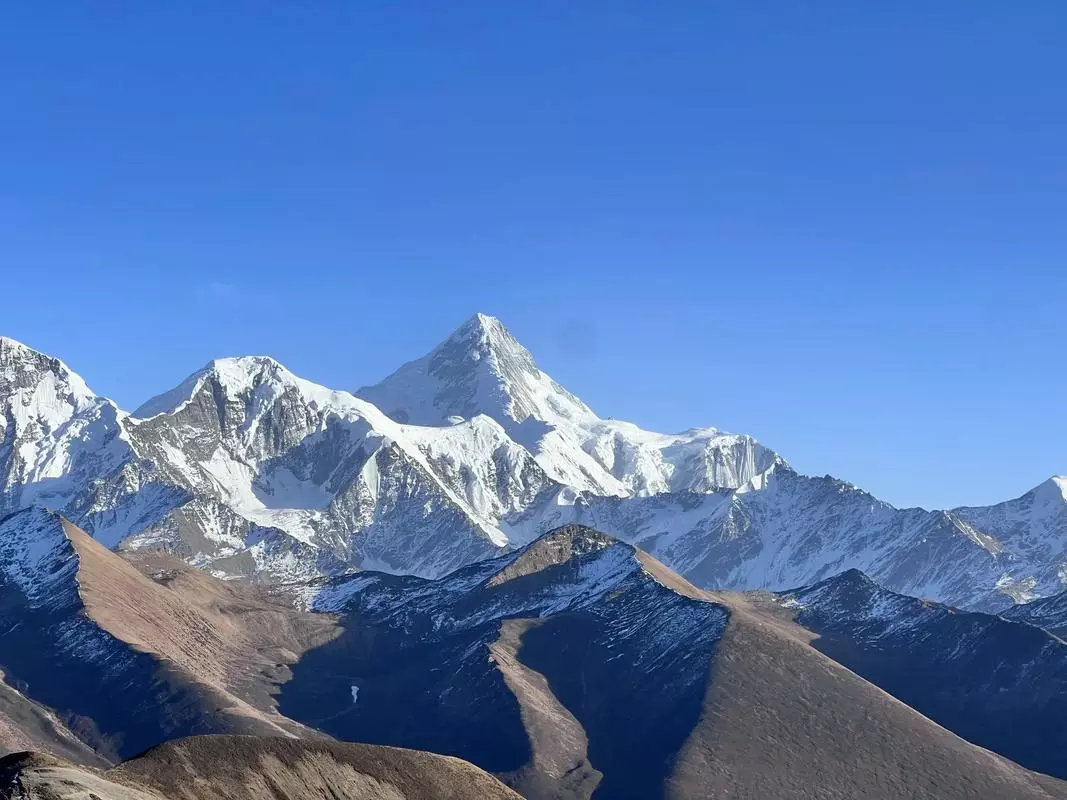
Góra Gongga (Minya Konka) znajduje się w tybetańskim regionie zachodniego Syczuanu. Jako główny szczyt pasma Daxue, wznosi się na wysokość 7 556 metrów i jest najwyższą górą w prowincji Syczuan, zyskując przydomek „Król Syczuańskich Gór”.
Ta ośnieżona góra to jeden z najbardziej niezwykłych szczytów w Chinach, przyciągający wspinaczy, fotografów i poszukiwaczy przygód z całego świata.
W języku tybetańskim Góra Gongga znana jest jako Minya Konka, co oznacza „najczystsza i najwyższa”. W lokalnej kulturze tybetańskiej to nie tylko majestatyczna ośnieżona góra, ale także święty szczyt o głębokim duchowym znaczeniu.
Podgląd treści
- Dlaczego warto odwiedzić Górę Gongga?
- Najlepsze miejsca do podziwiania Góry Gongga
- Najlepszy czas na wizytę w Górze Gongga
- Szlaki trekkingowe Gór Gongga
- Jak dotrzeć do Góry Gongga?
- Czy można wspiąć się na Górę Gongga?
- Porady dotyczące podróży na dużych wysokościach
- Sprzęt trekkingowy
- Podróż do zachodniego Syczuanu z Great Tibet Tour
Dlaczego warto odwiedzić Górę Gongga?
Góra Gongga to coś więcej niż ośnieżony szczyt; oferuje podróżnym możliwość odkrycia różnorodnych krajobrazów, wymagających szlaków trekkingowych i kultury tybetańskiej w zachodnim Syczuanie.
W przeciwieństwie do wielu gór, które można podziwiać tylko z daleka, region Góry Gongga oferuje liczne punkty widokowe i szlaki trekkingowe, które pozwalają zbliżyć się do ośnieżonych szczytów. Podróżni mogą podziwiać panoramiczny widok na główny szczyt z Przełęczy Zimei, cieszyć się odbiciem góry w Jeziorze Lenggacuo, lub wędrować przez lodowce, alpejskie jeziora, łąki i tybetańskie wioski, aby doświadczyć piękna i spokoju Płaskowyżu Syczuańskiego.
Najlepsze miejsca do podziwiania Góry Gongga
Lodowiec Hailuogou
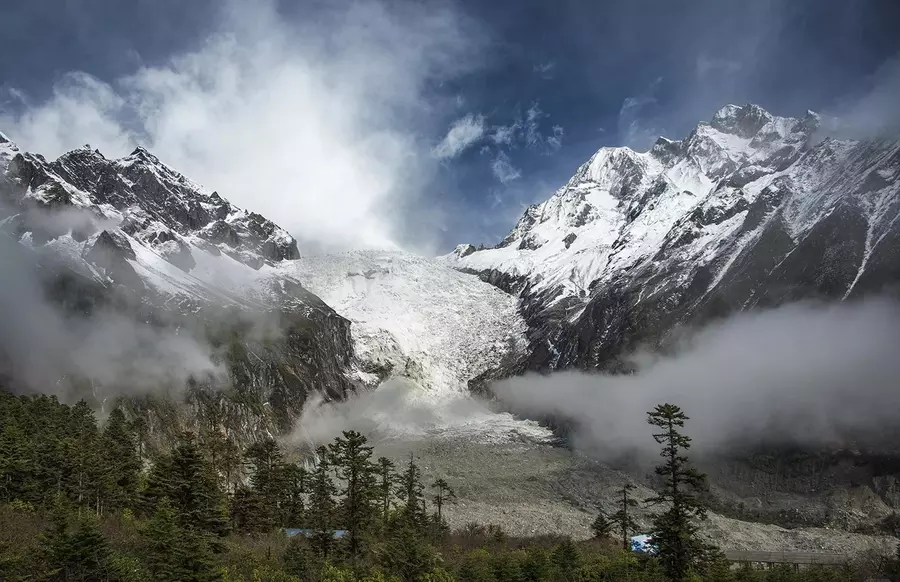
Położony na południowo-wschodnim zboczu Góry Gongga, Lodowiec Hailuogou jest jednym z najbliższych i najbardziej dostępnych miejsc do podziwiania głównego szczytu. Słynie z nowożytnego lodowca, pradawnych lasów, gorących źródeł i spektakularnych górskich krajobrazów, co czyni go idealnym miejscem dla wielu podróżników, którzy po raz pierwszy chcą doświadczyć Góry Gongga.
Największą cechą Hailuogou jest krajobraz lodowca na niskiej wysokości. Odwiedzający mogą podziwiać imponujące lodowce, lodospady i ośnieżone szczyty bez odbywania długich i wymagających wędrówek na dużych wysokościach. Dla podróżnych szukających wygodniejszego sposobu na poznanie Góry Gongga, Hailuogou jest doskonałym wyborem.
Przełęcz Zimei
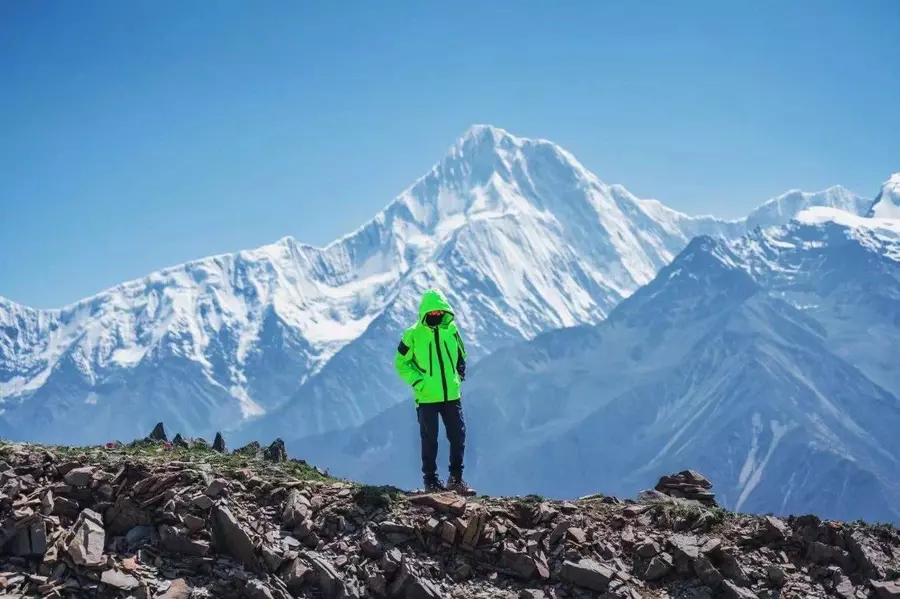
Przełęcz Zimei to jeden z najbardziej znanych punktów widokowych w regionie Góry Gongga i klasyczne miejsce do podziwiania pełnej panoramy głównego szczytu.
Ze względu na bliską odległość od Góry Gongga, przełęcz oferuje niezakłócony widok na okoliczne ośnieżone szczyty. W pogodne dni podróżni mogą cieszyć się szerokimi widokami na ośnieżone szczyty, warstwy gór i chmury przesuwające się przez doliny, zwłaszcza o wschodzie i zachodzie słońca.
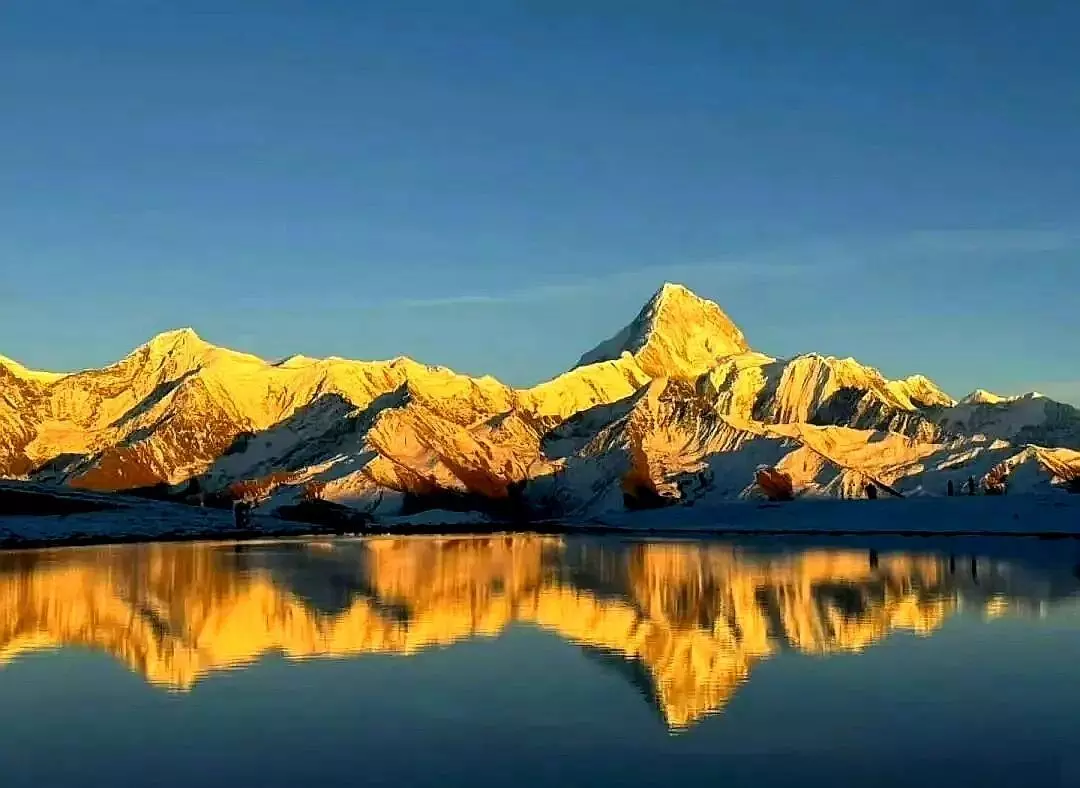
Przełęcz Zimei jest również popularnym celem podróżników i fotografów i powszechnie uważana jest za jedno z najlepszych miejsc do uchwycenia kultowego zjawiska „Złotej Góry w świetle słońca”.
Jezioro Lenggacuo
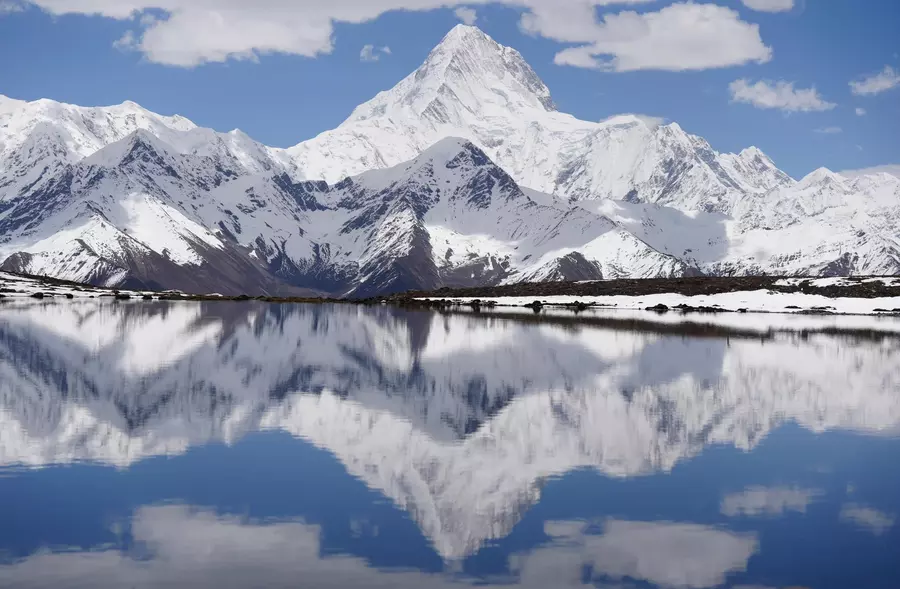
Znane wielu podróżnikom jako „Oko Gonggi”, Jezioro Lenggacuo jest jednym z najbardziej charakterystycznych alpejskich jezior w regionie Góry Gongga.
Położone na wysokości około 4500 metrów, Lenggacuo słynie z oszałamiającego odbicia głównego szczytu. Gdy tafla jeziora jest spokojna, ośnieżone góry odbijają się w krystalicznie czystej wodzie, tworząc spektakularną scenę, w której góra i jezioro łączą się w jedną całość.
W porównaniu z innymi punktami widokowymi, Lenggacuo pozostaje bardziej dzikie i spokojne. Dotarcie do jeziora zwykle wymaga krótkiego trekkingu lub jazdy konnej, co czyni je szczególnie odpowiednim dla podróżników, którzy kochają naturę, eksplorację na świeżym powietrzu i szukają spokojniejszych górskich krajobrazów.
Trawertyny Quanhua
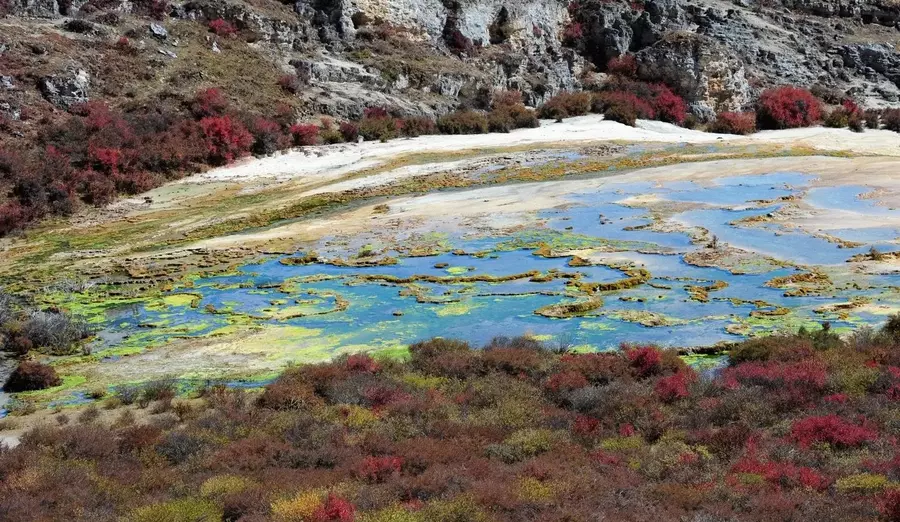
Trawertyny Quanhua to ukryty cud natury w regionie Góry Gongga, utworzony przez wieloletnie osadzanie się wód źródlanych bogatych w minerały.
Warstwowe formacje trawertynowe i kolorowe oczka wodne tworzą unikalny krajobraz o bogatych teksturach i naturalnych kolorach w świetle słonecznym. W połączeniu z otaczającym dziewiczym środowiskiem i widokami na Górę Gongga, to mniej znane miejsce stało się popularnym przystankiem podczas wycieczek w region Góry Gongga.
Trawertyny Quanhua są zwykle odwiedzane razem z Jeziorem Lenggacuo i Przełęczą Zimei, co czyni je ważnym przystankiem w odkrywaniu naturalnego piękna regionu Góry Gongga.
Klasztor Gongga
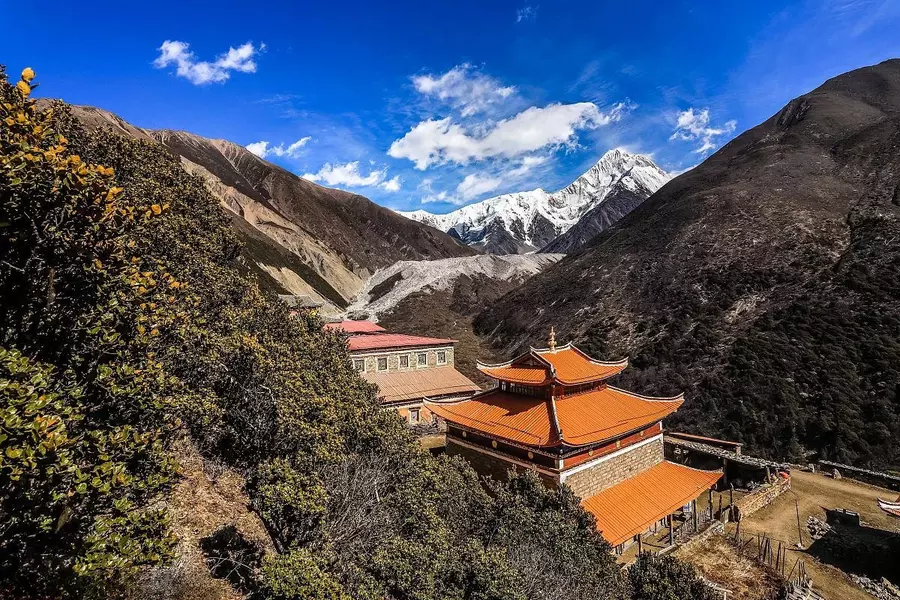
Położony w pobliżu głównego szczytu Góry Gongga, Klasztor Gongga jest ważnym tybetańskim klasztorem buddyjskim w regionie i znaczącym miejscem do poznawania lokalnej kultury tybetańskiej.
Z historiĄ sięgającą kilku stuleci, klasztor wciąż zachowuje tradycyjną religijną atmosferę. Kolorowe flagi modlitewne, spokojne zabudowania klasztorne i majestatyczne ośnieżone szczyty Gongga w oddali tworzą pogodną atmosferę, w której odwiedzający mogą doświadczyć związku między buddyzmem tybetańskim a otaczającym górskim krajobrazem.
Najlepszy czas na wizytę w Górze Gongga
Górę Gongga można odwiedzać przez cały rok, ale najlepszy czas na eksplorację regionu to zazwyczaj okres od maja do listopada. Wśród tych miesięcy, maj–czerwiec i wrzesień–listopad oferują najkorzystniejsze warunki, z bardziej przejrzystym niebem, lepszą widocznością i większymi szansami na zobaczenie głównego szczytu i słynnego zjawiska „Złotej Góry”.
Od maja do czerwca: wiosenne kwiaty i czyste widoki górskie
Maj i czerwiec są idealne dla podróżnych szukających spokojniejszych doświadczeń. Zanim w pełni nadejdzie pora deszczowa, pogoda jest stosunkowo stabilna, a chmury rzadsze. Alpejskie rododendrony zaczynają kwitnąć, tworząc piękny kontrast między kolorowymi kwiatami, lasami i ośnieżonymi szczytami.
Od września do listopada: najlepszy sezon dla fotografów
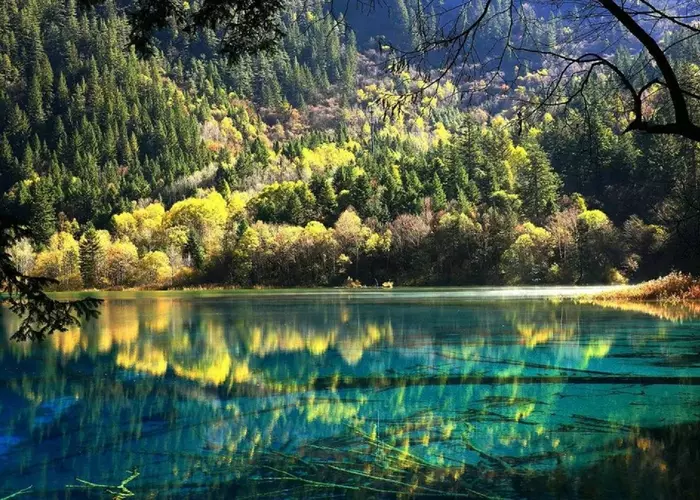
Jesień jest powszechnie uważana za najlepszy sezon na wizytę w górach, zwłaszcza od października do początku listopada. Powietrze staje się suche i czyste, co zapewnia doskonałą widoczność ośnieżonych szczytów. Złote lasy, głęboko błękitne niebo i białe góry tworzą jedne z najbardziej imponujących krajobrazów do fotografowania.
Od lipca do sierpnia: zielone krajobrazy, ale więcej chmur
Lato to pora deszczowa w zachodnim Syczuanie. Chociaż łąki są bujne, a krajobrazy pełne życia, częste chmury i deszcz mogą zmniejszyć szanse na wyraźne zobaczenie głównego szczytu. Dlatego nie jest to idealny okres dla podróżnych, których głównym celem jest fotografia górska.
Od grudnia do marca: zimowe śnieżne krajobrazy
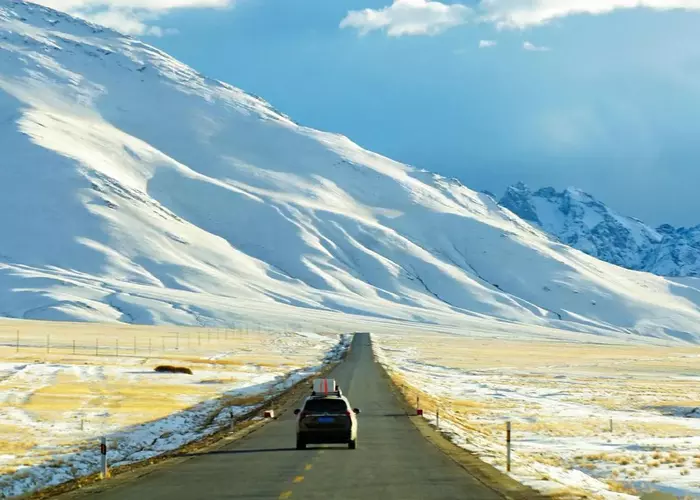
Zima przynosi czystsze powietrze i spektakularne, ośnieżone krajobrazy. Jednak temperatury mogą być ekstremalnie niskie, a niektóre drogi na dużych wysokościach mogą być zaśnieżone i oblodzone. Ten okres jest bardziej odpowiedni dla doświadczonych podróżników outdoorowych lub osób skupiających się na zimowych krajobrazach i gorących źródłach w takich obszarach jak Hailuogou.
Szlaki trekkingowe Gór Gongga
Góra Gongga jest jednym z najbardziej znanych celów trekkingowych na dużych wysokościach w zachodnich Chinach. W przeciwieństwie do wycieczek krajoznawczych skupiających się na punktach widokowych, szlaki trekkingowe oferują bardziej immersyjny sposób odkrywania regionu górskiego.
Obszar Góry Gongga ma kilka klasycznych szlaków trekkingowych o różnym stopniu trudności, od stosunkowo dostępnych tras dla początkujących po wymagające pętle dla doświadczonych wędrowców.
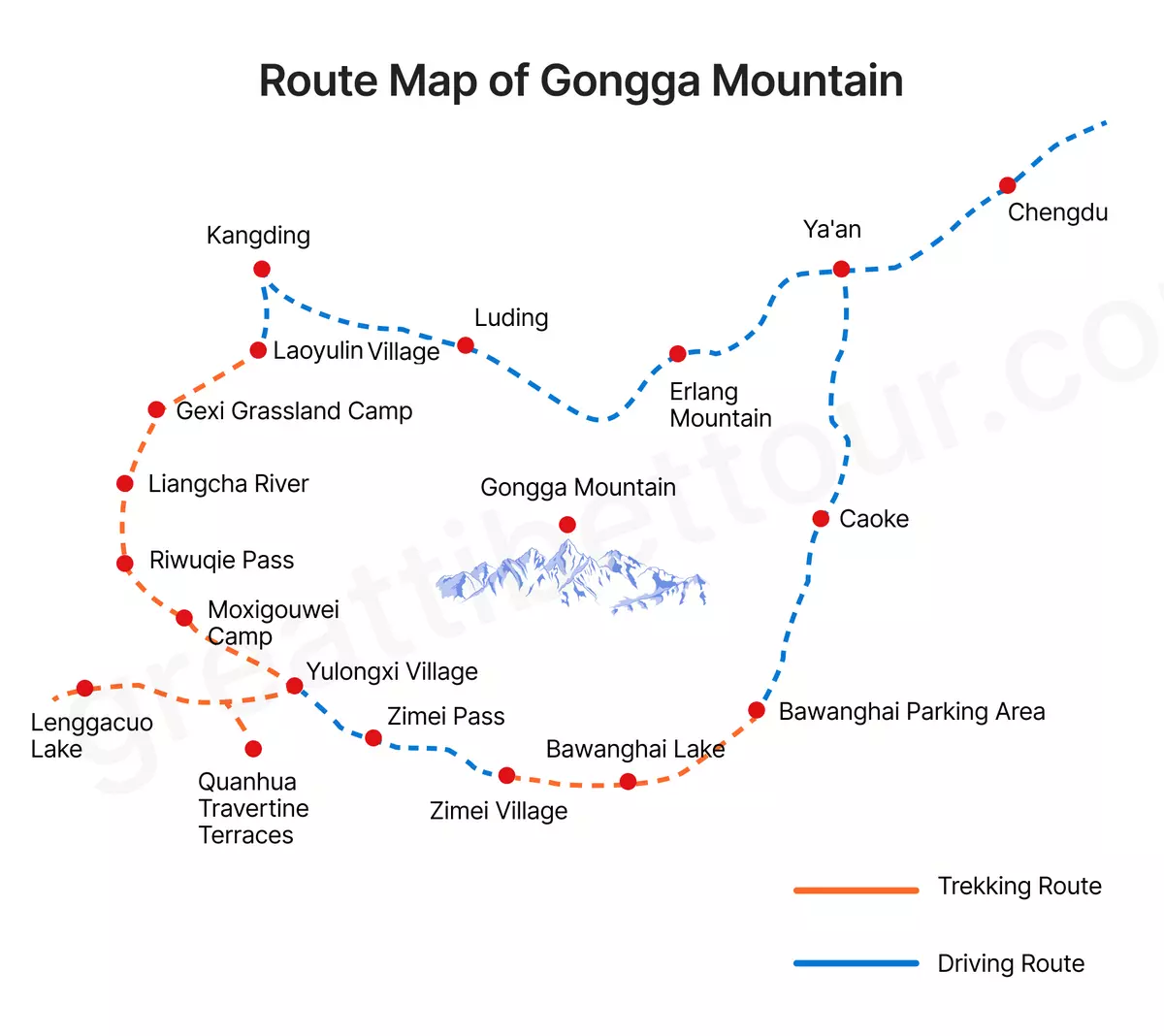
Trekking południowo-zachodnim zboczem Góry Gongga (Trasa Zimei)
Trekking południowo-zachodnim zboczem to najpopularniejsza trasa trekkingowa wokół Góry Gongga i dobry wybór dla podróżnych, którzy chcą doświadczyć góry pieszo.
W porównaniu z innymi trasami trekkingowymi wokół Gonggi, ma stosunkowo umiarkowany stopień trudności, a niektóre odcinki można pokonać konno lub zatrzymując się w wioskach.
Trekking trwa zwykle około 5–6 dni, pokonując około 40–45 kilometrów, a najwyższy punkt sięga około 4600 metrów nad poziomem morza. Jest odpowiedni dla podróżnych z podstawowym doświadczeniem trekkingowym i dobrą kondycją fizyczną.
Trasa: Wioska Yulongxi → Trawertyny Quanhua → Jezioro Lenggacuo → Przełęcz Zimei → Wioska Zimei → Klasztor Gongga → Jezioro Bawanghai
Trekking małą pętlą wokół Góry Gongga
Trekking małą pętlą jest odpowiedni dla podróżnych szukających bardziej wymagającego doświadczenia trekkingowego z mniejszą liczbą odwiedzających.
W porównaniu z trasą południowo-zachodniego zbocza, trasa ta obejmuje wyższe przełęcze i bardziej odległe odcinki, wymagając lepszej wytrzymałości i pewnego doświadczenia w trekkingach na dużych wysokościach.
Trekking trwa zwykle około 5 dni, pokonując około 40 kilometrów, a najwyższy punkt sięga około 4980 metrów na Przełęczy Ridaman. Jest zalecany dla doświadczonych wędrowców, którzy czują się komfortowo z biwakowaniem i długodystansowym chodzeniem.
Trasa: Łąki Gexi → Górny Obóz Riwuqie → Przełęcz Ridaman → Jezioro Lenggacuo → Trawertyny Quanhua → Wioska Yulongxi
Trekking lodowcowy wokół Góry Gongga
Trekking lodowcowy to bardziej wymagająca trasa przeznaczona dla doświadczonych podróżników outdoorowych, którzy chcą zgłębić się głębiej w region Gongga.
Trasa ta obejmuje dłuższe dni trekkingowe, wyższe wzniesienia i bardziej wymagające warunki górskie. Zalecane są dobre przygotowanie fizyczne, odpowiedni sprzęt i wcześniejsze doświadczenie biwakowe.
Trekking trwa zwykle około 6 dni, pokonując około 50 kilometrów, a najwyższy punkt sięga około 4980 metrów na Przełęczy Ridaman. Jest odpowiedni dla wędrowców szukających bardziej odległego i przygodowego doświadczenia górskiego.
Trasa: Łąki Gexi → Dolny Riwuqie → Górny Obóz Riwuqie → Lodowiec Ledomanyin → Jezioro Lenggacuo → Trawertyny Quanhua → Wioska Yulongxi → Przełęcz Zimei
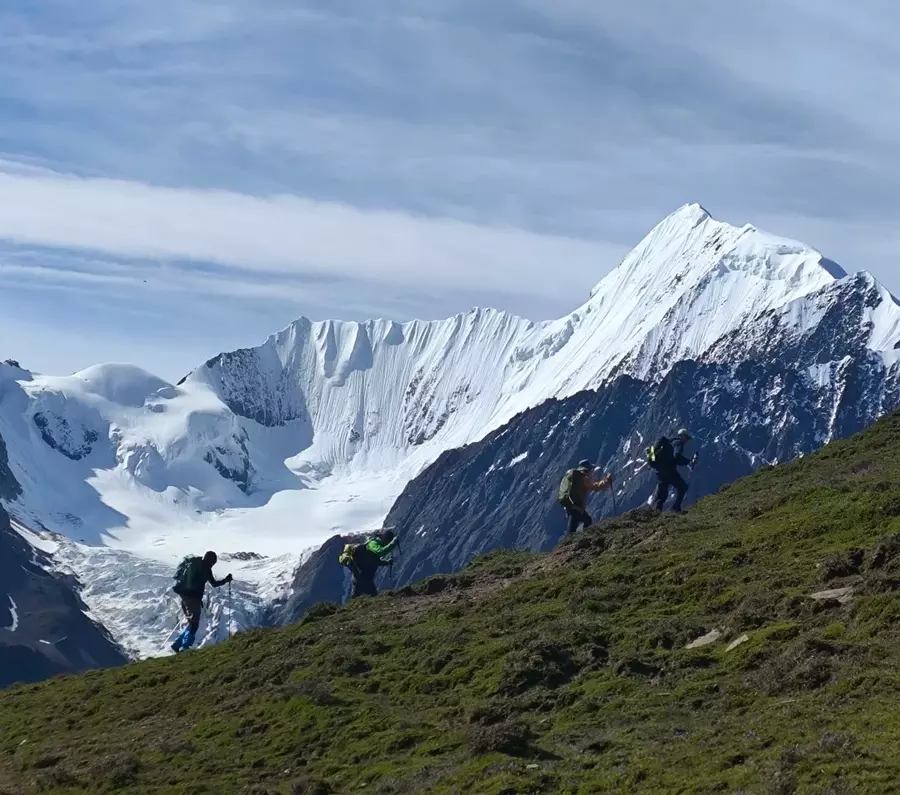
Trekking wielką pętlą wokół Góry Gongga
Trekking wielką pętlą to jedna z najbardziej wymagających tras trekkingowych wokół Góry Gongga i uważana jest za klasyczną trasę przygodową wśród doświadczonych wędrowców.
Trasa obejmuje wiele obszarów górskich i wymaga dużej wytrzymałości, wcześniejszego doświadczenia w trekkingach na dużych wysokościach oraz umiejętności adaptacji do zmieniających się warunków pogodowych i terenowych.
Trekking trwa zwykle około 8 dni, pokonując około 70 kilometrów, a najwyższy punkt sięga około 4900 metrów na Przełęczy Riwuqie. Jest najlepiej dostosowany do doświadczonych trekerów szukających kompleksowego odkrywania Góry Gongga.
Trasa: Łąki Gexi → Przełęcz Riwuqie → Górny Obóz Riwuqie → Jezioro Lenggacuo → Trawertyny Quanhua → Wioska Yulongxi → Przełęcz Zimei → Jezioro Bawanghai
Jak dotrzeć do Góry Gongga?
Góra Gongga znajduje się w zachodnim Syczuanie, około 300 kilometrów od Chengdu. Ze względu na rozległy górski teren, nie ma bezpośredniego transportu publicznego do głównych punktów widokowych lub początków szlaków trekkingowych.
Większość podróżnych rozpoczyna swoją podróż z Chengdu i jedzie na zachód przez Ya'an, Kangding i Xinduqiao, zanim wkroczy w region Minya Konka. Przejazd z Chengdu do Xinduqiao zajmuje około 6–7 godzin, a Xinduqiao jest popularnym miejscem na nocleg przed kontynuowaniem podróży w kierunku obszaru górskiego.
Z Kangding lub Xinduqiao podróżni mogą rozpocząć trekkingu w Wiosce Laoyulin lub Wiosce Yulongxi przez Jiagenba, które zapewniają dostęp do słynnych punktów widokowych, takich jak Jezioro Lenggacuo i Przełęcz Zimei. Dotarcie do tych punktów widokowych zwykle wymaga dodatkowej jazdy górskimi drogami, a całkowity czas podróży zależy od warunków drogowych i pogody.
Dla podróżnych z zagranicy, dołączenie do prywatnej wycieczki lub zorganizowanie pojazdu z doświadczonym lokalnym kierowcą-przewodnikiem jest zwykle najwygodniejszą opcją.
Czy można wspiąć się na Górę Gongga?
Wspinaczka na główny szczyt Góry Gongga jest możliwa, ale nie jest to typowe doświadczenie trekkingowe. Wymaga zaawansowanych umiejętności wspinaczkowych, doświadczenia technicznego, specjalistycznego sprzętu i profesjonalnego przygotowania.
Ze względu na strome ukształtowanie terenu, niestabilne warunki i trudność techniczną, Góra Gongga jest powszechnie uważana za jeden z najbardziej wymagających szczytów w Chinach.
Wspinaczka na górę wymaga również oficjalnych pozwoleń wspinaczkowych, które należy uzyskać za pośrednictwem autoryzowanych organizacji wspinaczkowych w Chinach.
Dla większości podróżnych odkrywanie Minya Konka szlakami trekkingowymi i z punktów widokowych oferuje najlepszy sposób na doświadczenie Góry Gongga bez podejmowania próby zdobycia szczytu.
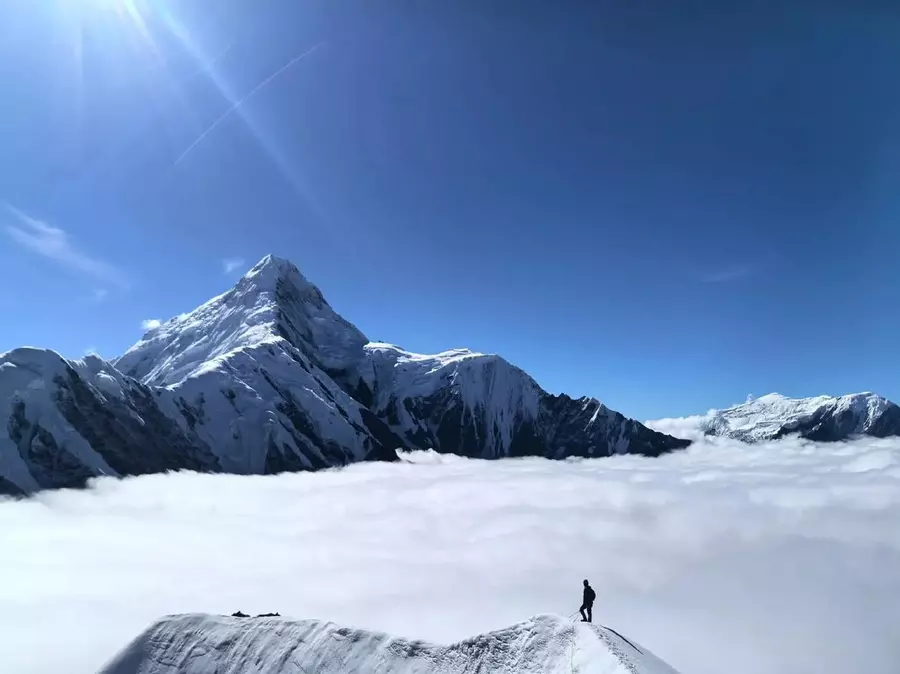
Porady dotyczące podróży na dużych wysokościach
Niektóre punkty widokowe i szlaki trekkingowe wokół Góry Gongga znajdują się powyżej 4000 metrów. Chociaż większość odwiedzających nie próbuje wspinać się na główny szczyt, podróż do miejsc takich jak Przełęcz Zimei, Jezioro Lenggacuo i szlaki trekkingowe nadal wymaga radzenia sobie z niższym poziomem tlenu, dużymi różnicami temperatur i szybko zmieniającą się górską pogodą.
Aby lepiej zaadaptować się do wysokości, podróżnym zaleca się, aby nie udawali się od razu na duże wysokości po przybyciu. Spędzenie nocy w stosunkowo niżej położonych miastach, takich jak Kangding lub Xinduqiao, może pomóc organizmowi stopniowo przyzwyczaić się do wysokości.
Podczas podróży utrzymuj wolniejsze tempo, unikaj intensywnego wysiłku i pij odpowiednią ilość wody. Łagodne dolegliwości związane z wysokością, takie jak bóle głowy, zmęczenie czy słaby sen, są stosunkowo częste na dużych wysokościach. Jeśli objawy staną się poważne lub będą się nasilać, zaleca się zejście na niższą wysokość.
Dla podróżnych wchodzących w odległe obszary trekkingowe, przygotowanie niezbędnych zapasów awaryjnych i podróżowanie z doświadczonym lokalnym przewodnikiem jest wysoce zalecane.
Sprzęt trekkingowy
Warunki pogodowe w regionie Góry Gongga mogą się szybko zmieniać. Nawet latem, poranki, wieczory i wysokie górskie przełęcze mogą być zimne i wietrzne. Odzież warstwowa to najbardziej praktyczny sposób przygotowania.
Zalecana odzież obejmuje:
- Oddychające warstwy bazowe, które utrzymują ciało suchym
- Polar lub ciepłe warstwy środkowe dla izolacji
- Wiatroszczelne i wodoodporne warstwy zewnętrzne na zmienną pogodę
- Lekką kurtkę puchową, którą zaleca się nawet podczas letnich trekkingów
Na szlaki trekkingowe podróżni powinni również przygotować wygodne buty trekkingowe, kijki trekkingowe, butelkę na wodę, czołówkę, krem z filtrem przeciwsłonecznym, okulary przeciwsłoneczne i osobiste leki.
Osoby planujące biwakowanie lub zimowe trekkingu powinny zabrać dodatkowy sprzęt, taki jak śpiwory, maty do spania i sprzęt chroniący przed śniegiem.
Ze względu na silne promieniowanie UV na dużych wysokościach, ochrona przeciwsłoneczna jest niezbędna. Podróżni, którzy planują uchwycić widoki o wschodzie słońca lub odbicia górskie, mogą również rozważyć zabranie statywu.
Podróż do zachodniego Syczuanu z Great Tibet Tour
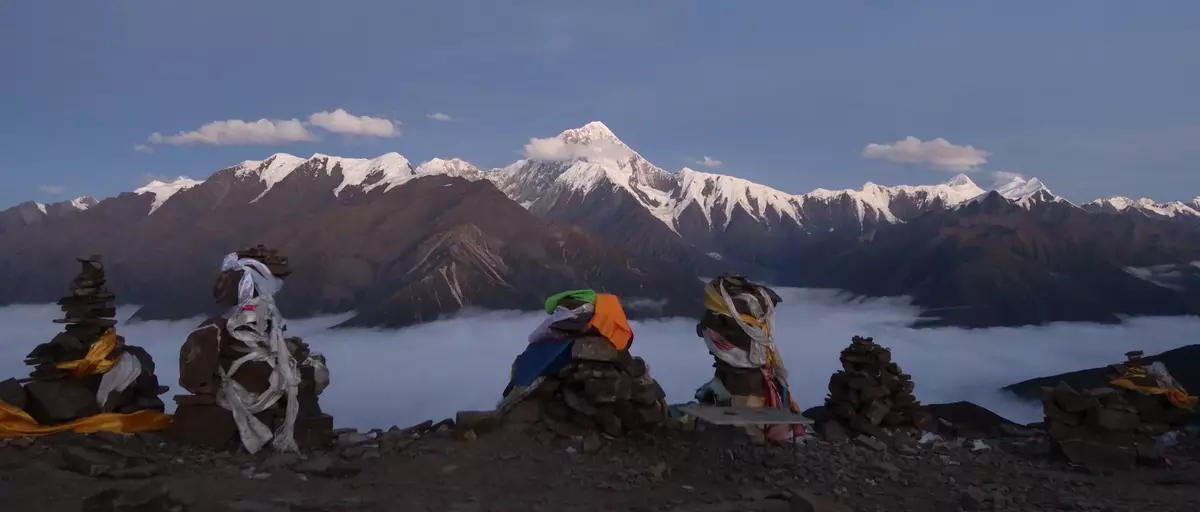
Dzięki naszej lokalnej wiedzy i doświadczeniu na Płaskowyżu Tybetańskim, Great Tibet Tour może pomóc Ci odkryć piękno zachodniego Syczuanu, od ośnieżonych szczytów Góry Gongga po tybetańskie wioski i krajobrazy wzdłuż Autostrady Syczuan-Tybet.
Odpowiedź e-mail w ciągu 0,5–24 godzin.