What's the Highlights of Tibet? See Below:
Following this page, you will find the highlights of Tibet,and you may find the attractions you want to experience.
Natural highlights & attractions
Tibet Plateau is the youngest plateau in the world's geiological history. And scientists have found lots of evidence to prove that Qinghai-Tibet area was sea before. In the Indian Plate and the Asian plate's interactions, the Tibet region began to rise. In the past 10,000years, Tibet experienced the fastest rising speed at about 7 centimetres er year.

Today's Tibet Plateau commands an average elevation of 4,000 metres. Snow-capped mountains encircle the plateau, numerous peaks soar high into the sky. And the plateau tilts slightly fromthe northwest down to southeast, displaying along the way various landscapes: gorgeous mountains, steep valleys, glaciers, frozen earth, naked rocks, clay forest, unnumbered rivers and lakes, far-flung virgin forest, gobi desert, grass land, etc.
Mountain Landscape . North of Tibet, lies the branch of Kunlun Mountains, the Tangula Mountain; in the south lies the world's highest mountain, the Himalayas, and
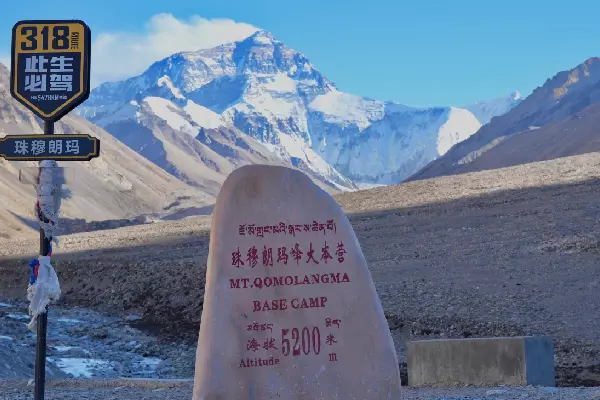
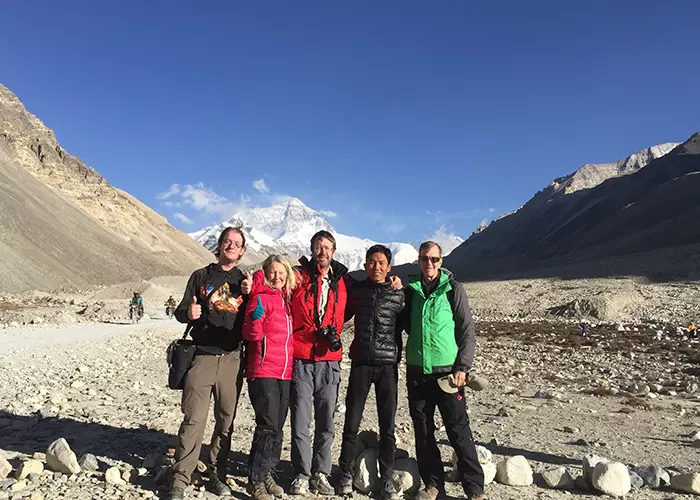
Mt. Everest, the word's Number one peak is just standing on the border of China and Nepal, in Tibetan, called Mt. Qomolangma, it is one of the must-see places of Tibet. The Karakorum Mountains guards the west and the hengduan Mountains with vertical cliffs and deep valleys surges on the east. Within the boundary of these huge mountains, the mountain chain of Gandise-Nyainqentanglha and their branches stretch from east to west. the forest of Snow-capped mountains forms quite a breathtaking view on the plateau.
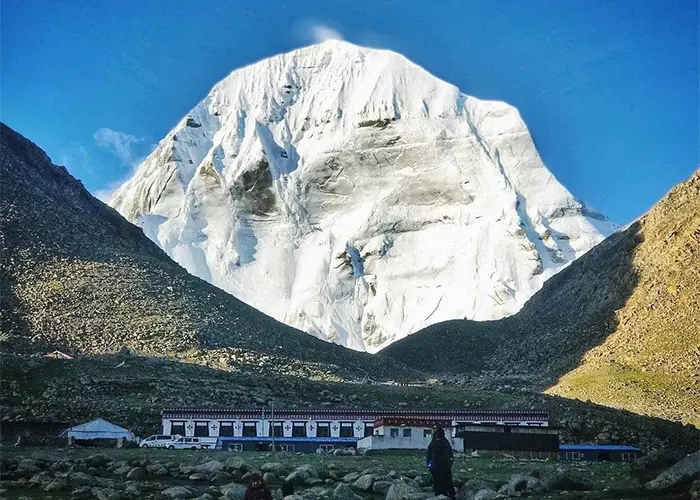
The main peak of
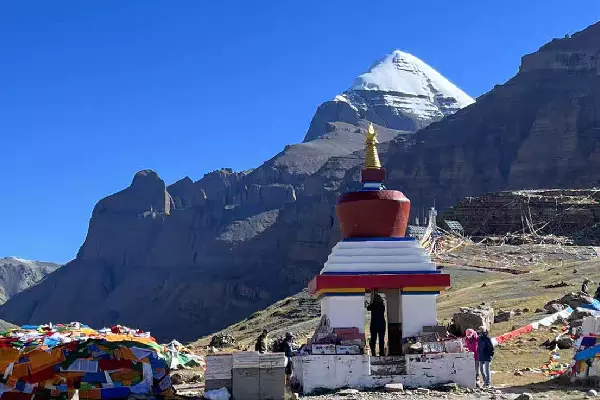
Gandis montains is Mt. Kailash, it is called Kangrinboqi in Tibetan and chinese, it is at an elevation of 6,656metres above the sea level, the snow capped Mt. Kailash gives life to four grand rivers: Shiquan River, known as Indus River in the lower reaches, Maquan River, the origin of the Yarlung Zangbo River, Xiangquan River, known as Sutlej in the lower reaches and Kongqu river, the origin of the Ganges River. And
Mt.Kailash is one of the most sacred mountains in the world.
It still commands great reverence from Tibetan Buddhism, Hinduism, Bon religion and Jainism.Every year, lots of pilgrims from India, Nepal, Bhutan and the chinese regions where the tibetan people live will from a continuous line around the mountain.
Clay forest landscape, it is in teh Zada county, between teh Gandise Mountains and Himalayas, teh renowned Zada Clay forest formed in teh Quaternary Period, this special plateau landscape into being after long-term soil erosion on the bed of vast ancient lakes and large rivers. In the whole Zada County, the various clay forests cover several hundred square kilometres.In the
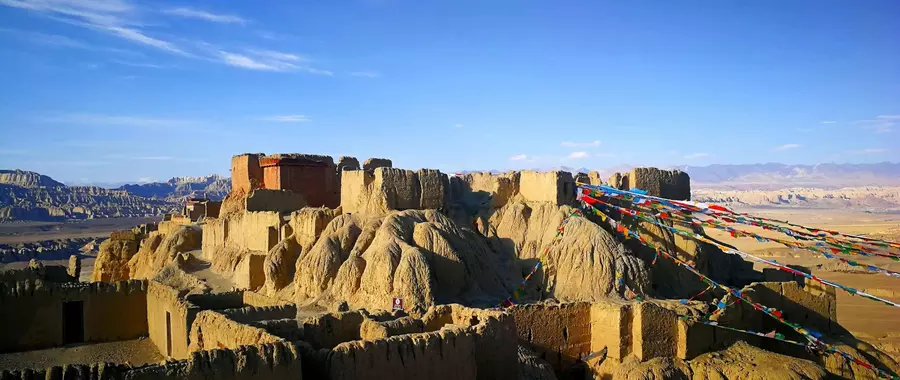
Zada Clay Forest, there are many caves left by prehistoric people who had painted numerous frescoes there. Some scholars thus believe that Qoinlung Woika, capital of the ancient ZhangZhung Kingdom in the Bon religion, is just located at today's Qoinlung of Zada in Ngari.
Glacier Scenery, it forms one of the most grandiose views of Tibet. The worlds' largest icy reservoir rests in Tibet, which is home to numerous silvery dragons. To the west of Bomi alone lies an astounding number of 32,756 glacier. The famous Yarlung River is just originated from teh Gyima yangzoin Glacier on teh northen slope of the Himalayas. Under teh forceof gravity, snow and ice that won't melt for tens of thousands f years slowly move along the valleys to form the glaciers, which are both great highlights for tourists and valuable for scientists. Among all the glaciers in tibet, the grandest should be the one near Mt.Everest and Shishabangma peak. The
Rongbuk Glacier is just

300 metres away from the Rongbuk monastery, and lies on teh vast area between 5,300 to 6,300 metres above sea level at the foot of Mt. Everest. It is one of the place must-sees. You can also have a overlook of the gracier secery by the Yumdrok Lake, at the
Karo-la glaciation region.
River scenery: There are 365 rivers in Tibet each with over 10,000 kilowatts of hydro capacity. The rivers in Tibet are cold but contain little sediment and appear transprent with good quality. The Yarlung Zangbo River is seen as the "cradle" and "mother river" of the Tibetan people. Together withits five main tributaries (Lhasa River, Nyang Qu River, Nyang River, Prlung Zangbo and Dogxung Zangbo), the
Yarlung Zangbo River has become one of the fascinations for tourists to Tibet.
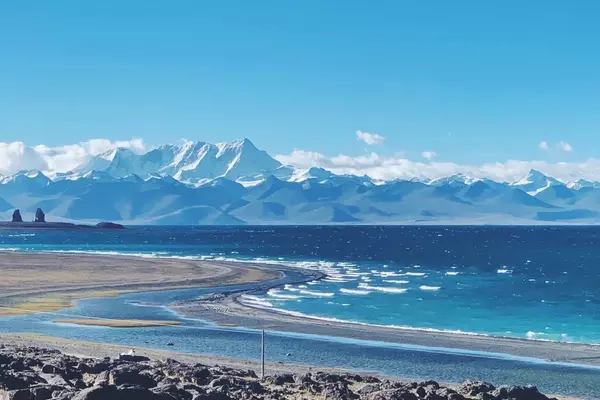
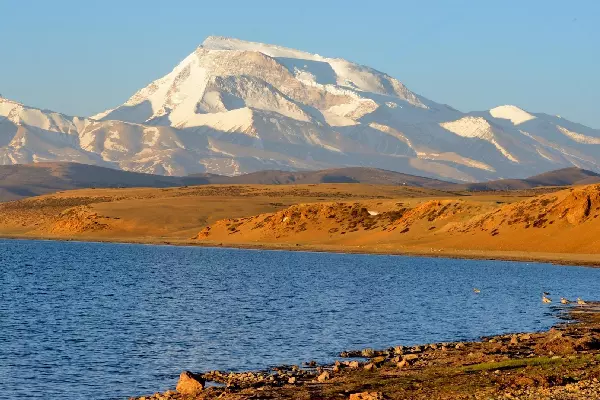
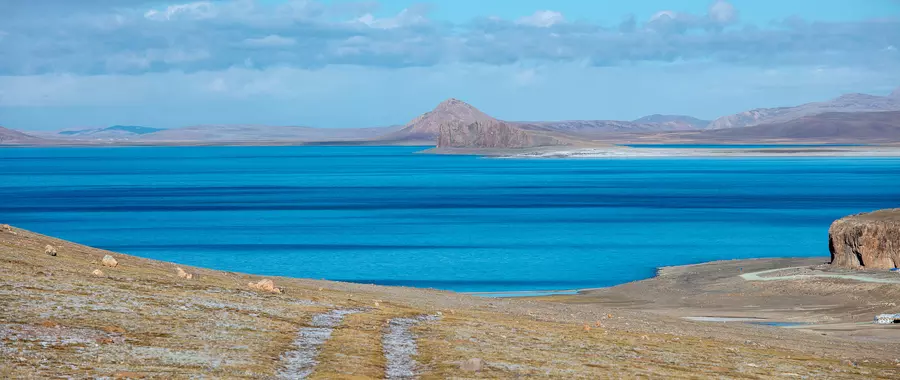
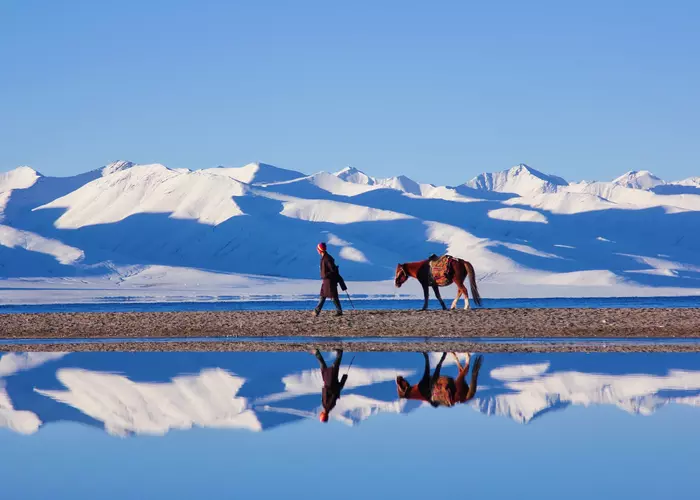
Lakes scenery. One of the most fascinating features of the Tibetan landscape is the lakes scattered all over the " world's ridge." under the bule skyand grand clods, one after another lake shine like the constellation on the sky night, or glimmer like sapphires inlaid on teh blanket of mountains and pasture land. The lakes of
Namtso Lake,
Yamdrok Lake,
Manasarovar Lake, Bangong Tso Lake,
Basum Tso Lake, etc. are the main destinations of numerous tourists.